

|
By Alyssa Lamberti
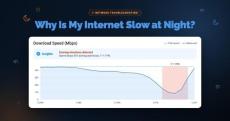
Your connection holds up all day. Then, in the evening, video calls start to stutter, pages take longer to load, and file uploads slow to a crawl. By the next morning, everything is back to normal, so any test you run during the day comes back clean. For a business, that pattern shows up in a few ways. A remote employee can’t get through an evening call. A branch office’s nightly backup never finishes.
|
By Alyssa Lamberti
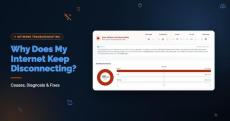
Your Internet usually keeps disconnecting because of one of five things: a weak or congested Wi-Fi signal, a failing modem, router or cable, an overloaded firewall, a device-level setting or driver, or a problem on your ISP’s line or network. To fix it, first find where the drop happens: on one device, across your LAN, or past your firewall. “The Internet keeps droppin” is one of the most common tickets IT teams get, and one of the hardest to close.
|
By Alyssa Lamberti
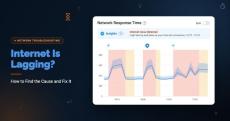
The speed test shows 500 Mbps. Yet Microsoft Teams calls keep turning into people talking over each other, the CRM pauses on every click, and remote employees are opening tickets because the Internet is lagging. Nothing looks broken, which is exactly what makes lag so hard to troubleshoot. Why is my Internet lagging? If your Internet is lagging, your connection is slow to respond, not necessarily slow to download.
|
By Alyssa Lamberti
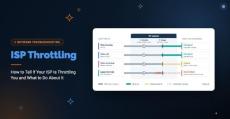
Your connection is fine in the morning and crawls every afternoon. Or video calls stutter while everything else loads normally. Either pattern could be ISP throttling. It could also be network congestion, or a problem inside your own network. ISP throttling is when your internet service provider intentionally slows your connection based on how much data you use, the type of traffic you send, the time of day, or the plan you’re on. Knowing throttling exists is the easy part. Proving it is harder.
|
By Alyssa Lamberti
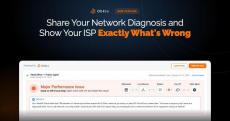
You know the conversation. Calls are choppy, users are complaining, and Obkio shows packet loss on the path to your ISP. You open a ticket, and they reply, "Everything looks fine on our end." Now you're stuck taking screenshots, exporting graphs, and trying to explain data to someone who can't see it. Meanwhile, the problem keeps happening. Today we're launching Shareable Links. With one click, you can create a read-only link to any Network Monitoring Session and send it to anyone.

|
By Alyssa Lamberti
Packet loss rarely shows up as packet loss. Users report choppy Teams calls, frozen screen shares, slow SaaS apps, or a connection that feels unstable. By the time the ticket reaches IT, the issue has often cleared. Even small amounts of loss degrade real-time traffic. And because TCP retransmits every lost packet, sustained loss also cuts throughput for everything else on the link. Packet loss happens when data packets fail to reach their destination.
|
By Andrii Kernitskyi
Obkio's ServiceNow integration is now live. When Obkio detects a network issue, it opens an incident in ServiceNow. When the issue recovers, it resolves that same incident. Your team works the problem in the platform they already use for incident management, with the monitoring context already attached.
|
By Alyssa Lamberti
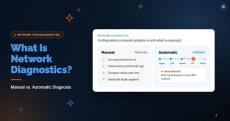
Network diagnostics is the process of finding out why a network performance issue is happening: what's causing it, where and when it occurred, and who needs to fix it. It's the step between an alert telling you something is wrong and a fix being applied. For most IT teams, it's also the slowest part of resolving a network issue.
|
By Alyssa Lamberti
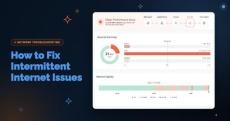
Your Internet circuit is up. The firewall shows the WAN link as connected, your ISP's status page is green, and a speed test comes back at full provisioned bandwidth. Meanwhile, Teams calls at one branch break up for ten minutes every afternoon, and every user at that site sees Salesforce slow to a crawl at the same moment. Then everything recovers before anyone can capture it.
|
By Alyssa Lamberti
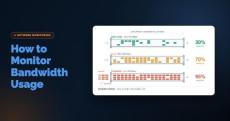
Your Internet link averages 40% utilization, yet users still complain that calls drop and SaaS apps crawl every morning at 9:00. Averages are where bandwidth problems hide. A five-minute polling interval can smooth a 30-second saturation spike into a flat, healthy-looking line. A total-usage graph also won't tell you whether the traffic is a backup job, a compromised endpoint, or an ISP delivering less than you're paying for.

|
By Obkio
Introducing Network Destinations, Obkio's all-new ICMP Monitoring feature. Quick question: are you paying for a second tool just to ping a few IPs? We heard that a lot. So we fixed it. Now, here's the thing about Obkio. We've always been laser-focused on agent-to-agent performance monitoring. Our secret? Distributed monitoring agents. Deploy them at your sites and over the Internet, and you get complete visibility between them, all in the app.
|
By Obkio
Obkio recently launched the brand new Visual Traceroute Tool. In this snippet from our feature release webinar, Solution Architect, Sam, dives into Network Maps and shows you how to read and interpret the visual data to quickly identify network bottlenecks and performance issues. Learn how to leverage the map view to understand your network topology, spot problematic hops, and make faster troubleshooting decisions with visual context.
|
By Obkio
Obkio recently launched the brand-new Visual Traceroute Tool. In this snippet from the feature release webinar, Solution Architect, Sam, shows you how to integrate Visual Traceroutes directly into your custom dashboards for even more powerful network visibility. See how easy it is to add traceroute widgets to your monitoring dashboards, giving your team instant access to hop-by-hop analysis alongside your other key graphs and network metrics.
|
By Obkio
Obkio recently launched the brand new Visual Traceroute Tool. In this snippet from the feature release webinar, Solution Architect, Sam, demonstrates how to use Obkio's integrated Visual Traceroutes in Monitoring Sessions. Watch as he walks through the timeline feature, hop-by-hop visualization, and path change detection, all designed to help you identify exactly where and when network issues occur.
|
By Obkio
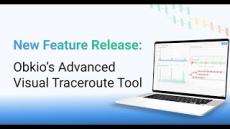
Introducing Obkio's New Visual Traceroute: See Your Network Issues, Not Just Hops After years of evolution, we're launching the most advanced Visual Traceroute we've ever built, now fully integrated into the Obkio app. The Journey: What's New:✓ Fully integrated visual network mapping✓ Historical timeline that actually remembers✓ Correlated with Network Performance and SNMP data✓ No extra setup required✓ See the complete story of network issues, not just individual hops.
|
By Obkio
Tired of noisy alerts and overcomplicated SNMP monitoring tools? Learn how Obkio’s SNMP Device Monitoring blends simplicity and intelligence, giving you fewer alerts, better insights and faster troubleshooting so you can resolve network router, switch and firewall issues in minutes. It always starts the same way. You’re managing your network; maybe it’s five devices, maybe it’s five hundred, and everything should be simple. But instead, you’re caught between two extremes.
|
By Obkio
This is a snippet from our full webinar: “Troubleshooting Internet Issues: For Dummies & IT Pros” In this clip, we dive into Obkio’s Sandwich Method, a simple yet powerful approach to monitoring and identifying Internet issues. By placing Monitoring Agents: Inside your LAN At your firewall or in the DMZ And over the Internet…you can break your network into clear segments and pinpoint exactly where performance problems are happening — whether it’s local, at the network edge, or in the hands of your ISP.
|
By Obkio
We created this video for every IT team still relying on guesswork to manage network performance. Here’s the reality: No monitoring = flying blind No alerts = no prevention No visibility = slow troubleshooting, false assumptions, and frustrated users Even the best IT pros need the right tools, just like pilots need instruments. Have you ever thought about: – Why “no complaints” isn’t the same as “no issues”– The hidden cost of poor visibility– How skill only takes you so far without data to back it up.

|
By Obkio
Discover Obkio’s Free Trial in Just 1 Minute! Are you curious about how Obkio works? This quick video gives you a fast, clear look at how our Network Performance Monitoring tool helps you identify, troubleshoot, and resolve network issues before they impact your users.

|
By Obkio
MSP Life Got You Like... Juggling client networks, mystery slowdowns, and finger-pointing? Yup, we’ve been there. In this short clip, we’re breaking down the real pain points MSPs face daily—and how Obkio makes them way less painful. Monitor. Troubleshoot. Breathe easy. MSPs, this one's for you.
|
By Obkio
Download our free white paper highlighting the features & benefits of Obkio's Network Performance Monitoring software.
- October 2026 (9)
- September 2026 (3)
- August 2026 (8)
- July 2026 (5)
- June 2026 (2)
- May 2026 (4)
- April 2026 (3)
- March 2026 (5)
- February 2026 (5)
- January 2026 (5)
- December 2025 (3)
- November 2025 (10)
- October 2025 (14)
- September 2025 (2)
- August 2025 (5)
- July 2025 (8)
- June 2025 (5)
- May 2025 (9)
- April 2025 (5)
- March 2025 (8)
- February 2025 (10)
- January 2025 (6)
- December 2024 (3)
- November 2024 (4)
- October 2024 (7)
- September 2024 (7)
- August 2024 (8)
- July 2024 (5)
- June 2024 (3)
- May 2024 (6)
- April 2024 (10)
- March 2024 (15)
- February 2024 (11)
- January 2024 (14)
- December 2023 (8)
- November 2023 (8)
- October 2023 (11)
- September 2023 (4)
- August 2023 (10)
- July 2023 (11)
- June 2023 (4)
- May 2023 (23)
- April 2023 (14)
- March 2023 (20)
- February 2023 (4)
- January 2023 (2)
- December 2022 (2)
- November 2022 (4)
- October 2022 (4)
- August 2022 (2)
- May 2022 (1)
- April 2022 (1)
- March 2022 (5)
- February 2022 (5)
- January 2022 (2)
- December 2021 (5)
- November 2021 (2)
- October 2021 (2)
- September 2021 (2)
- August 2021 (1)
- July 2021 (1)
- June 2021 (3)
- April 2021 (1)
- March 2021 (3)
- February 2021 (3)
- January 2021 (2)
- December 2020 (2)
- November 2020 (4)
- October 2020 (4)
- September 2020 (3)
- August 2020 (2)
- July 2020 (2)
- May 2020 (3)
- April 2020 (2)
- September 2019 (1)
Obkio is a simple network performance monitoring solution that allows users to continuously monitor the health of their network and core business applications to improve the end-user experience.
Obkio’s sleek and user-friendly software application diagnoses the causes of intermittent VoIP, video, and applications slowdown in seconds to easily identify the source of a system failure so you can quickly apply the corrective measures before it affects your end-users.