Operations | Monitoring | ITSM | DevOps | Cloud

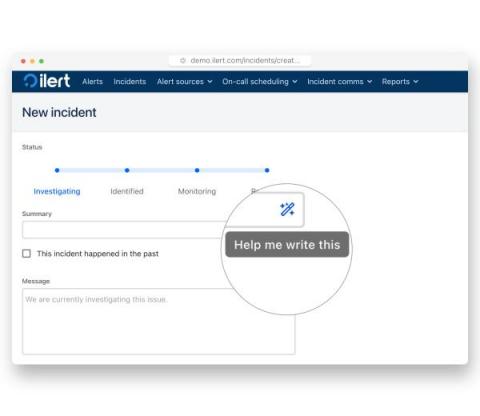
New related incidents functionality brings order to the chaos of highly complex incidents

We’ve all been there. You’re working through some rather frustrating blockers during an incident only to discover that you don’t own the dependency at fault. Or, you’ve been pounding away at an issue when a fellow engineer reaches out and asks if your service is affected by some particularly gnarly database failure they’re seeing. But then what? Do you merge efforts and work in parallel or head for a coffee break while the issue gets attacked upstream?

No, the average cost of downtime is not $5600 per minute

A fairly common claim among website uptime monitoring services is that downtime costs $5600 per minute. Chances are, you'll have one of two reactions to this claim: The reality of what downtime costs your business lies somewhere in between. As a company that runs 3.6 million uptime checks per week, we have a bit of insight into the cost of downtime, so if you're curious - read on.

Monitor GitLab with Datadog

GitLab is a DevSecOps platform that helps engineering teams automate software delivery. Using GitLab, teams can easily collaborate on projects and quickly deliver application code with robust CI/CD, security, and testing features. Datadog’s GitLab integration enables you to monitor your GitLab instances alongside the rest of your infrastructure by collecting GitLab metrics, logs, and service checks.

Monitor machine learning models with Fiddler's offering in the Datadog Marketplace

With the growing utilization of AI, modern business applications rely more and more on machine learning (ML) models. But the complexity of these models poses significant challenges to data scientists, engineers, and MLOps teams seeking to maintain and optimize performance.

Simplifying log data management: Harness the power of flexible routing with Elastic

In Elasticsearch 8.8, we’re introducing the reroute processor in technical preview that makes it possible to send documents, such as logs, to different data streams, according to flexible routing rules. When using Elastic Observability, this gives you more granular control over your data with regard to retention, permissions, and processing with all the potential benefits of the data stream naming scheme. While optimized for data streams, the reroute processor also works with classic indices.

Dynamic Observability Tools for API Live Debugging

Application Programming Interfaces (APIs) are a crucial building block in modern software development, allowing applications to communicate with each other and share data consistently. APIs are used to exchange data inside and between organizations, and the widespread adoption of microservices and asynchronous patterns boosted API adoption inside the application itself.

Getting Started with Honeycomb Buildevents and GitHub Actions

Buildevents is a small binary used to help instrument builds to generate trace telemetry. It populates the trace with metadata from the GitHub Actions environment so you have details about what occurred throughout the entire build. In this tutorial, learn how to instrument with Buildevents and GitHub actions.

Workshop: 2023 Kubernetes Troubleshooting Challenge

In April, over 350 tech professionals (and a few pirates) participated in the 2023 StackState Kubernetes Troubleshooting Challenge at KubeCon + CloudNativeCon EU in Amsterdam. It was great to witness so many crewmates using StackState to overcome some of Kubernetes applications' toughest challenges. As a result, we decided to organize a live interactive troubleshooting event in collaboration with the StackState product team.

Federated Data Explained: Empowering Privacy, Innovation & Efficiency

Data is like the oxygen that fuels the digital revolution. While critical and readily available, data becomes dangerous when misused. Leaders and users alike are becoming concerned with how organizations can protect data, especially personal information. It’s a complex and dynamic challenge, making it harder than ever to share data to the extent needed to facilitate innovation and research. To meet these challenges, many organizations are leveraging federated data systems.