Operations | Monitoring | ITSM | DevOps | Cloud

The latest News and Information on Cloud monitoring, security and related technologies.

Cloud Observability Is Broken - Hybrid Operations Need a New Intelligence Model

Cloud adoption was supposed to simplify operations. Infrastructure would become programmable, scalability would become elastic, and distributed architectures would enable resilience at global scale. In practice, cloud has delivered extraordinary flexibility, but it has also introduced a level of operational complexity that traditional observability approaches were never designed to handle.

Why mid-market IT teams lose control as dev velocity increases

At a certain point, faster delivery stops feeling like progress and starts feeling like risk. When engineering teams scale from 10 to 50+ developers, the volume of infrastructure changes, database schemas, environment variables, and networking rules, no longer grows linearly. It scales exponentially. This is the scaling inflection point where manual governance breaks.

From signals to savings: Optimizing cloud costs with Grafana Assistant and MCP servers

In today's cloud-native environments, managing resource waste and optimizing costs can feel like a constant battle. Operators, along with their fearless FinOps teams, spend countless hours hunting down unused resources, deciphering complex telemetry data, and manually implementing code or configuration changes to try to reduce cloud costs. But what if you could automate the entire process, from identifying waste to implementing the fix, all based on actual production telemetry?

How CloudZero Measures Cost Per Customer (Step By Step)

Like most SaaS companies, CloudZero uses its own product. When we released cost per customer reporting, we tested it on ourselves first. And today, we use cost per customer reports regularly. Why? Because they help leadership answer board and renewal questions, including customer-level margins. Cost per customer is valuable and hard to get right. Multi-tenant systems and Kubernetes can hide the link between shared infrastructure (like EC2) and the customers using it.

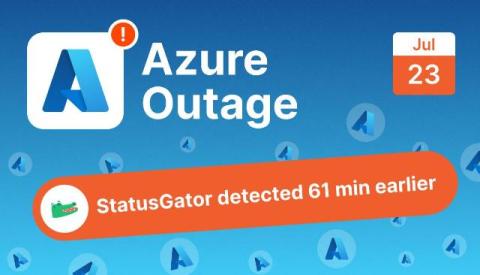
Improved Azure status integration

Monitoring Azure health across large environments should not require complicated setup. Until recently, connecting Azure to StatusGator required configuring access at the subscription level, which could become difficult for organizations managing dozens or even hundreds of subscriptions. We redesigned the Azure integration to make it simpler, more scalable, and easier to manage.

The Analyst View on Data Sovereignty with TechMarketView

Perspectives from the Edge: Episode 2 Data sovereignty isn't a solo effort. It's a symphony. Data sovereignty is moving fast up the agenda. But who's orchestrating it? The second episode of Perspectives from the Edge explores the subject through an analyst’s laser lens, in conversation with Kate Hanaghan, Chief Research Officer at TechMarketView. Find out how AI and platform consolidation make data harder to control, how to bake sovereignty into your business from the start – and why the organisations getting it right treat ecosystems as a strategy, not just a procurement exercise.

Seven early warning signs you're heading toward a governance crisis

Governance failures rarely start with a major outage or a failed audit. They start with small, localized signals that teams treat as isolated annoyances. By the time a crisis becomes visible, the structural breakdown is already expensive to fix. If you are in IT leadership or platform engineering, you have likely seen these signs. The risk is ignoring them until they consolidate into a systemic failure.