Operations | Monitoring | ITSM | DevOps | Cloud

Seven Tools to Help You Become a Better Serverless Developer

Serverless technologies let us do more with less effort, time and energy. They let us focus on creating user value and let the cloud handle undifferentiated heavy-lifting like scaling and securing the underlying infrastructure that runs our code. Serverless technologies have allowed me to accomplish tasks as a solo engineer that used to take a whole team of engineers to accomplish, and I’m able to complete these tasks in a fraction of the time and cost to my customers.


Three hidden RMM features that are underutilized

Over my time as a Sales Engineer and Partner Success Manager, I quickly learned that there are a few under-utilized features of N-sight RMM. While performing RMM dashboard audits, three of these features routinely came up in conversation with our partners. They include the Site Concentrator, Data Overdue Cross-Check, and Monitoring Templates. In this blog series, we will briefly cover uses in your day-to-day work and implementation of the features.

Comparing DBA, DBRE, and SRE Roles

As I navigate further into my career, I’m finding the scope of my role has shifted over the years. I thought I’d take some time to help relay the differences I’ve seen between traditional database administrators (DBAs), database reliability engineers (DBREs), and site reliability engineers (SREs). Before I start, I want to get a disclaimer out of the way: some of the comparisons here reflect only what I’ve seen and may not match what you’ve experienced.

Extending autorun

What’s autorun? Autorun is a feature of the Masterfiles Policy Framework (MPF)1 that simplifies the process of adding and executing new policy. We have talked about Modular policies with autorun and the Augments before. This time, we dig into autorun a bit deeper to explore some of its current features and look at how to implement your own as we did during The Agent is In, Episode 15 - Extending Autorun

Performance Monitoring with API

If you are in a room with 20 engineers and you ask, “explain what an API is to a non-technical person”, you will get 20 different analogies. An API is like the on button to your TV connecting you to a variety of shows and systems, or an API is like a waiter taking your order and serving you from the kitchen. An API is like a library card catalog, or it’s simply a tool that connects you to other tools.

Tools and Tutorials for Learning Powershell

Do you have repetitive tasks you’d like to automate or manage, but not the time or know-how to code a solution from scratch? Powershell might be just what you’re looking for. Designed to help automate activities, it is a cross-platform shell and scripting language developed by Microsoft. With Powershell, you can use the command line or scripting language to have point-and-click activities executed and managed. It’s fairly easy to use and yet extremely powerful. So, where do you begin?

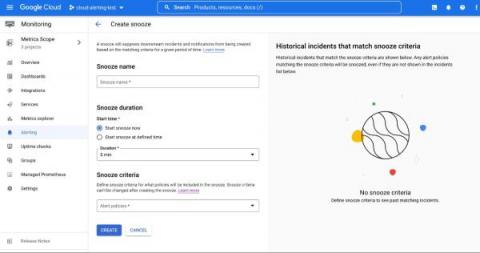
Snooze your alert policies in Cloud Monitoring

Does your development team want to snooze alerts during non-business hours? Or proactively prevent the creation of expected alerts for an upcoming expected maintenance window? Cloud Alerting in Google's Cloud operations suite now supports the ability to snooze alert policies for a given period of time. You can create a Snooze by providing specific alert policies and a time period. During this window, if the alert policy is violated, no incidents or notifications are created.

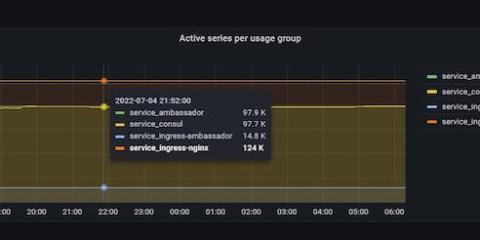
Grafana usage insights: How to track who is sending what metrics to your stack in Grafana Cloud

We are happy to announce the release of the Grafana usage groups feature in Grafana Cloud. This new feature — which is available in the Grafana Cloud Advanced plan — helps centralized observability teams and administrators track and attribute metrics usage back to groups that exist within a single shared Grafana stack. Ultimately, Grafana usage groups can help with governance and cost control.

What's The Best Employee Monitoring Software - ActivTrak or Insightful?

In the sea that is the SaaS market, there is an abundance of software for employee monitoring. This software, as the name suggests, is used for time tracking, monitoring, project management, and implementing safety measures. Widely used by companies that want to ensure that their employees are actually getting work done while on the clock, but that’s not where the benefits of using these tools end.