Operations | Monitoring | ITSM | DevOps | Cloud

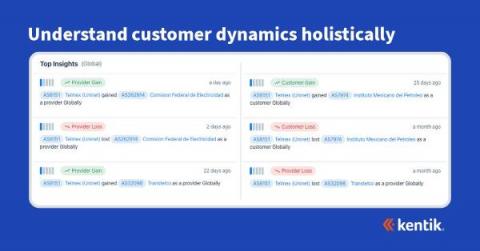
Kentik Market Intelligence just increased its IQ - introducing KMI Insights!

Early this year we launched Kentik Market Intelligence (KMI). If you missed it, KMI enumerates transit and peering relationships as well as produces rankings based on the volume of IP space transited by ASes in different geographies. Using tables and charts, KMI offers a global view of the internet out-of-the-box without any configuration or setup. KMI uses public BGP routing data to rank ASes based on their advertised IP space.


Three ways end user self-service tools can save you time

Countless times in the MSP world I’ve had to ask myself, “why can’t the end users handle this?” Typically, the answer boils down to the fact that they are paying the MSP to take that stress and labor off their hands. However, there are occasions when end users, providing they’re properly trained, can legitimately take some of the workload off the MSP’s hands.

IDC Report: A Best Practice Blueprint from Customers on Successful Cloud Migration

The events over the past two and a half years have radically changed the world. Digital transformation initiatives went from being a priority to an urgent imperative. Enterprises that had not already migrated data to the cloud rushed to do so during the pandemic, and others accelerated their on-premise-to-cloud shifts. Hybrid and multi-cloud environments become the new reality for many organizations who want to get the most out of their on-premises and cloud investments.

Managing your Kubernetes cluster with Elastic Observability

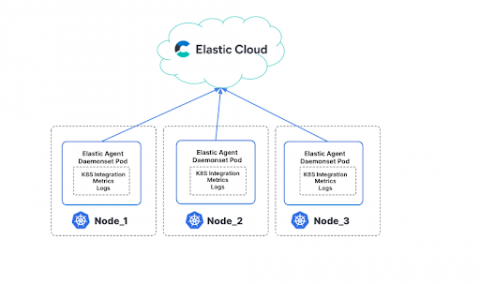
As an operations engineer (SRE, IT manager, DevOps), you’re always struggling with how to manage technology and data sprawl. Kubernetes is becoming increasingly pervasive and a majority of these deployments will be in Amazon Elastic Kubernetes Service (EKS), Google Kubernetes Engine (GKE), or Azure Kubernetes Service (AKS). Some of you may be on a single cloud while others will have the added burden of managing clusters on multiple Kubernetes cloud services.

A more flexible and hassle-free approach to digital transformation

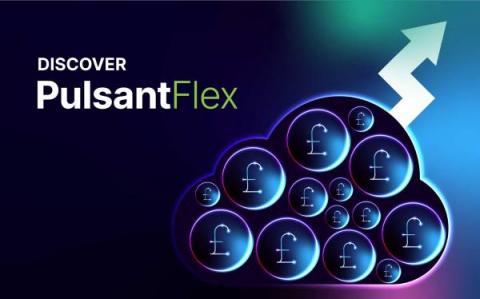
Businesses need a new, more flexible solution to make digital transformation far easier, says Daniel Blackwell, Product Manager – Networks & Security, Pulsant Digital transformation can provide businesses with a more flexible approach to infrastructure that simplifies the delivery of services and applications. However, this journey to digital transformation can introduce its own complexities that require a new way of thinking.

Cloud-Based Email Security - Managing Your Email Security from Anywhere

There's a lot of talk about cloud-based email security. Many companies are using it, and many people are interested in it. But not many understand how it works or why they should consider switching from their current solution. That's why it's necessary to know why you should consider cloud-based email security for your business and how it works.

How to Connect Alteryx to Snowflake

The CData ODBC Driver for Snowflake provides ODBC-compliant access to real-time data from Snowflake, allowing interaction with Snowflake data in a broad range of business intelligence, reporting, and extract, transform and load (ETL) applications, as well as directly using conventional SQL queries. Because of the advanced data processing included within the driver, the CData ODBC drivers provide unrivaled speed when working with live Snowflake data in Alteryx Designer.

The Benefits of Data Observability to SMBs and How to Unlock Them

Data observability is a relatively new discipline in the fields of data engineering and data management. While many are familiar with the longstanding concepts of observability and monitoring in enterprise IT networks and infrastructure, data observability has only really come into the spotlight in the last two years. However, it has managed to turn a lot of heads in that short time.

RTO vs. RPO: What's the Difference?

It’s common for an MSP to question the value of Microsoft Intune when it comes to managing their customers. There are a few common concerns that tend to come up, including the pricing structure and the lack of multi-tenancy. It’s also something new that the MSP and their staff may need to learn. With that said, is MS Intune bringing value to the MSP’s table? Is there some potential to be leveraged out of using Microsoft’s MDM as a managed service provider?