When you’re just getting started with observability, a proof of concept (POC) can be exactly what you need to see the positive impact of this shift right away. Coveo, an intelligent search platform that uses AI to personalize customer interactions, used a successful POC to jumpstart its Honeycomb observability journey—which has grown to include 10,000+ machine learning models in production at any one time. Wondering how Coveo got there? So were we.
With the Rust team's announcement of the 1.68.0 version of Rust, Cloudsmith is happy to announce our support for the new "sparse" registry protocol, which has been stabilized as part of version 1.68.0. Cargo is the package manager for Rust, a programming language empowering everyone to build reliable and efficient software. Cloudsmith customers who migrate to the new beta "sparse" registry implementation will dramatically improve the speed and reliability of their builds.
The past few years have been a boon to the IT channel. Economic and social changes have driven more SMBs and enterprises toward outsourced IT solutions. New technologies have pushed IT profitability higher. Businesses are more focused on digital transformation than at any other point in history, while at the same time everyone with a networked device is concerned about the growing threat of cyberattack. Operations of all types know that the IT department is becoming the key to staying competitive.
Interoperability — it’s one of the main reasons I joined Grafana Labs. Our “big tent” philosophy helps Grafana work with a wide range of data sources and tools, and it’s why you can use Grafana to address endless use cases and problems. We are best known for the seamless way we correlate metrics, logs, and traces to understand what is happening in the environment, resolve the immediate issue, and address any underlying issues so that it does not happen again.
135,000 is the average number of endpoint devices connected to an enterprise network. The estimate is in a joint report from Adaptiva and the Ponemon Institute, along with several other surprising statistics: A common challenge facing IT professionals is gaining insight into the devices connected to their network. With so many devices being used by employees, managers and IT workers, a solution to categorize and analyze these devices in one spot is essential.
In today’s fast-paced, tech-driven world, ensuring the security of your company’s data and mobile devices is more vital than ever. Mobile device management (MDM) tools are a powerful way to protect against malicious threats and other external risks to keep your business running smoothly. Of course, there is no one-size-fits-all solution when it comes to MDM, but there are essential features that can benefit any organization.
Time-varying entities may contain multiple time-varying and static attributes, making mapping them a particular challenge. Time is notorious in modeling tasks. Indeed, the temporal aspect exacerbates the complexity of the modeling task, making simple diagrams look pretty complex. The temporal dimension becomes particularly nasty when it takes part in identifying entities. The figure on the right visualizes the typical database example.
From time to time throughout my career, I have been involved in projects with dramatic releases when we built and delivered something very new and very special. The release of InfluxDB Cloud, powered by IOx (referred to as “InfluxDB IOx” for short below) absolutely meets those criteria. I want to explain my personal views of why this release is so impactful and why I am so excited to be part of it.
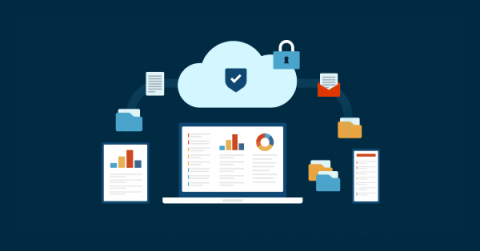
In today’s data-driven economy, data is the lifeblood of any business. A catastrophic data loss event can cause irreversible damage to an organization’s reputation, financial stability, and business continuity. This #WorldBackupDay, we’re reminding organizations worldwide of the importance of backing up their data and having a robust recovery plan in place through our campaign #AlwaysHaveAPlanB. In terms of data recovery, having a plan B means simply having a backup plan.