Operations | Monitoring | ITSM | DevOps | Cloud

What is Azure Locally Redundant Storage?

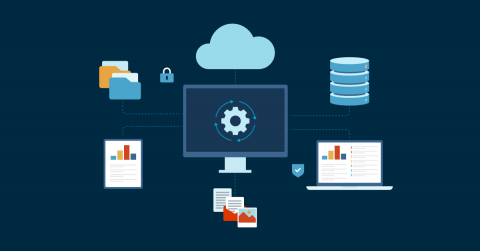
As more and more companies move their data to the cloud, the importance of data redundancy cannot be overstated. Losing data can be catastrophic, so having multiple copies of your data in different locations is essential to ensure data availability and business continuity. One way to achieve this is through Azure Locally Redundant Storage (LRS). In this article, we will cover everything you need to know about Azure LRS, including what it is, how it works, and its benefits.

New Performance Issues | Snack of the Week

We’ve released new Performance Issues for Frontend, Backend, and Mobile recently. N+1 API Calls, Large Render-blocking Assets, and Slow Database Queries are just a few of them. If you want to learn more, you can register for our upcoming Performance Issues AMA where you can talk with the engineers who built our performance product: .

k3s vs k8s - The Difference Between k3s vs k8s

Our CTO Andy Jeffries explains how k3s by Rancher Labs differs from regular Kubernetes (k8s). Since we launched the world’s first k3s powered, managed Kubernetes service – we’ve had a lot of questions from our members on what the differences are between k3s and k8s (full blown Kubernetes), aside from the choice from each on how to capitalise a "K" (or not).

Understanding Azure Fault and Update Domains:

Microsoft Azure is a cloud computing platform that offers a wide range of services to businesses of all sizes. One of the critical aspects of any cloud service is high availability and resiliency, which ensures that your applications and data are always accessible, even in the event of hardware failures or updates. Azure provides two critical features to achieve high availability and resiliency: Azure Fault and Update Domains.

Log Aggregation: Everything You Need to Know for Aggregating Log Data

Log aggregation is the process of consolidating log data from all sources — network nodes, microservices and application components — into a unified centralized repository. It is an important function of the continuous and end-to-end log management process where log aggregation is followed by log analysis, reporting and disposal. In this article, let’s take a look at the process of log aggregation as well as the benefits.

The future of AI

It’s no secret that every ITOps leader can face an ever-increasing amount of alerts. Since the dawn of digital, alerts have served an important purpose. Sometimes all those alerts can become overwhelming noise, and sorting out what is and is not a priority can become challenging. The good news is that artificial intelligence (AI) and machine learning (ML) are adept at processing large data sets in real time, looking for patterns and being able to aid in decision making.