If you’ve been reading our recent automotive blogs and white papers, you know that the automotive industry is highly complex and regulated, especially when it comes to functional safety and cybersecurity. Standards and consortiums help ensure that companies provide a common framework and follow compatibility and interoperability approaches. Usually, these standards define constraints in how specific components and systems are designed or how they should work together.
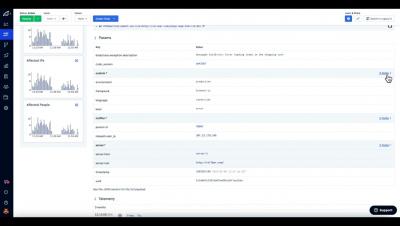
An important component of understanding the root cause of an error, and the importance of an error to the business is having additional contextual information about the error. The specific additional data that is important for your errors will be unique for your application and possibly the category of the error. Rollbar provides an easy way to tag your error data with additional custom tags. There are 2 main ways of doing this.
I'm no stranger to ranting about deploys. But there's one thing I haven't sufficiently ranted about yet, which is this: Deploying software is a terrible, horrible, no good, very bad way to go about the process of changing user-facing code. It sucks even if you have excellent, fast, fully automated deploys (which most of you do not). Relying on deploys to change user experience is a problem because it fundamentally confuses and scrambles up two very different actions: Deploys and releases.
Playwright is an open-source framework for cross-browser automation and end-to-end web application testing. It was designed to be a fast, reliable, robust, and evergreen test automation framework, and its API supports modern rendering engines that include Chromium, WebKit, and Firefox. Playwright tests run on Windows, Linux, and macOS, locally or on your continuous integration pipeline, and headless or headed.
Fun fact: Observability goes all the way back to the 1960s, coined by scientist Rudolf Kálmán as a way to measure a system through its output. Now, over six decades later, observability has fragmented into several specialized segments — from application observability, to security observability, and everything in between. The two segments driving the most confusion are data observability and observability data.