

Operations | Monitoring | ITSM | DevOps | Cloud

The latest News and Information on Cloud monitoring, security and related technologies.

Why compliance keeps slowing your releases (and what to change first)

A team ships at a steady pace for most of the year. Then an audit approaches, and delivery slows. Engineers get pulled off feature work to support the audit, producing the configuration exports, logs, and environment checks that the evidence depends on. The slowdown lasts as long as the audit does. It is tempting to read this as a team that needs to move faster or be bigger. It is usually neither.

Cloud Cost Management for Observability: A Practical Guide

Observability spend is outgrowing infrastructure budgets. What drives the cost up, how pricing models work, and a practical framework to manage it. Sejal Pandey works on content and growth at Last9, writing about observability, reliability, and SRE practices.

Moving Beyond OOM Kills: Introducing Memory QoS in Kubernetes 1.37

Table of Contents For most of Kubernetes’ history, memory management has been a blunt instrument. Cross your limit, and the kernel kills your container. There has been no equivalent to CPU throttling, no graceful backpressure, just a hard stop. With Kubernetes 1.37, that changes: Memory QoS, built on cgroups v2, graduates to Beta and is enabled by default.

For whoever has to explain the cloud bill to finance every month.

As infrastructure gets more complex, with workloads spread across clouds, regions, and providers, every hop your data takes between them adds up. Where do these costs actually come from? Has your team ever traced a surprise bill back to data movement? With Megaport, cloud egress costs are minimized by routing data privately between providers, avoiding the higher transfer rates associated with public internet routing.

Our Customer Success AI bill tripled. Here's why we're spending more.

Pop quiz: If you spend $40,000 per month on Anthropic, and you’ve got two customers, what’s your cost per customer? If you bypassed the easy answer of $20,000 and said, “Scott, you old trickster, that’s not enough information to answer that question,” you’ve won today’s prize: a lesson in the perils of average costs. Let’s flesh out the situation: You put an AI feature in your product, a document assistant powered by Claude.

SaaS Sprawl Is Becoming an IT Problem: Here's How to Bring It Under Control

For most organizations, SaaS sprawl does not begin with a bad technology decision. It starts with a useful tool. Marketing needs a new analytics platform. Sales adopts prospecting software. HR adds an applicant tracking system. Engineering signs up for another monitoring service. Someone discovers an AI tool that saves several hours a week and puts it on a company card. Each purchase makes sense on its own.

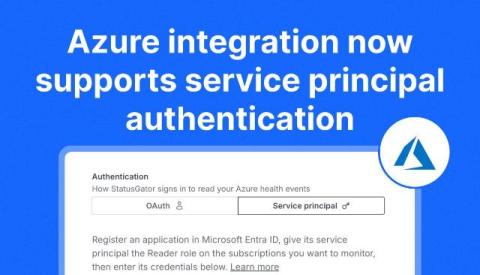
Azure integration now supports service principal authentication

We’ve released some improvements to our Azure status integration. StatusGator can now read your Azure Resource Health events via a service principal. Previously the only supported authentication mechanism was OAuth. Both pull the same data and produce the same alerts – the difference is who the connection belongs to, and what happens to it over time.

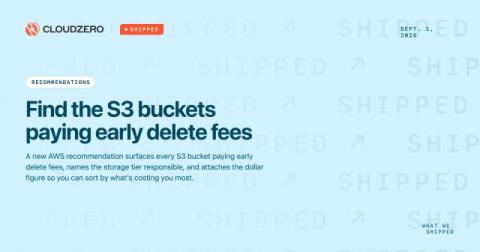
Shipped: Find the S3 buckets paying early delete fees

S3 lifecycle rules move data to Standard-IA or Glacier to cut storage cost. CloudZero now flags the buckets where that move backfires: an early delete fee is charged when an object leaves its tier before the tier’s minimum storage duration. The cause isn’t always a misconfigured lifecycle rule. A manual delete, an overwrite, or an object written straight into the tier by a replication or backup job produce the identical charge.

AI usage tracking: Monitor spend by team, feature & model

AI usage tracking means measuring who and what consumes AI across your company, by team, feature, and model, then converting the usage into spend and cost per unit of work. Provider consoles stop at totals per API key. Tracking puts names on those totals: which team, which product, which model, and whether any of it was worth the money. In May 2026, CNBC reported that “almost every Fortune 500 is tracking overall AI usage,” quoting ModelOp CTO Jim Olsen. The same reporting carried his warning.