Operations | Monitoring | ITSM | DevOps | Cloud

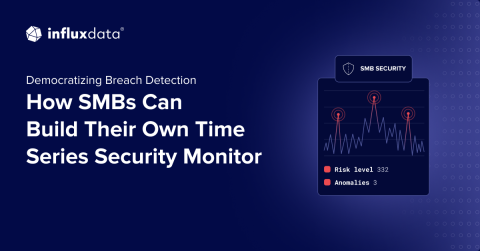
Democratizing Breach Detection: How SMBs Can Build Their Own Time Series Security Monitor

Summary Small and midsize businesses are often flying blind when it comes to security breach detection. An affordable way to address this issue without the complexity of SIEM is by modeling security events as time series data. This architecture takes audit logs from SaaS platforms and normalizes activities like logins, downloads, and token creation to establish behavior baselines that can be used to detect anomalies indicating security breaches. Table of Contents.
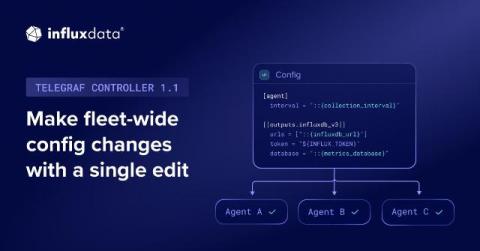
Telegraf Controller 1.1: Make Fleet-Wide Config Changes with a Single Edit

Summary Telegraf Controller 1.1 lets teams make fleet-wide configuration changes with a single edit using Global Constants, Configuration Groups, and Configuration Aliases. Configuration Versioning makes every change traceable, comparable, and reversible. High availability, available in Telegraf Enterprise, automatically fails over between Controller instances so agents can continue pulling configurations and reporting health if an instance goes down. Table of Contents.

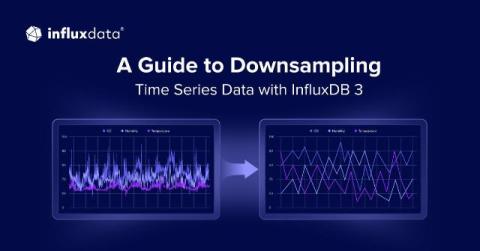
A Guide to Downsampling Time Series Data with InfluxDB 3

Summary Downsampling turns high-frequency time series data into lower-resolution summaries. In InfluxDB 3, you can calculate those summaries by querying with SQL or materialize them on a schedule with the Python Processing Engine. Table of Contents This tutorial demonstrates both approaches using the InfluxDB 3 Processing Engine’s built-in bird tracking simulator plugin. You will generate telemetry, aggregate it into 10-second windows, and validate the result with SQL.

A Rust Client for InfluxDB 3

Summary A new async Rust client for InfluxDB. Built for the edge gateways, embedded systems, and high-throughput ingest pipelines where Rust already runs. Table of Contents Time series data shows up wherever the physical world meets software. A satellite constellation streams altitude, power, and thermal telemetry from every spacecraft on every pass. A factory floor running on Industry 4.0 principles instruments every line, every motor, every batch.

Where Historians Fall Short for Physical AI

Summary Physical AI—machines and industrial systems that sense conditions, reason, and act in the real world—needs two things from operational data: detailed history for training, and real-time telemetry for inference. Traditional data historians weren’t built for either at the speed Physical AI requires. Four gaps result: limited real-time access, compression that strips model-relevant signal, IT/OT fragmentation, and site-by-site architectures.