Operations | Monitoring | ITSM | DevOps | Cloud

How to Reduce Application Downtime with APM?

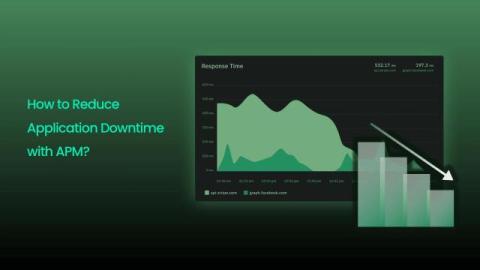
According to a recent 2025 study, the average cost of downtime has inched as high as $9,000 per minute for large organizations. For higher-risk enterprises like finance and healthcare, downtime can eclipse $5 million an hour in certain scenarios. Whether you're part of a DevOps team, an SRE, a developer, or an engineering manager, minimizing application downtime should be a critical focus. One of the most effective ways to achieve this is through Application Performance Monitoring (APM).
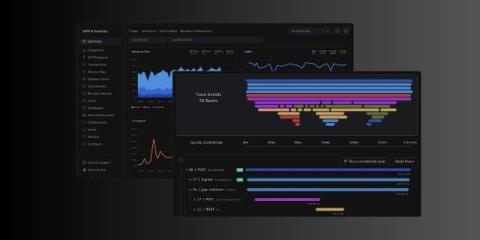
What's Slowing Down Your App? Common Performance Issues APM Can Solve

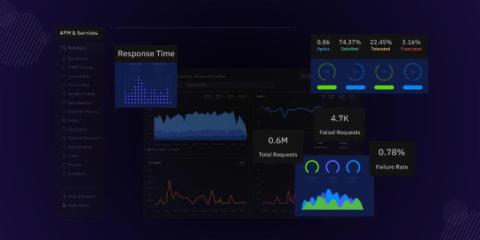
Application performance is critical to user experience and business success. When an application starts slowing down, identifying the root cause isn’t always straightforward. For developers, DevOps engineers, and SREs, Application Performance Monitoring (APM) tools provide real-time visibility into how applications behave under load.

Understanding APM and Distributed Tracing in the Observability Stack

To keep modern applications running smoothly, you need more than just basic monitoring. APM (Application Performance Monitoring) gives you a broad overview, tracking metrics like latency, errors, and system health. Distributed Tracing, on the other hand, shows the full journey of each request across services, helping you pinpoint the root cause of slowdowns or failures.

OpenTelemetry vs Fluent Bit - Key Differences 2025

Modern applications demand strong observability to ensure performance, reliability, and quick troubleshooting. Two powerful open-source tools, OpenTelemetry and Fluent Bit play key roles in this space. While OpenTelemetry offers a full-stack framework for collecting metrics, logs, and traces, Fluent Bit specializes in fast, lightweight log forwarding.

Real User Monitoring (RUM) vs. Synthetic Monitoring: Understanding Best Practices

For modern engineering and DevOps teams, user experience isn’t a post-deployment concern, it’s a critical operational metric. Monitoring how real users interact with your application is no longer optional, especially in high-traffic, dynamic, or global environments. This is where real user monitoring (RUM) proves indispensable. But RUM isn’t the only approach.

Fluentd vs Fluent Bit: A Side-by-Side Comparison 2025

Fluentd and Fluent Bit are both open-source data collection and processing tools, but they serve different purposes. Fluentd offers a comprehensive, plugin-rich architecture ideal for centralized log aggregation. Fluent Bit is designed for performance and efficiency, making it a better fit for edge devices and environments with limited resources. This Fluentd vs Fluent Bit comparison outlines their key differences, helping you decide which fits your infrastructure best.

What is Real User Monitoring (RUM)?

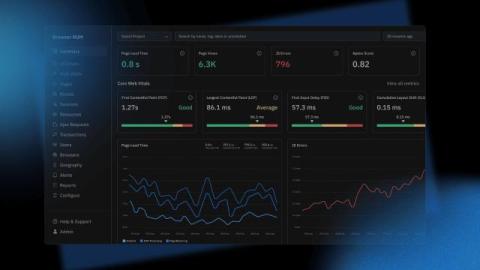
As applications grow more complex and user expectations rise, delivering seamless and high-performing experiences to users is non-negotiable. Real User Monitoring (RUM) has emerged as an essential technique that provides developers, DevOps teams, and site reliability engineers with deep visibility into the actual performance of web applications that capture the experiences of real people in real-time.

Fluentd vs Logstash: In-Depth Comparison of Two Popular Log Collectors 2025

In modern observability stacks, log collection is a critical component. Among the most widely adopted logs collector are Fluentd and Logstash. Both tools are designed to collect, process, and forward logs to various destinations like Elasticsearch, Kafka, and cloud services. However, the differences between FluentD and Logstash lie significantly in their design, performance, plugin ecosystems, and user experiences.