Operations | Monitoring | ITSM | DevOps | Cloud

APM for Banks and Fintech: Ensuring Stability in High-Transaction Apps

The financial services industry is undergoing a major transformation. According to the McKinsey & Company 2025 Global Payments Report, digital payments continue to dominate, generating approximately $2.5 trillion in revenue from around $2.0 quadrillion in value flows across 3.6 trillion transactions worldwide. In another survey conducted by JP Morgan says that, more than 30 percent of financial professionals reported that faster payments are having a positive impact on their organizations in 2025.
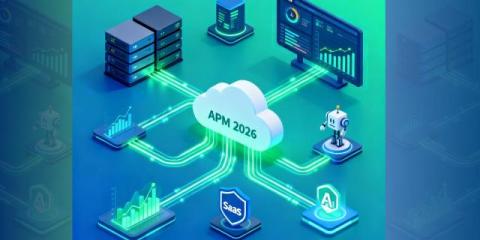

APM in 2026: The New Standard for Business Reliability and Growth

Global IT spending is expected to reach a record $6.08 trillion by 2026, with software investments growing by 15.2%. This shows how critical application performance has become for businesses today. For almost 80% of companies, even one hour of downtime can cost more than $300,000. In a world where every digital experience affects your revenue and brand reputation, keeping your applications performing well is no longer optional.

External Request Monitoring: The Silent Pillar Every APM Needs

The global market for application performance monitoring (APM) is growing fast. Market research shows the industry is expected to rise from about USD 7.52 billion in 2023 to nearly USD 19.62 billion by 2030, with a compound annual growth rate (CAGR) of around 15.1%. This rapid expansion reflects how digital transformation, hybrid cloud adoption, and third-party integrations are reshaping performance monitoring needs. It’s no longer enough to track just internal code paths and database queries.

Why Your APM Needs Observability - Metrics, Logs, and Traces Explained

Modern software applications are increasingly complex. Microservices, cloud infrastructure, and distributed architectures make it challenging for developers, DevOps engineers, and SREs to maintain high performance and a seamless user experience. Traditional Application Performance Monitoring (APM) provides critical insights into how applications perform, but alone, it often leaves blind spots when it comes to diagnosing issues or understanding the full system behavior.

10 Proven APM Best Practices to Reducing Latency and Improving Response Time

Speed defines user loyalty. Recent market research indicates that organizations adopting advanced application performance monitoring (APM) tools are achieving measurable gains in user engagement, retention, and revenue. “ A 2025 performance study found that businesses tracking latency and response time proactively reduced customer churn by up to 30%. ” As applications expand across distributed architectures, microservices, and cloud environments, performance gaps become harder to diagnose.

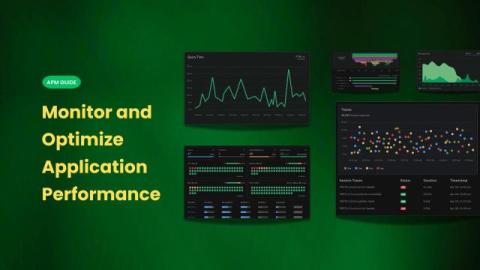
Application Performance Monitoring (APM) Guide: Monitor and Optimize Application Performance

Every millisecond your application takes to respond can decide whether a user stays or leaves. But here’s the catch, you can’t improve what you can’t see. Behind every slow page load, failed API call, or random spike in latency lies a story your application is trying to tell. Application Performance Monitoring (APM) is how you listen to that story.

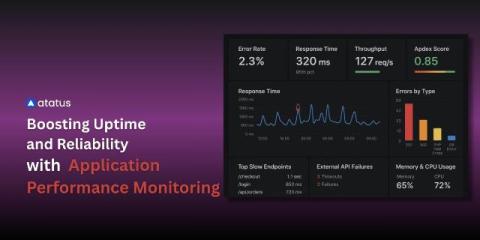
How Leading Businesses Achieved Greater Uptime with Atatus Monitoring

When every second of downtime can mean lost revenue and frustrated customers, leading businesses can’t afford to leave performance to chance. That’s why leading companies are turning to Application Performance Monitoring (APM) tools like Atatus, a Datadog alternative to keep their applications healthy, detect issues before customers do, and achieve higher uptime than ever. But how exactly are they doing it?

Datadog vs Splunk: A Side-by-Side Comparison [2025]

Datadog and Splunk are both leading tools for monitoring and observability. Each offers a range of features designed to help you understand and manage your data. Datadog provides tools for tracking application performance and analyzing logs in real-time. Splunk, meanwhile, is known for its powerful log analysis and search capabilities. In this post, we will compare Datadog and Splunk on important aspects like APM, log management, search capabilities, and more.