Operations | Monitoring | ITSM | DevOps | Cloud

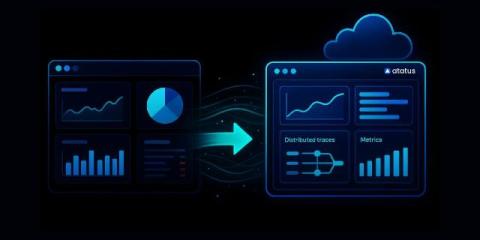
What to Expect When You Migrate to Atatus APM

As organizations aim for exceptional software reliability and user satisfaction, migrating to Atatus APM is a key upgrade in application monitoring. With nearly 80% of companies facing costly downtime exceeding $300,000 per hour, robust APM solutions like Atatus are crucial. It helps teams quickly identify bottlenecks, optimize performance, and improve the customer experience through comprehensive, real-time insights.

Best New Relic Alternatives & Competitors in 2026

If you are someone who has explored monitoring and observability solutions for your program, New Relic One is hard to miss. It is a comprehensive monitoring and management application initially started by Lew Cirne in 2008. Then on, it expanded its product base to include over twenty products ranging from front-end to backend, infrastructure, logs, and even vulnerability addressing. Today, it is one of the most successful analytics platforms for enterprises dealing with data.

Distributed Tracing for Microservices: 10 Essential Best Practices for 2026

Distributed tracing tracks how a single request moves across multiple microservices, helping teams see the entire execution path end to end. In modern architectures where dozens of services interact, it becomes difficult to understand where latency starts, why bottlenecks appear, and which component breaks under load. Traditional monitoring only shows isolated metrics. Distributed tracing connects those dots.

Top DevOps Challenges in 2025 and How APM Solves Them

In 2025, DevOps continues to grow and change quickly, helping teams deliver software faster and more securely. But as systems become more complex with microservices, cloud platforms, and AI-driven tools, new challenges arise. Teams now need to balance speed with security, manage too many tools, control rising cloud costs, and still maintain high-quality software. This is where Application Performance Monitoring (APM) becomes essential.

Improve Observability in Your CI/CD Pipeline

The backbone of modern software development is automation and at the heart of that lies the CI/CD pipeline. It’s what turns code into deployable software, delivering changes to users faster, safer, and more predictably. In simple terms, a CI/CD pipeline automates everything from the moment developers push code to when it reaches production. It integrates, tests, builds, and deploys software continuously ensuring faster releases with fewer human errors.

Why the Gaming Industry Needs Application Performance Monitoring (APM)?

Performance defines player experience. When a game lags, crashes, or delays inputs, players lose patience. In competitive and live-service titles, even a few hundred milliseconds can decide whether someone keeps playing or uninstalls for good. Modern games rely on complex ecosystems built on cloud servers, microservices, and real-time data synchronization. Millions of concurrent players generate massive workloads that test the limits of any infrastructure.

What is APM? Understanding application performance monitoring

The rapid advancement of technology has revolutionised the way businesses operate and engage with their customers. A delay of even a few seconds can lead to significant drop-offs in engagement and conversions. According to Google's findings, "just a 100-millisecond lag can reduce revenue by 1%, and a half-second delay can cause a 20% drop in search engine traffic".

Atatus 2025 Highlights: G2 Wins and Product Milestones

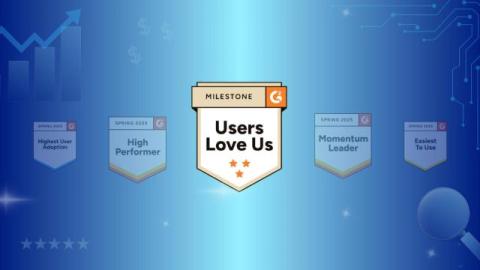
As we approach 2026, we’re taking a moment at Atatus to reflect on a year that pushed us forward in every way. 2025 was about raising the bar by expanding integrations, deepening data insights, broadening language support, and rolling out new capabilities that empower teams to see more and do more. Most importantly, the response from our customers and community made it clear that the work we’re doing is making a real difference.

Top 10 APM Tools [2026 Guide]

In 2026, application performance isn’t just a technical metric—it’s a business-critical factor. As organizations move deeper into cloud-native architectures, distributed systems, and AI-driven workflows, ensuring speed, reliability, and uptime has become non-negotiable. According to Gartner, by 2026 more than 70% of new APM implementations will be cloud-native, and businesses that leverage advanced observability platforms are expected to reduce downtime by up to 60%.

Top Observability Tools for 2026: The Definitive Guide

As we move toward 2026, observability is evolving from an engineering luxury to an operational necessity. Modern applications span microservices, containers, APIs, and data pipelines and when something breaks, users expect instant recovery. That urgency is fueling rapid market growth. According to Market.us, the Global Data Observability Market is projected to reach several billion dollars by 2033, growing at a CAGR exceeding 20% between 2024 and 2033.

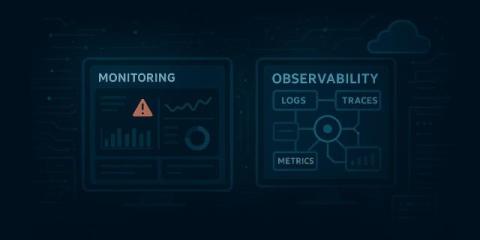
Observability vs. Monitoring: Key Differences Explained (2026 Guide)

People often get confused between Monitoring and Observability, using the terms interchangeably in DevOps. However, they represent two distinct yet complementary concepts that play a crucial role in ensuring application reliability and performance. As modern applications evolve, over 90% of new digital services are built using microservices and cloud-native architectures. Traditional monitoring alone can’t provide full visibility into distributed systems.