
Imaginary Cities: Design Skylines That Could Never Exist with AI
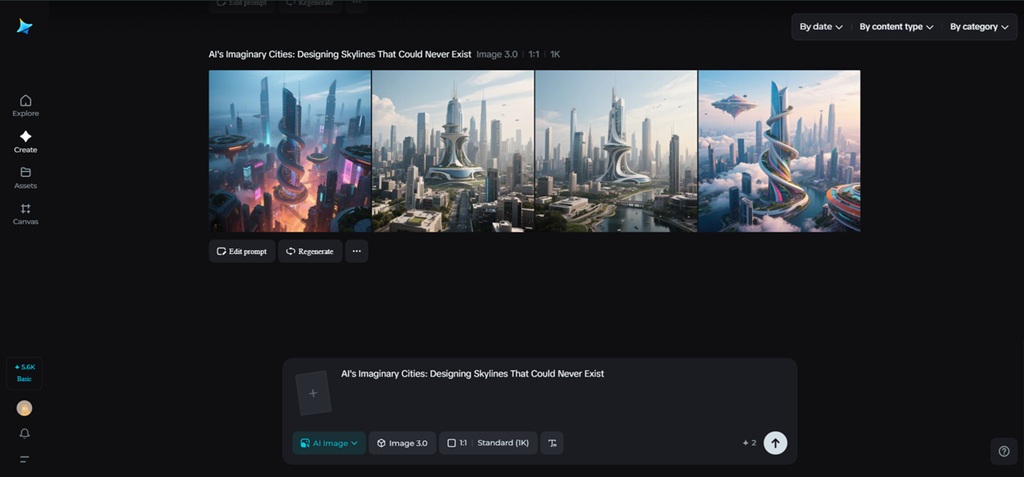
Now imagine a skyline that twists like liquid metal, a series of towers that spiral upward as if growing like vines rather than made of steel, and glowing bridges that wrap around moons rather than rivers. These are the cities that live at the edges of dreams, places that we will never visit, but ones we can picture with insistent clarity.
This is where Dreamina comes in. The magic of an AI photo generator can now create wandering sketches of impossible architecture into sprawling digital metropolises. Type in a simple prompt, then its text-to-image feature transforms your imaginary cities into life. The surreal no longer needs to live in your notebook doodles; they can rise into skylines that feel like they could actually be plotted.
The allure of unbuildable skylines
There is something eerily seductive about a city that you could never walk through. Unlike real places, they have no limitations of safety codes, budgets, or even gravity. They are built for wonder, not function.
-
A tower shaped like a flame, forever flickering in the wind.
-
Floating neighborhoods only tethered by glowing ropes of light.
-
An upside down city where the skyscrapers dangle into the clouds.
These skylines are not "blueprints", but visual metaphors. They remind us that imagination can also be a form of architecture.
Why brands want impossible backdrops
At first glance these wildly surreal skylines may seem like a dream. But think of the worlds they create: making a brand's message feel larger than real life, stranger than real life, impossible than real life. An imaginary skyline in a poster or digital campaign to the viewer conveys: "we don't just live in everyday life; we live in a future that is impossible; next level extraordinary."
-
A new tech startup may want to represent reflective innovation by using a mirrored cityscape.
-
A beverage company may choose to announce a launch party, with a neon desert city, and fountains bursting with drinks for everyone.
-
An art festival may like to promotional posters for sewing a city of glowing yarn threads together.
When brands move away from photographs depicting real places, they give their audience an opportunity to enter a realm where rules don't apply. That is where curiosity—and ultimately loyalty—begins.
When logos and skylines meet
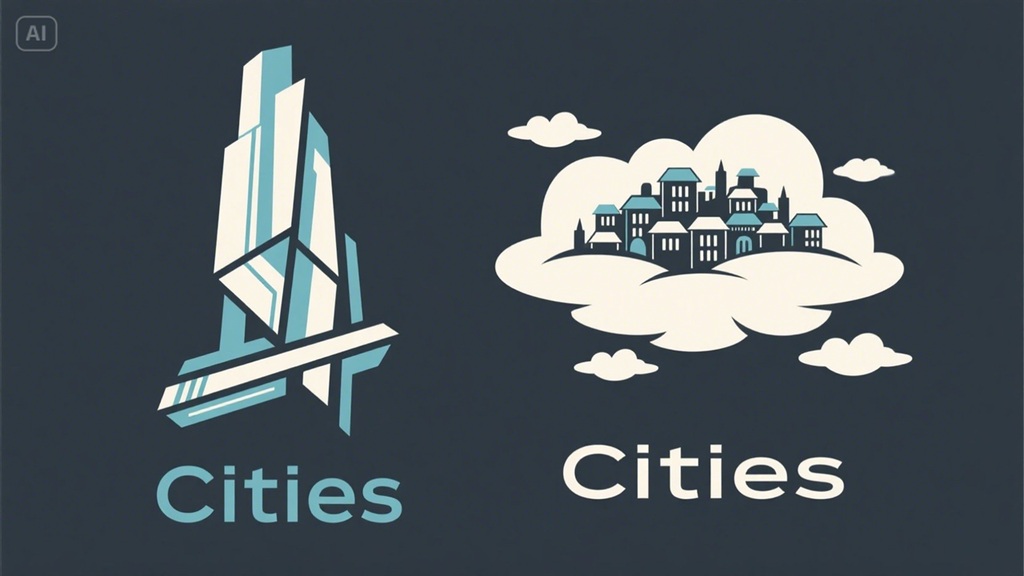
Odd skylines also work well with strong identity design. Imagine the feeling of a logo when it’s grounded on a strange setting. With Dreamina's AI logo generator, you could produce symbols relevant to these cities: with angular designs that reference futuristic towers, or soft curves that seem like floating cloud-villages. Together, logos and skylines can tell stories of not only what a brand is, but what it is a part of.
It’s less about selling something, and more about giving someone an exit.
How to make your own imaginary city with Dreamina
Now comes the fun part. You don’t need to be an architect—or even an artist—to make one of these surreal skylines. Dreamina makes it feel like a fun experiment, where any idea can take shape visually in the blink of an eye. Here’s how to generate your own un-buildable city:
Step 1: Compose a text prompt
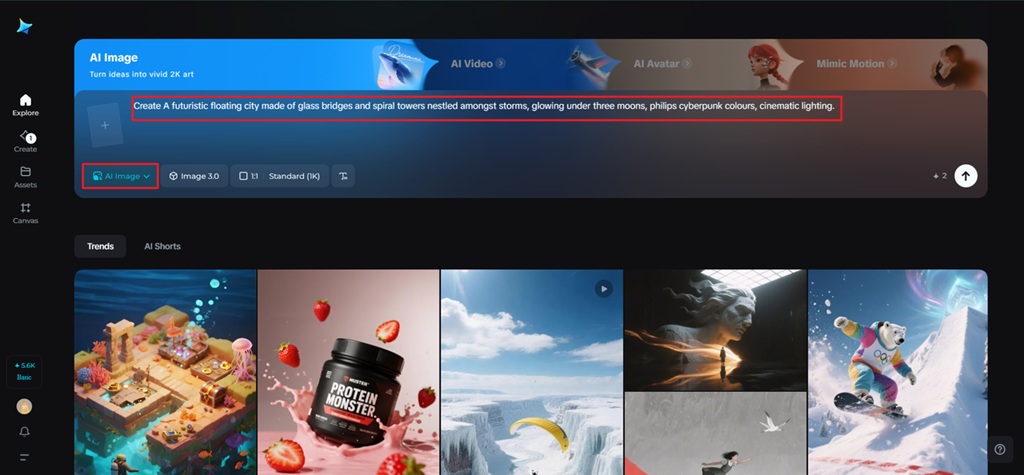
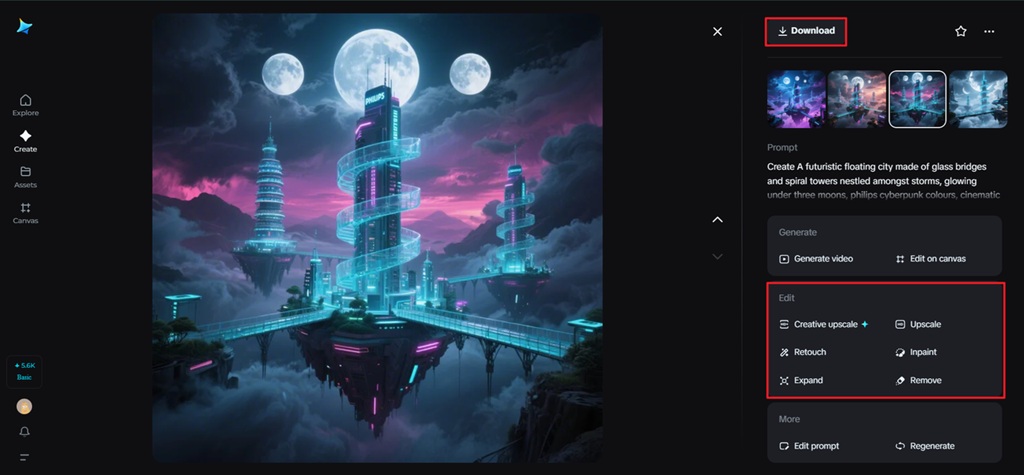
To begin working in Dreamina, you'll need to compose a descriptive text prompt. By composing a prompt, you may be directing the atmosphere in which you want to be developed into your impossible skyline! Simply put, use as many descriptive words as you like about style, mood and detail. For example:
"A futuristic floating city made of glass bridges and spiral towers nestled amongst storms, glowing under three moons, philips cyberpunk colours, cinematic lighting."
It's always great to put in a lot of descriptive text. The more descriptive words you create, the more the impression of stepping into another reality when dreaming up your skyline development you produce.
Step 2: Adjust the parameters and generate
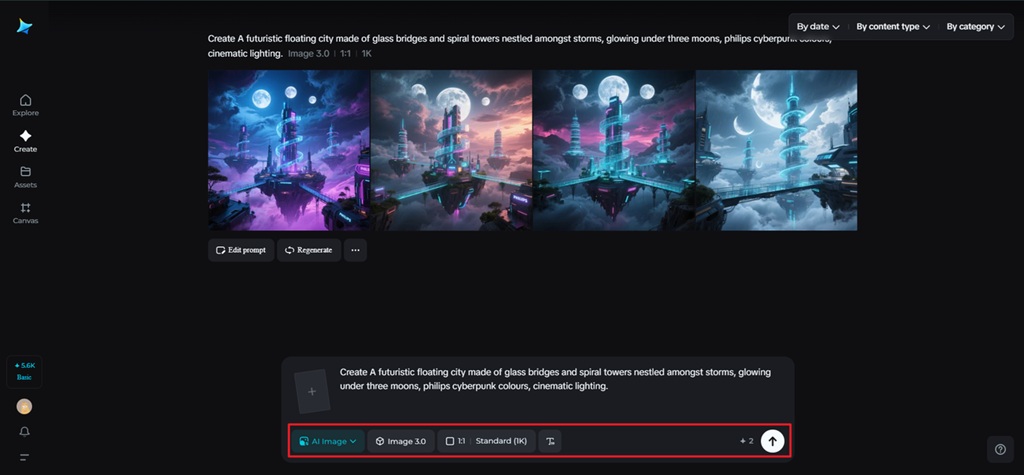
You can now modify the parameters to sculpt your city. You'll want to adjust the model to the artistic style you like, then set the aspect ratio to wide to get a skyline, and pick the resolution size too (pick 1k if you're drafting, 2k if you want some high-definition detail), then hit the Dreamina icon and watch your impossible skyline slowly materialize.
Step 3: Customize and download
You can now customize your generated skyline design. Perhaps one tower seems out of place, or maybe you want to push the horizon out farther? You can pretty much polish your city with Dreamina's Creative upscale, inpaint, expand, remove or retouch options to get the city to match your vision. When you're done clicking, the "Download" icon so that your skyline can be shared, printed, or layered overtop another design project.
Cities as signs
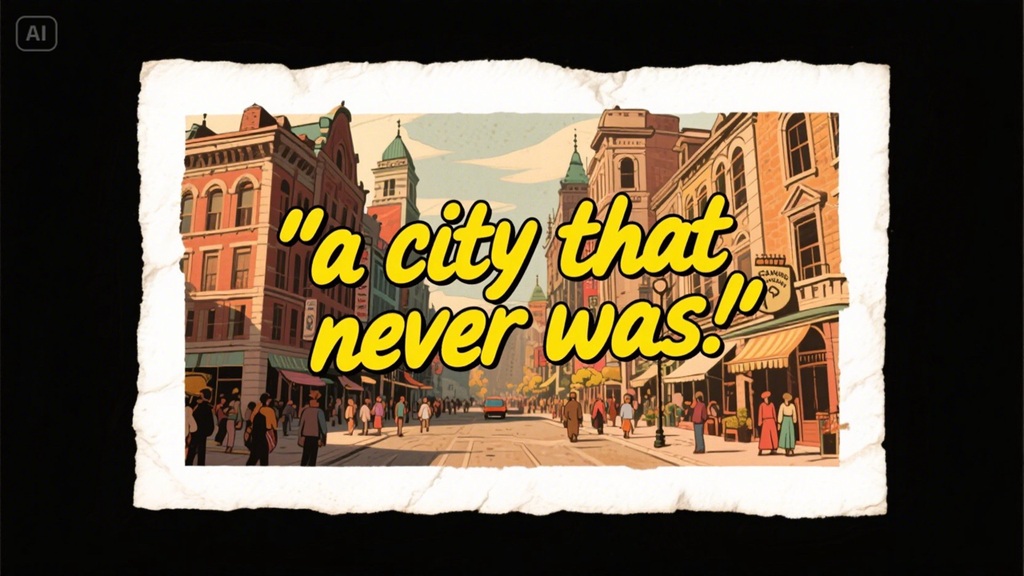
Not all imagined skylines need to be large. Some can be small, quiet even; inconveniently, perhaps. Imagine using them as 'hidden stamps' of identity. A brand could make a micro-city that appears as a continual visual identity—an identifiable site only to the audience that is "paying attention."
This is also where Dreamina's sticker maker can benefit. Imagine peeling a small decal of a 'city that never was' off of a sticker sheet and randomly applying it to laptops, notebooks, or posters. Suddenly, a skyline has meaning. It is no longer a sight, but an emblem that marks belonging. Those who notice it become part of that collective secrecy. They become citizens of an imaginary city.
The poetry of unfinished cities
Not every skyline needs to be finished. Some of the most potent designs are half-designed or unfinished—toxic ruins waiting to be discovered. A jagged skyline quietly fading into static could stir us as much as a hyper-designed megacity. These works suggest possibility—they tell us "here's a world still under construction and waiting for you to imagine what it could be."
In many ways, these half-designed or unfinished skylines are closer to how our dreams take shape: unfinished, fragmented, yet full of potential.
Where imagination meets design
The fantastic thing about these imaginary skylines is that they aren't confined to art galleries or speculative fiction anymore. They can show up anywhere—brands, personal projects, even as an interior poster for your bedroom. They occupy a space in-between world-building and visual branding while simultaneously offering escape and connection.
At the heart of it all, we want worlds larger than our own. Whether you are a designer creating your next big campaign, or just doodling in a notebook, the concept of impossible skylines reminds us to go beyond what we think is possible.
Conclusion: Dreamina as your city-builder
Impossible skylines are no longer just figments of imagination. You can now use Dreamina AI generator for expression, for storytelling, and for identity. You can create glowing skyscrapers that are beyond physics, and also create small sticker-sized cities that fit inside your pocket. You can design worlds that never existed, and yet still feel like they always should have.
Dreamina doesn't just help you see these places, it helps you build them. And perhaps that is a part of the secret—the future of design is not necessarily about what is real, but rather it's about giving form to what we have always dreamed into existence.