
The Remodeling Market Is Changing - And the Marketing Playbook Has to Change With It
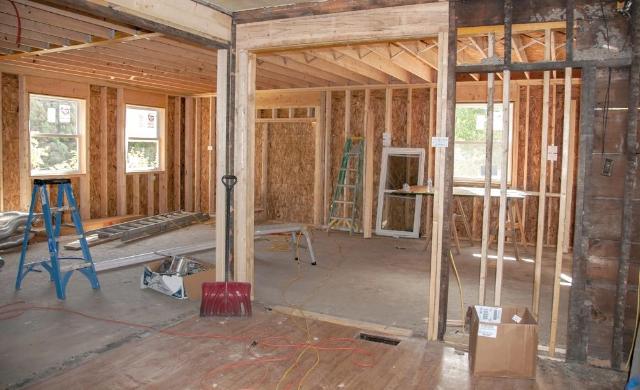
Image Source: depositphotos.com
The home remodeling industry has spent the last few years on a strange ride. The pandemic-era boom, when homeowners were trapped indoors staring at their kitchens, drove demand to levels the industry hadn't seen in a generation. Then interest rates climbed, project budgets tightened, and the easy phone calls stopped coming. Many contractors who scaled up quickly are now learning the hard way that demand never returns on its own — it has to be earned, and the marketing that worked in 2021 isn't the marketing that wins today.
If you operate a remodeling business or advise one, the conversation has moved on from "do we need a website?" to questions that are far more uncomfortable. Where are leads actually coming from now? Why is cost-per-lead climbing? Why are competitors who looked smaller two years ago suddenly outranking us? Useful home remodeling marketing tips aren't about the latest social platform or the newest ad format. They're about building a system that produces predictable leads in a market that's no longer growing automatically.
The buyer has changed — and most marketing hasn't caught up
Remodeling customers in 2026 behave differently from remodeling customers in 2021. The shift is subtle but consequential.
They research longer. The average homeowner now spends weeks — sometimes months — comparing contractors, reading reviews, watching project videos, and pricing materials online before they ever pick up the phone. A kitchen remodel that used to be a three-week decision is now a three-month one.
They trust online proof more than referrals. The traditional remodeling sales model leaned heavily on word-of-mouth. That hasn't disappeared, but it's been supplemented — and in younger buyer segments, replaced — by online reviews, before-and-after galleries, and verifiable portfolios. A neighbor's recommendation gets verified against Google reviews before the call happens.
They expect immediate responses. The remodeling firm that takes 48 hours to return a quote request loses to the one that responds in 48 minutes. Speed of response has become a ranking factor in the customer's head, even if it doesn't show up on a dashboard.
They're more skeptical of marketing in general. Years of being sold to by every imaginable channel has built up a layer of resistance. The companies winning today aren't the ones with the loudest claims — they're the ones whose marketing feels like genuine information rather than persuasion.
What separates the contractors growing from the ones stuck
When you look at remodeling companies that have continued to grow through the slowdown, a pattern emerges. It's rarely about budget. It's about clarity of execution across a handful of areas.
A website that does real work. Not a portfolio. Not an online brochure. A site engineered to turn curiosity into a booked consultation. Fast load times, mobile-first design, clear calls-to-action, project galleries organized by problem rather than by style, and quote forms short enough that someone will actually fill them out at midnight from a phone.
Content that answers buyer questions before competitors do. A homeowner planning a bathroom remodel has dozens of questions: how long it takes, what it costs, what permits are needed, how to live through the project, how to choose between options. The contractor whose blog or videos answer those questions first becomes the trusted voice — and the eventual call.
A local presence that actually shows up. Local SEO has become non-negotiable. That means a consistent Google Business Profile, accurate NAP data across every directory, real reviews collected on a steady cadence, and location pages on the website that are genuinely useful rather than copy-pasted with city names swapped out.
Measurement that ties effort to revenue. The companies stuck are usually the ones who can't answer "where did your last ten jobs come from?" with confidence. The ones growing have call tracking, form attribution, and a clear view of which channels produce which kind of work.
The agency landscape, and why it's confusing
For a small remodeling business, the marketing agency market is genuinely hard to navigate. There are generalist agencies, full-service shops, freelancers, lead-buying platforms that call themselves agencies, and specialists who focus only on the trades. They look similar from the outside. They produce dramatically different results.
The remodeling-specific niche has matured a lot in the last few years. Reviews and rankings of the best remodeling SEO companies have become a real category, partly because contractors got burned often enough by generalist agencies that didn't understand the vertical. A marketing partner who has worked with thirty remodeling firms intuitively knows things about seasonal demand cycles, project pricing pages, geographic targeting, and material trends that a generalist will spend a year learning at the contractor's expense.
That said, hiring a specialist isn't automatically the right move. Some operators get more value from an in-house marketer with good outside guidance. Others need a full external team. The decision usually comes down to scale and current marketing maturity. A two-truck operator looking for a first website doesn't need the same partner as a 50-employee design-build firm running multiple offices.
What matters is asking the right questions before hiring anyone: How do they measure success? Can they show real before-and-after results from clients of similar size? Do they understand the unit economics of the remodeling business — that one signed kitchen project is worth dramatically more than ten low-value leads? Will they own outcomes or just deliverables?
Three uncomfortable truths
A few realities worth saying out loud, because they don't always make it into the polished marketing advice.
The era of cheap leads is over. Cost-per-lead has roughly doubled across most paid channels in the last three years. The companies still operating on 2021 budgets are getting half the volume — or paying twice as much for the same.
SEO is slower and harder than it used to be, but more durable when it works. Ranking for "kitchen remodeling [city]" today requires depth, authority, and consistency that a six-month engagement won't produce. The contractors who started two years ago are reaping compounding traffic. The ones starting today need to budget for an 18-month horizon.
Branding is no longer optional for serious operators. When buyers spend months researching before deciding, the contractor whose name they keep encountering — in articles, reviews, social content, neighborhood word-of-mouth — wins the eventual job. That's branding. It used to be a luxury. It's now a competitive necessity.
What to focus on this year
If a remodeling operator asked for the shortest possible marketing plan for the next twelve months, the honest answer would be this:
- Fix the website's conversion path before spending another dollar on ads.
- Build a real local SEO foundation: Google Business Profile, citations, reviews, location-specific content.
- Publish content that genuinely helps homeowners make decisions. Not for SEO points — for trust.
- Implement call tracking and proper attribution so every decision is grounded in data.
- Decide on a long-term marketing partner or hire — and commit to the time horizon their work actually needs.
None of that is revolutionary. The companies executing it well are quietly taking market share from those still hoping referrals will fill the calendar.
The market rewards discipline now
The remodeling market is still large. Homeowners still need kitchens redone, additions built, bathrooms updated. What's changed is that demand no longer arrives unprompted. It has to be sought, captured, and converted through a marketing system built for a more skeptical, slower, more research-driven buyer.
The operators who internalize that — and rebuild their marketing accordingly — will be the ones still growing when the cycle eventually turns up again. The ones waiting for the phone to ring on its own may not be around to see it.