Icinga for Windows Preview: Visualize your Metrics!
It has been a while since we published some news regarding Icinga for Windows – that’s why we would like to tell you one month ahead about a big change which follows with version 1.10 in August.


It has been a while since we published some news regarding Icinga for Windows – that’s why we would like to tell you one month ahead about a big change which follows with version 1.10 in August.
I’m excited to announce that ServiceNow® Strategic Portfolio Management (SPM) is the winner of the Ventana Research 15th Annual Digital Innovation Awards in the category of Digital Business. The award for Digital Business recognizes a trailblazing vendor that delivers innovation in applications and technologies for work management, as well as numerous other business areas. But it goes beyond that.
Having a strong password is necessary to protect our information from being accessible by others. A strong password should be difficult to be identified, guess or decrypt by the attackers. Mostly, while entering passwords, we will be prompted to enter the upper case and lowercase letters along with numbers and special characters. But thinking of a new password every time is very difficult and most people end up repeating the same password for every website and application they use.
Microsoft’s OneDrive has proven itself a reliable platform to store and share files, and considering its ubiquity among Windows users, it’s often a small business owner’s first foray into leveraging the cloud for their operational needs. That familiarity leads many end users to wonder if OneDrive can be more than a file storage and sharing app -- could OneDrive also help me backup and protect my files?
Software development teams face a large and growing number of obstacles: shifting design requirements, organizational blockers, tight deadlines, complicated tech stacks and software supply chains. One emerging challenge that developers and IT leaders face is the need to stay compliant with regulations and control frameworks that stipulate comprehensive data security, incident response, and monitoring and reporting requirements.
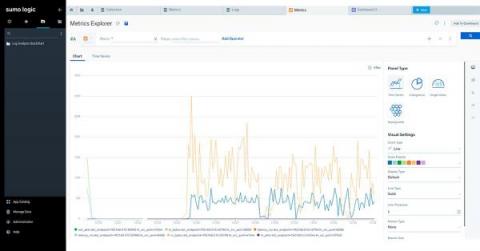
Recently we caught up with the Sumo Logic team to discuss network visibility and optimizing application stack views. We took a look at their API and found that it would be easiest to use the HTTP Ingest method to send in our metric data.
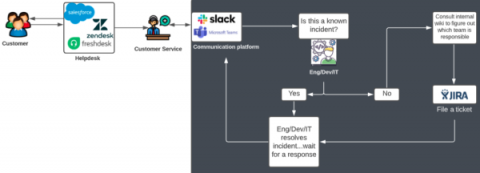
“Customer service software has evolved so much these past ten years, but they all seem to be solving the same problems!” This was a statement made by a Customer Service leader in a recent brainstorming conversation around decreasing overall Response Times and Resolution Times.
Written by Nick Cavalancia, Technical Evangelist, Microsoft MVP, & CEO of Conversational Geek In a world of Managed IT Service Providers that all offer some form of services around Microsoft 365, there’s a compelling case to be made for your business to be centering in on Microsoft Teams.