Operations | Monitoring | ITSM | DevOps | Cloud

From PR to Production Without Leaving Your Cursor IDE | Harness Blog

TLDR: Today, Harness is introducing the Harness Cursor Plugin, bringing the power of the Harness AI-native software delivery platform directly into Cursor. This integration, along with the Harness Secure AI Coding hook for Cursor, allows developers and AI agents to move from code changes to vulnerability detection, CI/CD execution, security validation, approvals, deployments, and operational insight without leaving the editor. AI has completely changed how we write code.

AI writes the code. Who delivers it safely? | Harness Blog

The question for enterprise AI in 2026 is no longer just which model. It’s which harness. An agent harness is the system around the model. It decides what the agent remembers, what context it sees, what tools it can call, what it is allowed to do, and what happens when it is wrong. The model provides intelligence. The harness provides control. This is where the real engineering is happening.

Building for Resilience: An Engineering Guide to the Mythos Era | Harness Blog

The release of Anthropic Mythos and Project Glasswing marks an exciting and pivotal new chapter in software development. As the industry advances, the speed and economics of vulnerability exploitation have fundamentally shifted. What once took weeks of manual reconnaissance can now be scaled rapidly through automated models. However, this is not just a security problem to solve. It is a massive engineering opportunity to build cleaner, more robust systems.

Infrastructure as Code Management: Terragrunt & Multi-IaC | Harness Blog

What happens when your Infrastructure as Code management strategy works perfectly in dev, scales reasonably well in staging, and then quietly fractures across seventeen production workspaces because nobody documented which Terragrunt wrapper goes with which AWS account? You spend Friday afternoon reverse-engineering DRY patterns that made sense six months ago, wondering why your team is managing three different IaC execution engines with four incompatible workflow philosophies.

Harness Cursor Plugin Demo: AI for Software Delivery from Your IDE

Stop context-switching between your IDE and your CI/CD dashboards. In this video, we demonstrate the new Harness Cursor Plugin, a native integration that brings the full power of the Harness AI Software Delivery Platform directly into Cursor. Using the Cursor Agent window and the new Harness Model Context Protocol (MCP) server, you can now manage your entire software delivery lifecycle through natural language. From triggering pipelines to governing deployments, this plugin ensures you stay in your flow while maintaining enterprise-grade security and control.

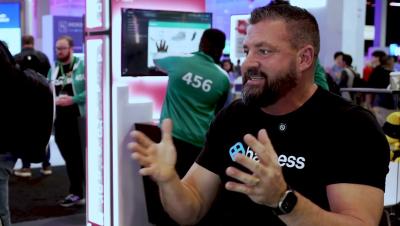
ShipTalk Season 4 Finale: Engineering Excellence at AWS re:Invent

Welcome to the Season 4 finale of the Ship Talk podcast! Join special host Thomas Dockstader and several industry leaders at AWS re:Invent to discuss the intersection of AI and software delivery. The following is a series of interviews with partners, customers, and engineering leaders on the front lines of AI transformation. Don't miss the "Ship It or Skip It" segment, where our guests give their rapid-fire takes on everything from AI code reviews to the four-day work week.

Why GitOps for MongoDB Matters: A Case for Harness DB DevOps | Harness Blog

Most development teams today build everything around Git, and deploy with GitOps principles. Code sits in version controlled environments, changes go through PRs, and deployments are handled through modern CI/CD. That part is pretty standard at this point, especially when using a modern DevOps platform like Harness.

Now in Harness DB DevOps: Percona Toolkit for safer MySQL schema changes | Harness Blog

If you've ever run an ALTER TABLE on a busy MySQL table in production, you know the feeling. The change is small. The risk isn't. Long-running table locks, queued writes, application timeouts, replication lag, a five-minute migration that turns into a half-hour incident review. We're shipping an integration that takes that anxiety out of the loop. Harness Database DevOps now supports Percona Toolkit for MySQL as part of Liquibase-based schema management.

Disaster Recovery Testing in Harness | Resilience Testing

In this video, we introduce Harness Resilience Testing and show you how to move beyond once-a-year DR drills to a continuously validated, pipeline-driven process. You'll see how Harness lets you validate regional failovers, check database replication lag under pressure, and confirm your hot standbys genuinely take over live traffic, all in one place. We also walk through a live DR test execution, showing exactly how Harness triggers the full failover sequence, runs every validation step automatically, and gives you a clear pass or fail result in real time.

Eliminate Manual Authentication Configuration for Fast & Effective API Security Scanning | Harness Blog

Application security testing tools promise coverage and accuracy, but teams often struggle just to get started. One of the biggest friction points in dynamic application security testing is configuring authentication correctly so a scanner can even access a target application, let alone API endpoints that power the functionality. Whether it’s API keys, bearer tokens, or custom auth flows, setting up authentication for scans frequently requires trial-and-error and engineering support.

An Introduction to Disaster Recovery Testing: What You Need to Know in 2026 | Harness Blog

Businesses today run on computers, cloud systems, and digital tools. One big failure can stop everything. A cyber attack, a power outage, or a software glitch can shut down operations for hours or days. Disaster recovery testing is how you prove you can restore critical services when the unexpected happens. 
 In 2026, with hybrid and multi-cloud estates, distributed data, and tighter oversight, this is not a once-a-year fire drill.

How to Install Terraform for Secure and Scalable Infrastructure Automation | Harness Blog

If your Terraform install is insecure or inconsistent, it can quickly slow down your delivery. A single compromised file or a misconfigured backend can stop deployments for many services. Teams that set up Terraform correctly from the start can scale easily and avoid compliance issues.

Beyond the Big Bang: De-risking Cloud Migrations with Progressive Delivery | Harness Blog

At 2 am, your migration goes live. By 2:07, error rates spike, and rollback isn’t an option. Cloud migrations, API rewrites, and architecture transformations rarely fail because of bad code. They fail because of how that code is released. Most teams still rely on a “big bang” cutover where infrastructure, services, and user-facing changes go live at once. This concentrates risk into a single moment.

What is Terragrunt and how does it simplify Terraform Workflows? | Harness Blog

Managing Terraform across dozens of AWS accounts becomes a maintenance nightmare fast. Teams end up copy-pasting the same backend configurations, provider blocks, and variable definitions hundreds of times. Terragrunt acts as an orchestrator above Terraform, eliminating this duplication through shared configuration inheritance and dependency management. When financial services teams manage 200+ microservices across multiple environments, these DRY patterns become essential for governance and consistency.

Chaos Engineering vs. Traditional Testing: What's the Difference? | Resilience Testing | Harness

Stop treating system outages like surprises and start preparing for them. While traditional software testing is the bedrock of development, using unit, integration, and regression tests to verify that code meets specific requirements, it only accounts for what we expect to happen. Chaos Engineering takes a different approach by shifting the focus from bug prevention to system resilience. Instead of asking "does this work?", Chaos Engineering asks "how does this survive?" by injecting real-world turbulence like network latency or pod failures directly into production-like environments.

What Does Load Testing Measure? (Top 5 Performance Metrics) | Resilience Testing | Harness

Before you deploy, you need to know if your application can handle real-world traffic. In this video, we break down the 5 essential load testing metrics: Response Time (latency), Throughput (requests per second), Error Rates (system stability), Resource Utilization (CPU/Memory bottlenecks), and User Concurrency. Whether you're into Software Engineering, DevOps, or SRE, understanding these System Design fundamentals is the only way to prevent server crashes and ensure Software Scalability.

RTO and RPO in Disaster Recovery Explained | Resilience Testing | Harness

Struggling with disaster recovery planning? Learn the simple difference between RTO and RPO, the two most important metrics every developer, DevOps engineer, and SRE must understand. RTO (Recovery Time Objective) tells you exactly how long your systems can stay down before it hurts your business. RPO (Recovery Point Objective) shows how much recent data you can afford to lose in an outage.

From Deployment to Confidence: Why Continuous Verification Is the Missing Piece in Modern CD Pipelines | Harness Blog

Modern engineering teams have become exceptionally good at shipping software quickly. With modern CI/CD platforms, what once required careful coordination, late-night release windows, and layers of approvals now happens almost invisibly. Pipelines execute in minutes. Releases flow continuously. The friction that once slowed everything down has been engineered away. From the outside, it looks like progress in its purest form. Automation removed bottlenecks. Cloud infrastructure removed limits.

Building for the Agentic Era: Engineering Excellence at Harness | Harness Blog

As AI agents become ubiquitous across the software development lifecycle, engineering teams must do more than adopt new tools; they must redesign how they build, verify, and operate software. This post distills the vision, priorities, and best practices that guide engineering excellence at Harness. Different products sit at the heart of the Harness platform.

The Complete Guide to Feature Testing for Modern DevOps Teams | Harness Blog

Today’s teams are challenged to ship fast without breaking things. Traditional deployment strategies tie every code change directly to user exposure, forcing teams to trade velocity for safety and live with stressful, all-or-nothing releases. Feature testing changes that. In modern DevOps, you don't have to cross your fingers during a big-bang rollout.

7 Types of Load Testing Explained: Load, Stress, Spike, Soak & More | Harness

Discover the 7 most important types of load testing that every developer, DevOps engineer, and QA team should know in 2026. Whether you're building scalable applications, preparing for traffic surges, or ensuring system reliability, understanding these load testing types is essential for modern software performance testing. In this quick video from Harness, we break down.

A/B Testing Tools: The CTO's Guide to Safe and Measurable Change | Harness Blog

Picture this: It's 2 a.m. Your phone is buzzing. A new feature just went out to your entire user base, and conversion rates are tanking. Your on-call engineer is digging through logs, your Slack channels are on fire, and you’re left wondering, Why didn't we just test this first? Every CTO has a version of this story. And most of them have quietly vowed never to repeat it.

Women in Tech: Journeys, Grit, and the Future We're Building | Harness Blog

Technology evolves rapidly — but progress in tech isn’t driven by tools alone. It’s driven by people. By curiosity. By courage. By individuals who choose to step into complex systems and shape how they function. As an engineering leader driving application and API security, I have always believed that our industry is at its best when complex concepts are made accessible and practical for everyone.

Cloud Cost Visibility at Scale: Why It Fails & How to Fix It | Harness Blog

Why does your cloud cost visibility break down the moment someone spins up a Kubernetes cluster in a new region without telling anyone? You get the alert three weeks later when the bill arrives — and by then, nobody remembers which experiment justified the spend, or which team should own it. This scenario repeats constantly across platform teams managing multi-cloud environments at scale. Cloud cost visibility works fine when you have five services and one AWS account.

From Rollouts to Results: Unlocking the Value of Feature Management and Experimentation

Recorded at @DevOpsLive In today’s fast-paced software landscape, releasing new features is no longer just about speed - it’s about control, confidence, and measurable impact. Combining Feature Flag Management and Experimentation enables teams to deliver innovation safely, experiment in real time, and understand what truly resonates with users. Whether you’re scaling a platform, launching a new product, or simply looking to innovate faster, FME offers a proven way to ship with confidence and learn continuously from your users.

AI for Everything After Code: Ship Fast, Stay Safe

Recorded at @DevOpsLive Most teams have “done DevOps” and “built a platform,” but still wrestle with the same core problems: platforms that developers dodge, AI that accelerates coding while quietly degrading delivery performance, security and compliance that can’t keep up, cloud bills that keep climbing, and incident response that hasn’t caught up with cloud‑native complexity.

Why Release Management Is Broken and How to Fix It

Are you tired of slow, expensive, and ineffective Change Advisory Board (CAB) meetings? In this video, Eric Minick from Harness explores the evolution of release management and how to transition from traditional manual approvals to a streamlined, automated DevOps approach. What You'll Learn: Whether you are a release manager or a DevOps engineer, learn how to build a reliable audit trail while accelerating your software delivery.

AI vs. Hype: Redefining Engineering Excellence with Ron Miller

In this episode of "ShipTalk: Engineering Excellence," host Thomas Dockstader sits down with Ron Miller, editor at Fast Forward, to discuss the real-world impact of AI on software development. They dive deep into the maturity of AI-driven code, the rise of the "citizen developer," and why traditional writing and communication skills are becoming the new must-have for modern engineers.

Site Reliability Engineering (SRE) 101: Everything You Need to Know | Harness Blog

A single second of latency can cost e-commerce sites millions in revenue, while just minutes of downtime trigger customer churn that takes months to recover. Modern users expect instant responses and seamless experiences, making reliability a competitive feature that directly impacts business outcomes. Site Reliability Engineering treats operations as a software problem rather than a manual discipline. SRE applies engineering principles to achieve measurable reliability through automation.

Your AI Agents Are Only As Good As Your Data | Harness Blog

Every agent demo follows the same arc. The agent calls an API. A deployment triggers. A ticket gets created. The audience is impressed. Then someone asks a real question: "Which regions had the highest order failure rate this quarter, and are any of them linked to vendor SLA breaches?" That question crosses four entity types — orders, fulfillment records, vendors, SLA contracts.

Building Governance, Auditability, and Visibility into Database DevOps | Harness Blog

Database changes are inherently complex: coordinating schema updates, managing risk, and avoiding downtime all require care. Even when teams improve how they deliver those changes, governance often remains inconsistent, manual, and reactive. In many environments, governance is treated as a separate layer around deployment. Policies are applied unevenly, approvals become bottlenecks, and audit evidence is assembled after the fact, creating gaps in enforcement and increasing operational risk.

Unlocking Security Potential for AI: Introducing the Harness WAAP MCP Server | Harness Blog

Security teams face overwhelming amounts of data and complex interfaces, making it hard to access critical insights. AI tools promise solutions, but integration remains difficult as time ticks away and leadership wants the latest data to inform risk decisions. Most security platforms lack seamless integration, slowing access to important data and hindering AI-powered workflows.

Why DR Testing Can No Longer Be an Afterthought | Harness Blog

Regular DR testing is no longer a compliance checkbox — it is a critical engineering discipline that determines whether an organisation can survive a real cloud outage with its services and revenue intact. As the AWS Middle East incident demonstrated, regional cloud failures can strike without warning and defeat standard redundancy models, making untested DR plans dangerously unreliable.

Testing AI with AI: Why Deterministic Frameworks Fail at Chatbot Validation and What Actually Works | Harness Blog

Chatbots are becoming ubiquitous. Customer support, internal knowledge bases, developer tools, healthcare portals - if it has a user interface, someone is shipping a conversational AI layer on top of it. And the pace is only accelerating. But here's the problem nobody wants to talk about: we still don’t have a reliable way to test these chatbots at scale. Not because testing is new to us. We've been testing software for decades.

Why Connected Platforms Will Power the Next Generation of AI in Engineering | Harness Blog

AI is quickly becoming part of the engineering workflow. Teams are experimenting with assistants and agents that can answer questions, investigate incidents, suggest changes, and automate parts of software delivery. But there is a problem hiding underneath all of that momentum. Most engineering environments were not built to give AI the context it needs. In many organizations, the service catalog lives in one place. Deployment data lives in another. Incident history sits in a separate system.

Load Testing Vs Stress Testing | Resilience Testing | Harness

Load testing and stress testing are two important parts of performance testing, but they serve very different purposes. Load testing checks how your application behaves when many users access it at the same time under normal or expected conditions. It helps you understand if your system can handle real-world traffic smoothly without slowing down.

What is Chaos Engineering? Explained in 60 seconds | Resilience Testing | Harness

Discover how leading engineering teams proactively build rock-solid applications using Chaos Engineering. Learn why waiting for real outages is risky and how intentionally injecting controlled failures like pod crashes, network latency, and node restarts helps uncover hidden weaknesses before they impact your users. In this short, explore the simple yet powerful practice that turns fragile systems into resilient ones and how Harness makes running chaos experiments effortless and safe with its intuitive Resilience Testing module.

How to Implement Self-Service Infrastructure Without Losing Control | Harness Blog

Self-service infrastructure replaces ticket queues with controlled, automated workflows so developers can get what they need safely and on demand. Policy-as-code, standardized templates, and an Internal Developer Portal (IDP) provide guardrails that maintain security, compliance, and cost control. You can demonstrate ROI in 90 days by starting with a single golden path and measuring adoption, speed, and policy outcomes. If platform teams are buried in tickets, they are not operating a control plane.

How to Build a Developer Self-Service Platform That Actually Works | Harness Blog

Your developers are buried under tickets for environments, pipelines, and infra tweaks, while a small platform team tries to keep up. That is not developer self-service. That is managed frustration. If 200 developers depend on five platform engineers for every change, you do not have a platform; you have a bottleneck. Velocity drops, burnout rises, and shadow tooling appears. Developer self-service fixes this, but only when it is treated as a product, not a portal skin.

Enable self-service environments with Harness Internal Developer Portal

Learn how to enable self-service environments with an internal developer portal (IDP) and CI/CD automation. You’ve automated deployments with Harness CD, but what about the environments those deployments run on? In this quick demo, see how Harness Environment Management completes the picture by making environments self-service, standardized, and fully lifecycle-managed. Together, CD + Environment Management close the loop on modern software delivery.

Deterministic by Design: How Harness Grounds AI Agents in Structured Data | Harness Blog

When AI agents operate across a multi-module platform like Harness (from CI/CD to DevSecOps to FinOps), the number one goal is to give you answers that are correct, consistent, and grounded in real data. Getting there requires a deliberate architectural choice: when a question can be answered from structured platform data, the agent should use a schema-driven Knowledge Graph rather than raw API calls via MCP. The principle is simple: if the data is modeled, retrieval should be deterministic.

Phil Christianson on Balancing Innovation and Reliability in Modern Product Teams | Harness Blog

At SREday NYC 2026, the ShipTalk podcast spoke with Phil Christianson, Chief Product Officer at Xurrent, for a leadership perspective on the intersection of product strategy, engineering investment, and platform reliability. While many of the conversations at the conference focused on tools, automation, and incident response, Phil offered a view from the C-suite level, where decisions about engineering priorities and R&D investment ultimately shape how reliability practices evolve.

AI Demos Are Easy. Enterprise AI Is Not. | Harness Blog

‍Why 90% of AI prototypes never make it to production, and what to do about it. Every week, someone on my team shows me a demo that looks incredible. An agent that writes deployment pipelines. A chatbot that triages incidents. A copilot that generates test cases from Jira tickets. The demo takes 20 minutes. The audience claps. Everyone leaves convinced we're six weeks from shipping it. We're not.

Ansible vs Terraform Explained: Key Differences for Modern Infrastructure Automation | Harness Blog

If DevOps teams mix up the roles of Ansible and Terraform, deployment pipelines can become unreliable. Manual handoffs slow down changes, and audits may find gaps where responsibilities overlap. Each tool solves different problems, so using them correctly avoids delays and compliance risks. Are you dealing with scattered provisioning and configuration workflows?

AI for GitOps: Tame your Argo Sprawl | Harness Blog

Innovation is moving faster than ever, but software delivery has become the ultimate chokepoint. While AI coding assistants have flooded our repositories with an unprecedented volume of code, the teams responsible for actually delivering that code, our Platform and DevOps engineers, are often left drowning in manual toil. If you’re managing Argo CD at an enterprise scale, you’re painfully familiar with the "Day 2" reality.

Authentication vs Authorization: What's the Difference and Why It Matters | Harness Blog

‍ Let's get something out of the way: authentication and authorization are not the same thing. We know, we know. People swap the two terms constantly. And honestly, it's easy to see why. They both start with "auth," they both deal with security, and they often show up in the same conversations on access control. But if you build or secure software, blurring the line between authentication and authorization is how you end up with a system where everyone is logged in and everyone is an admin.

Performance Testing vs Load Testing: Simple Difference

Learn the clear difference between performance testing and load testing in this quick video. Performance testing checks how well your software works under different conditions like speed, stability, and scalability. Load testing focuses only on how the system handles expected user traffic. If you want to build reliable applications, knowing these two helps you test smarter. Perfect for developers, testers, and QA teams.

Introducing Zero Trust Architecture for Software Delivery | Harness Blog

For the world’s largest financial institutions, places like Citi and National Australia Bank, shipping code fast is just part of the job. But at that scale, speed is nothing without a rock-solid security foundation. It’s the non-negotiable starting point for every release. Most Harness users believe they are fully covered by our fine-grained Role-Based Access Control (RBAC) and Open Policy Agent (OPA).

The pipeline that never reached production | Harness Blog

Modern CI/CD platforms allow engineering teams to ship software faster than ever before. Pipelines complete in minutes. Deployments that once required carefully coordinated release windows now happen dozens of times per day. Platform engineering teams have succeeded in giving developers unprecedented autonomy, enabling them to build, test, and deploy their services with remarkable speed. Yet in highly regulated environments-especially in the financial services sector-speed alone cannot be the objective.

Cost Awareness in CI/CD Pipelines: A FinOps Guide | Harness Blog

This guide walks through practical ways to embed cost awareness directly into CI/CD workflows so development teams can make cost-informed decisions before deployment. You’ll learn how to implement automated cost feedback loops, introduce pipeline budget guardrails, and use Harness Cloud Cost Management to align DevOps velocity with FinOps accountability.

Defeating Context Rot: Mastering the Flow of AI Sessions | Harness Blog

In Part 1, we argued that most dev teams start in the wrong place. They obsess over prompts, when the real problem is structural: agents are dropped into repositories that were never designed for them. The solution was to make the repository itself agent-native through a standardized instruction layer like AGENTS.md. But even after you fix the environment, something still breaks. The agent starts strong.