Operations | Monitoring | ITSM | DevOps | Cloud

How to Speed Up Incident Response With Guided Remediation

Most teams picture incident response as a linear sprint from alert to resolution. A notification appears, an analyst pivots across screens, a decision gets made, and the workflow moves on. It works, but it is mechanical, tiring, and fragile. Graylog 7.0 aims for something more impactful. Guided remediation gives analysts clarity during the moments when pressure rises and context usually scatters. It takes raw detection data and turns it into a clear path forward. No theatrics.

What Is a Data Pipeline

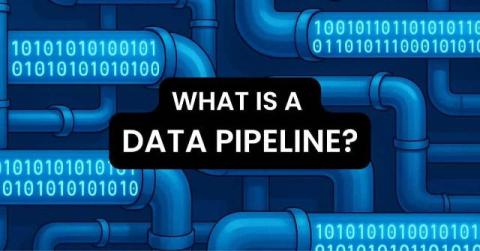
In today’s tech world, IT and security technologies are the functional equivalent of Pokemon. To gain the insights you need, you “gotta catch ‘em all” by ingesting, correlating, and analyzing as much security data as possible. Data pipelines organize chaotic information flows into structured streams, ensuring that data is reliable, processed, and ready for use.

Graylog MCP Integration: Real-Time LLM Access to Your Data

Graylog V7.0 supports integration with the Model Context Protocol (MCP), which allows large language models (LLMs) to access and interact with Graylog data and workflows in real time. Graylog exposes an MCP-compatible endpoint for LLM clients, such as Claude and LM Studio. MCP integration allows Graylog users to interact with their data through LLMs. With MCP, an LLM can connect directly to Graylog as a remote tool interface, performing queries, retrieving system information, and assisting with common administrative or investigative tasks. This capability may make it possible to.

Gobbling Up Insights: Graylog 7.0 Serves Up a Feast

A feast of new features. A cornucopia of new capabilities. A banquet of breakthroughs (and the T-day puns are just getting started). Graylog 7.0 brings a full plate of advancements that help security teams cut through noise, control cloud costs, and respond with confidence. We’re serving practical improvements across dashboards, automation, and AI support so analysts can focus on action instead of manual effort.