Operations | Monitoring | ITSM | DevOps | Cloud

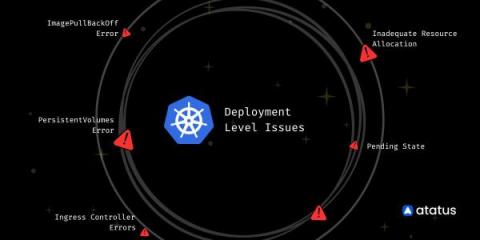
Troubleshooting Kubernetes Deployment at Every Level!

Kubernetes has emerged as the de facto standard for container orchestration, with its ability to automate deployment, scaling, and management of containerized applications. However, even with the best practices and expertise, Kubernetes deployment can sometimes be a complex and challenging process. It involves multiple layers of infrastructure, including the application, Kubernetes cluster, nodes, network, and storage, and each layer can have its own set of issues and challenges.
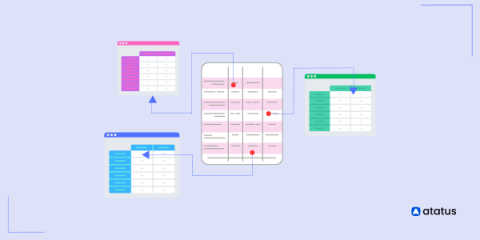
Relational Databases: Exploring Indexes and Transactions

Indexes serve as the key to unlocking the immense potential of relational databases, enabling swift and optimized data access. They act as a roadmap, allowing the database engine to locate specific data quickly, ultimately enhancing query performance. Understanding the nuances of indexes and employing the appropriate indexing techniques can significantly impact the efficiency of a database system.

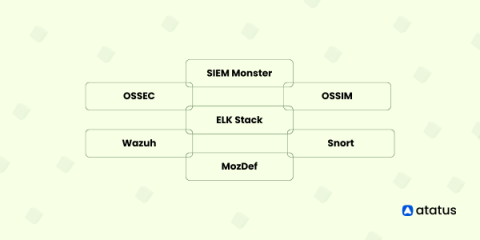
14 Critical Log Files You Need to Monitor for System Security

In the realm of Linux system administration, monitoring log files is essential for maintaining a healthy and secure environment. Linux distributions generate a multitude of log files that capture crucial information about system events, errors, and user activities. These log files act as a silent witness, providing valuable insights into the inner workings of a Linux system.

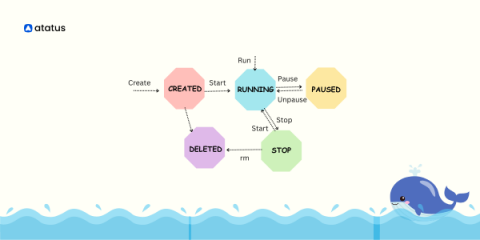
Docker Container Lifecycle Management

Managing an application's dependencies and tech stack across numerous cloud and development environments is a regular difficulty for DevOps teams. Regardless of the underlying platform it uses, it must maintain the application's stability and functionality as part of its regular duties. However, one possible solution to this problem is to create an OS image that already contains the required libraries and configurations needed to run the application.

Best Practices for Organizing and Maintaining Elasticsearch Indices

In Elasticsearch, an index is a logical container or namespace that holds a collection of documents that are related in some way. It is the primary unit for organizing and storing data. Indices in Elasticsearch serve as containers for organizing and managing data, enabling efficient search and retrieval operations. Understanding the concept of indices is crucial for effective data organization and utilization in Elasticsearch-based applications.

MTTR vs. MTBF vs. MTTF: Understanding Failure Metrics

In the dynamic landscape of software and web applications, failures can have severe consequences, impacting user experience, business continuity, and overall performance. To proactively address these challenges, organizations rely on robust monitoring practices supported by failure metrics. Failure metrics, specifically tailored to software and web application monitoring, provide crucial insights into system health, reliability, and optimization opportunities.

Load Balancing 101: Understanding the Basics for Improved Web Performance

In today's digital landscape, where websites and applications are expected to handle increasing traffic loads, ensuring optimal performance and reliability is of paramount importance. Load balancing, a technique used to distribute incoming network traffic across multiple servers, plays a critical role in achieving these goals. Load balancers which are the key components in this process, help optimize resource utilization, enhance the scalability functions, and improve overall system efficiency.

CNAPP: A Comprehensive Solution for Cloud-Native Application Security

A unique approach to security is needed when developing cloud-native apps that use microservices, containers, and serverless computing. The specific security issues that these cloud-native architectures provide are the focus of CNAPPs. Traditional security solutions are frequently created to protect on-premises infrastructure and applications. However, new security strategies are required due to the adoption of cloud-native architectures and the migration to cloud computing.