Operations | Monitoring | ITSM | DevOps | Cloud

Cavalry or cattle? Let the machine decide

Long before dashboards and decibel-loud alerts, there were watchtowers. Every kingdom worth its salt had them, men perched on hills, lighting fires to signal the moment they spotted something suspicious on the horizon. It was, in its time, a fine system. The trouble was that watchmen, being human, occasionally mistook a herd of cattle for an invading army, or a dust storm for smoke, and lit their fires anyway.

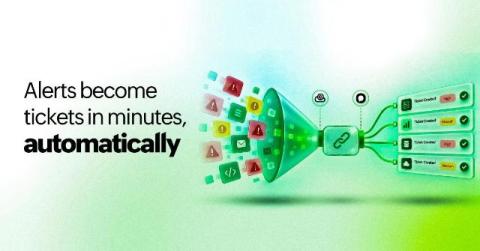
How to build a resilient incident management workflow using ilert

Your payment API suddenly returns 503 errors. Within seconds, your infrastructure monitors, application checks, and dependency monitors begin generating their own alerts. And while the dashboards keep flashing, the clock is still running. Your customers are waiting, internal teams are asking for updates, and engineers are trying to separate the real problem from the noise before the situation gets worse.

BGP monitoring: Fixing the blind spot in your digital experience monitoring stack

Without Border Gateway Protocol (BGP) monitoring, your digital experience monitoring (DEM) stack can't detect the route hijacks, leaks, or instability that prevent users from reaching your applications. Most DEM stacks miss this entirely, and that gap is where some of the most damaging, hardest-to-diagnose outages happen.

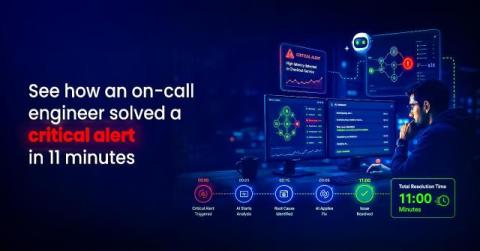
How Agentic AI speeds up troubleshooting application issues

One night, Daniel Rizzy was the only person awake on Zylker’s IT team, and the clock was already running. He was also the only thing standing between a P1 outage and 10,000 customers. Rizzy works nights for ZylkerXchange, Zylker’s foreign currency exchange app. He lives on the city’s outskirts, where the air is clean and quiet, and the night shift suited that life. Most nights, nothing happened. Some nights, everything did.

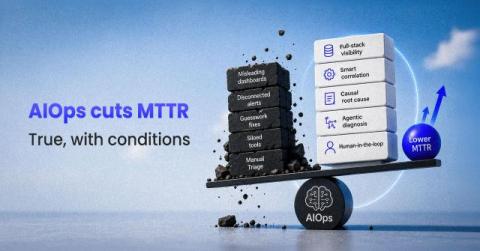
Improving MTTR with AIOps: Myth or Fact?

There was a version of daily life, not long ago, that ran entirely on physical effort. Booking a trip meant a visit to a travel agent. Ordering lunch meant walking to a restaurant or calling and hoping someone picked up. Buying something for the home meant a trip to the store and a checkout queue. Paying a bill meant visiting a bank branch and engaging with a teller. None of it was instant, and nobody expected it to be.

Monitoring website that redirects to a different URL

Is it necessary to monitor a website that redirects to a different URL? Imagine a user visits a URL and is automatically redirected to a new main URL without taking any action. This process is called URL redirection. It typically occurs when a web server sends a 3xx HTTP status code and a location header with the new URL. Sometimes there is only one redirect, but in other cases, the request passes through several URLs before reaching the final page.

Troubleshooting website response time latency

Your dashboards may be telling a different story than what the customers are experiencing There's a version of a website problem that nobody talks about enough—the one where everything is technically fine. The site is up. The server is responding. No alerts have fired. And yet, somewhere out there, a user is watching a spinner rotate for the fifth second in a row, quietly losing faith in your product. This is what makes response time latency the most deceptive problem in web operations.

Troubleshooting website connection failures with website monitoring RCA

Every engineer has a story about the outage that came out of nowhere. One moment everything is green. The next, your monitoring dashboard lights up red, your inbox fills faster than you can read it, and somewhere a customer is staring at a blank screen wondering if your business still exists.

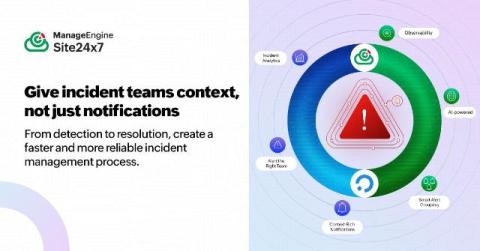
From alerts to action: Where reliability is actually won

Observability has evolved dramatically in the past decade. The industry has moved from basic uptime checks to full-stack observability (FSO), including metrics, logs, traces, and real user monitoring. Observability tools like ManageEngine FSO can detect anomalies in little time. And yet, outages still last longer than they should. Observability has matured. Response hasn’t. Most IT teams today have the tools to know when something breaks. But knowing is not the same as resolving.