
How Do You Deal With Massive Healthcare Bills?
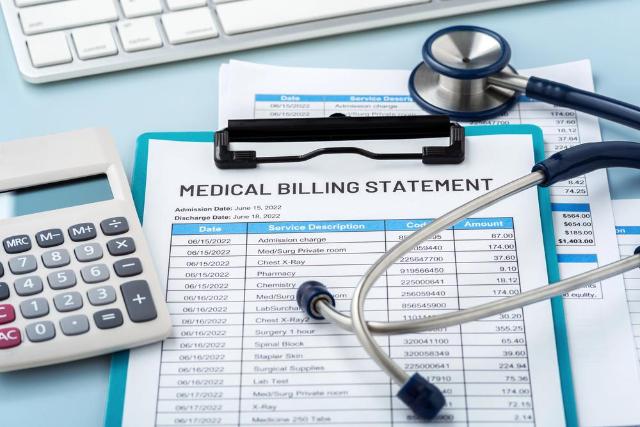
Image Source: depositphotos.com
Receiving a huge healthcare bill can be stressful for anyone. Whether it comes after an emergency, surgery, or a long hospital stay, the cost may seem impossible to pay. Many people worry about how they will cover their medical expenses while still paying for everyday needs like rent, groceries, and other bills.
According to a 2024 analysis by KFF (Kaiser Family Foundation), people in the United States owe at least $220 billion in medical debt, with about 14 million adults owing more than $1,000 and around 3 million owing more than $10,000. This shows how common and serious medical debt has become for many families.
The good news is that you do not have to pay your medical bill immediately without reviewing it first. Hospitals, insurance companies, and government programs offer various options to help lower your costs or make payments more manageable. By understanding your rights and taking the right steps, you may be able to reduce your bill and ease the financial burden.
Why Healthcare Bills Can Be So High
The cost associated with medical services comes about due to the presence of several aspects involved in each procedure. These could include services such as those from the emergency rooms, consultation by doctors, laboratory investigations, medicines, medical equipment, imaging techniques, follow-ups, and even Integrative medicine services.
Even with insurance coverage, you might be required to pay deductibles, copays, and coinsurance. Below are some of the most common causes of expensive healthcare bills.
- ER treatment
- Surgery or prolonged hospital stay
- Consultations with specialists
- Lots of medical procedures
- Out-of-network providers
- Deductibles
- Underinsured
Knowing the causes of your high bill will help you take action afterwards.
Stay Calm and Review the Bill
It may be scary to get a huge bill for your expenses, but it is necessary to stay calm. Most people just pay bills without verifying that there are no errors. You should spend a little time reviewing everything.
You should start by reading the bill from the very beginning. Always keep copies of all your medical bills, insurance documents, and other payments. Write down all confusing charges and also write down the date by which you should pay this money.
Request an Itemized Bill
Perhaps the most effective way to analyze your charges is by requesting an itemized bill that will provide details on all services, treatments, medicines, and other medical items without just providing the total amount.
Some of the errors to watch out for include:
- Double charging
- Wrong dates
- Services not provided
- Incorrect medicine
- Wrong amounts
- Charges for canceled procedures
Medical billing errors are very common and occur far more frequently than most people realize. Fixing even one mistake can help you save a lot of money.
Compare the Bill With Your Insurance Statement
If you are insured, compare your medical expenses statement with the EOB (Explanation of Benefits) document provided by your insurance provider, where you will find out what your insurer has paid for your services and what is still owed by you.
Check whether there are discrepancies between those documents, whether your insurance has really covered everything it should have covered, and whether the calculation of your deductible, co-payment, and coinsurance was right.
In case you see something suspicious, report it to your insurance provider and to your healthcare provider.
Contact the Billing Department
It is important to note that most people are unaware that their medical expenses can actually be negotiated. The hospitals and clinics normally have billing specialists who will help you understand your bills and make arrangements for paying them.
When contacting the hospital/clinic:
- Always remain calm.
- Explain your position to them.
- Inquire about whether there are any discounts that you may qualify for.
- Remember to take down some notes of the conversation.
- Finally, note the name of the person who helped you out.
Ask About Available Discounts
Many health care professionals have some kind of discount that their patients will never know about because the patients do not know to ask about them.
The following are some examples of common discounts:
- Discounts for self-payers without insurance coverage.
- Discounts for patients who are having financial problems.
- Discounts for patients paying early.
A little discount goes a long way, so always ask.
Negotiate Your Medical Bill
Negotiating a medical bill may be embarrassing, but it is quite common. The hospitals know that not everybody can pay the full amount right away.
All you have to do is to tell your story and to see whether anything can be done to reduce the amount owed by you. You can ask for removal of unnecessary charges, reduction of the total amount, or whether you qualify for financial aid.
Many hospitals will be happy to help patients who are honest and want to pay their bills.
Set Up a Payment Plan
When it is difficult to pay all the expenses at once, check whether a payment plan is available. Some medical facilities let people pay every month without any interest.
This option allows you to:
- Simplify the process of payment.
- Decrease financial pressure.
- Decrease the probability of late payments.
- Avoid sending the bill to a collection agency.
Set up a monthly payment that suits your budget rather than one that you cannot afford.
Keep Records of Everything
Each time you communicate with your insurer and healthcare service provider, make sure you document all interactions.
You will want to include:
- Date and time of communication.
- Representative’s name.
- Information about what was discussed.
- Any commitments made.
- Confirmation number or e-mail address.
Documentation might prove useful in case you need to challenge something later on.
Dispute Billing Errors
In case you notice any mistakes on your medical bill, get in touch with the billing department right away and request a checkup of your bill before paying for it.
Typical errors include:
- Bills for a service that was never done to you.
- Double billing.
- Wrong billing codes.
- Misunderstanding of the patient information.
- The service that is supposed to be covered by your health insurance.
In case the error relates to your claim from health insurance, you should inform your health insurance provider about the mistake.
Apply for Financial Assistance
Hospitals usually offer financial assistance programs, which may also be referred to as charity care, to patients who cannot afford to pay their hospital bills. Based on your financial situation, the program will either lower the bill by a certain percentage or help to pay it in its entirety.
These documents may include income verification, tax forms, bank records, and pay stubs. Even if you are not sure about your qualification, it might be worth a shot, as the criteria vary among hospitals.
Explore Government Programs
Medical insurance from the government can also assist in lowering health care costs for those who qualify.
These insurance schemes are:
- Medicaid for those with lower income levels.
- Medicare for those who have reached old age and some with disability.
- Children’s Health Insurance Plan (CHIP) for qualifying kids.
There may be some extra assistance schemes in some states.
Consider a Medical Billing Advocate
Medical bills may be overwhelming, particularly after complex procedures or after dealing with several insurance claims. The services of a medical billing advocate include reviewing your bills for mistakes, explaining charges to you, and negotiating with the provider on your behalf.
Medical billing advocates can either be paid or may work for non-profit organizations or employee benefit plans.
Avoid Common Mistakes
Many people create financial problems for themselves after getting a hefty bill for their health care services.
Do not do any of the following things after getting your bill:
- Ignore your bill.
- Assume that everything that is on your bill is correct.
- Pay immediately without checking your bill.
- Use high-interest credit cards to pay your bills only if they are the only option available.
- Waiting too long to inquire about payment plans or financial help can hurt you.
Reduce Future Medical Costs
While it is not always possible to prevent emergencies from occurring, there are some things that you could do to ensure that you don’t have to pay huge amounts of money in the healthcare sector later on.
Some important recommendations include:
- Knowing what your health insurance plan covers.
- Going through in-network providers as much as possible.
- Requesting cost estimates when not dealing with an emergency.
- Examining all medical bills closely.
- Keeping your health and insurance records in order.
- Saving up for emergencies, if possible.
- Getting preventative check-ups regularly.
Conclusion
While paying a large amount of money for a hospital bill may stress you out, you do have solutions available. Examine the bill for any inaccuracies, compare it with the insurance report, check whether any discounts or payments apply, and take advantage of them. In case it all proves too difficult, consider applying for financial aid or government programs.