
How Smart Manufacturing Is Transforming Sheet Metal Fabrication
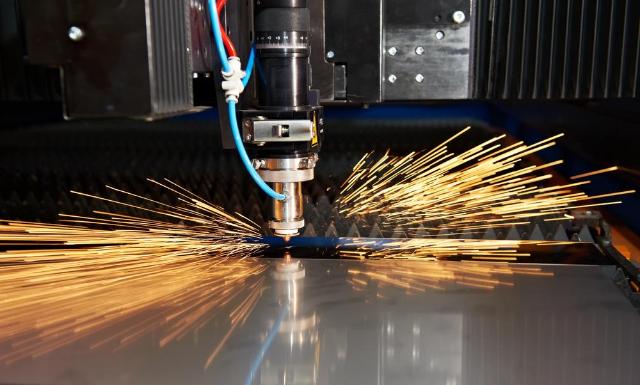
Image Source: depositphotos.com
Manufacturing's pace of change in recent years is unlike prior eras. Smart manufacturing combines connected sensors, data analytics, and automation with physical production, reshaping how sheet metal fabrication shops operate and how quickly they respond to customer demand.
The global smart manufacturing market has seen rapid and sustained growth, spanning automotive and aerospace to custom sheet metal fabrication, driven by measurable operational advantages in quality, speed, and process control. For sheet metal fabricators, the shift is not theoretical — it is visible on the shop floor, in inspection data, and in delivery performance.
How Smart Manufacturing Improves Sheet Metal Fabrication Quality
The Internet of Things allows machines, sensors, and devices to share data continuously without human input. In a sheet metal fabrication shop, this means a laser cutter can monitor and flag calibration drift in real time, maintaining cutting accuracy across tight-tolerance runs. A press brake can log cycle counts, tooling wear, and stress readings every shift automatically, helping operators maintain precise bend angles without waiting for a defect to appear.
This connectivity enables predictive maintenance. Sensors detect changes in vibration or heat and alert operators before failures occur, reducing unplanned downtime and extending equipment lifespan. For precision sheet metal fabrication, where tolerances are extremely tight, early detection prevents quality problems from spreading across an entire production run.
Factory-wide data also improves scheduling and material decisions, replacing reactive problem-solving with planning grounded in real production evidence. Material traceability becomes a built-in output rather than a manual task, with each coil, sheet, or blank tracked from receiving through finished part.
Smart Quality Control for Sheet Metal Parts
Artificial intelligence turns IoT data into actionable insight. In sheet metal fabrication services, AI identifies correlations between process variables and defect rates, enabling adjustments that improve yield without reducing throughput.
Computer vision systems inspect every component rather than sampling at intervals. In sheet metal production, this means automated surface inspection that detects scratches, pitting, and coating inconsistencies that manual checks can miss at volume. These systems also perform dimensional inspection, verifying hole placement, flange lengths, and formed profiles against CAD tolerances without slowing the line.
Burr control is another area where smart inspection adds direct value. Vision systems can flag edge quality after laser cutting or punching, triggering a deburring step before parts move downstream rather than catching the problem during final inspection or, worse, at the customer.
Machine learning improves these systems over time. A model trained on large volumes of production runs develops process knowledge around welding consistency, surface quality, and dimensional variation that takes engineers years to accumulate, turning data into a lasting operational asset.
Why Automation Matters in Custom Sheet Metal Fabrication
A digital twin is a virtual model of a product or process that updates as its physical counterpart operates. In sheet metal prototype fabrication, engineers simulate forming sequences and springback behavior before cutting material, reducing physical iterations and compressing development timelines. Press brake bending programs can be validated virtually, ensuring bend sequences are feasible and tooling selections are correct before the first blank is loaded.
For custom sheet metal fabrication, non-standard components can be stress-tested virtually before production begins. Clients review design performance earlier, shortening approval cycles and reducing late-stage revision costs driven by fit or formability issues.
Collaborative robots, often called cobots, work alongside human operators in a modern sheet metal fabrication shop. They handle repetitive and physically demanding tasks — loading blanks, transferring formed parts, and presenting components for welding — while skilled workers manage setup, programming, and oversight. This raises throughput without removing the judgment that complex work demands.
Robotic welding systems deliver consistent travel speed, arc length, and heat input across large weld volumes. That uniformity is critical in structural applications where weld quality determines load-bearing performance and certification outcomes. Combined with real-time monitoring, robotic welding also produces the documentation needed to support full material and process traceability for demanding customers.
Aerospace Standards Elevating Every Sheet Metal Fabrication Program
Aerospace sheet metal fabrication places the highest demands on smart manufacturing systems. Aircraft components require strict tolerances, full material traceability, and documented process records for every cut, bend, and weld. Smart CNC machines log this data automatically, supporting certification requirements without added manual effort.
Sheet metal fabrication companies serving aerospace clients build process discipline that strengthens every other program they run. Standards developed for aviation — covering laser cutting accuracy, weld inspection, dimensional verification, and surface quality — regularly migrate into automotive, medical, and energy sectors, raising expectations across the industry.
A Compounding Advantage for Sheet Metal Fabricators
Smart manufacturing is not a single technology but a layered system where IoT, AI, digital twins, and robotics reinforce each other. For sheet metal fabrication shops, this integration produces measurable gains across the entire process — from laser cutting accuracy and press brake consistency to surface inspection, burr control, and final dimensional verification. Facilities that have already built this foundation are accumulating process knowledge and infrastructure that competitors will take years to replicate, making early adoption one of the most durable advantages in modern sheet metal fabrication.