
The Role of LED Walls in Modern Sports Entertainment
Sports entertainment has evolved far beyond the game itself. Today, fans expect immersive experiences that combine live action, digital interaction, and large-scale visual engagement. Across the United States, stadiums, fan zones, entertainment venues, and commercial spaces are increasingly turning to led wall technology to meet these expectations and create environments that feel dynamic, energetic, and memorable.
From live match broadcasts to interactive fan experiences, LED walls have become one of the defining visual tools in modern sports entertainment. Their ability to deliver large, vibrant visuals in real time makes them essential for events that aim to capture audience attention and sustain emotional engagement throughout the experience.
The transformation of sports viewing experiences
Modern audiences, however, are accustomed to high-definition visuals, instant replays, and immersive digital experiences. This shift has changed the expectations fans bring to live events and public viewing spaces.
Many event planners exploring immersive tournament experiences are already analyzing how a led screen for sports can help create visually impactful fan environments during international competitions and large public gatherings.
LED walls help bridge the gap between in-person excitement and high-quality digital presentation. Their scale and clarity allow audiences to feel closer to the action, even in large venues or crowded public areas. Whether fans are attending a live event or gathering in a fan zone, the visual environment plays a major role in shaping the overall experience.
Why visual technology matters in sports entertainment
Sports are driven by emotion, speed, and atmosphere. Visual technology enhances these elements by making every detail easier to see and every moment feel larger than life. LED walls are particularly effective because they combine brightness, motion, and seamless image quality into a single display platform.
Large-format visuals create stronger crowd engagement by helping audiences stay connected to the game. Instant replays, player close-ups, statistics, and animated graphics all contribute to a more immersive environment where fans remain emotionally involved throughout the event.
Enhancing audience focus and energy
In large venues, maintaining audience attention can be challenging, especially during pauses in gameplay or transitions between activities. LED walls help sustain energy levels by displaying dynamic content that keeps fans engaged even when the live action temporarily slows down.
Music visuals, sponsor activations, interactive prompts, and crowd animations can all be integrated into the display experience, transforming passive spectators into active participants.
The growing importance of fan engagement
Modern sports entertainment is no longer limited to what happens on the field. Fans now expect interactive and social experiences that make them feel connected to the event and to each other.
This shift has encouraged venues and organizers to invest in technologies that support real-time interaction and large-scale communication. LED walls contribute to this engagement by creating central visual points where audiences naturally gather.
Their ability to display synchronized content across large spaces strengthens the collective energy that defines live sports culture.
Supporting stadiums and large entertainment venues
Professional stadiums and sports arenas increasingly rely on LED walls to improve communication and enhance the spectator experience. These displays are used for far more than scorekeeping. They support live broadcasts, advertisements, crowd prompts, sponsor messaging, and event branding.
Because LED walls remain visible under different lighting conditions, they are effective during both daytime and nighttime events. High brightness levels ensure that visuals stay sharp and readable even in outdoor stadiums exposed to direct sunlight.
Wide viewing angles for large audiences
One important feature of LED technology is its ability to maintain image quality from multiple viewing positions. In large sports venues, spectators are spread across wide seating areas, making consistent visibility essential.
LED walls provide broad viewing angles that allow fans to enjoy clear visuals regardless of their location inside the venue. This consistency helps create a more inclusive and engaging experience for the entire audience.
Fan zones and public viewing events
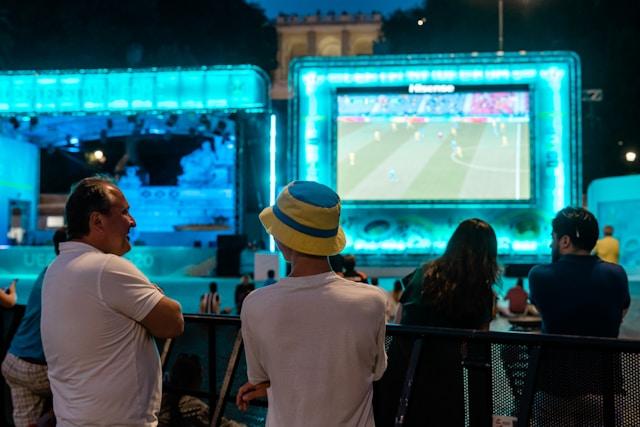
Large sporting events often extend beyond the stadium through fan zones and public viewing areas. Cities, sponsors, and entertainment districts organize these spaces to accommodate large crowds looking to watch matches together.
LED walls play a central role in these environments by delivering large-scale visuals capable of reaching thousands of spectators simultaneously. Their modular structure allows them to be configured for different layouts, from outdoor plazas to temporary event stages.
These installations help recreate the excitement of the stadium atmosphere in public spaces, making fans feel connected to the event regardless of where they are watching from.
Real-time content and dynamic communication
One of the biggest advantages of LED walls in sports entertainment is their flexibility. Content can be updated instantly to reflect live scores, player statistics, social media interactions, or event announcements.
This real-time adaptability keeps audiences informed and engaged throughout the event. Instead of relying on static visuals, organizers can continuously adjust content to match the pace and emotion of the game.
For sponsors and advertisers, this flexibility also creates opportunities to deliver time-sensitive campaigns that feel integrated into the event experience rather than separate from it.
Improving commercial and hospitality experiences
Sports bars, restaurants, hotels, and entertainment venues increasingly use LED walls to attract customers during major tournaments and live sporting events. Large displays help create immersive viewing experiences that encourage visitors to stay longer and engage more actively with the venue.
Unlike traditional television setups, LED walls offer seamless visuals without distracting bezels. This uninterrupted presentation creates a more cinematic atmosphere that enhances group viewing experiences.
In commercial spaces, the emotional energy generated by live sports often translates into stronger customer engagement and increased foot traffic during major events.
Adapting to evolving audience expectations
Modern audiences expect entertainment experiences that feel interactive, visually engaging, and technologically advanced. Younger generations in particular are accustomed to digital environments where content is dynamic and constantly changing.
LED walls align with these expectations by delivering large-scale visuals capable of supporting multimedia experiences beyond the game itself. From animated graphics to synchronized crowd interactions, the technology helps sports entertainment evolve into a more immersive form of live media.
Long-term value for venues and organizers
Although sports tournaments generate immediate demand for immersive visual systems, LED walls continue delivering value long after a specific event ends. The same displays can be used for concerts, conferences, esports events, product launches, and advertising campaigns.
This versatility makes LED technology a long-term investment for venues looking to remain competitive in the entertainment industry. As expectations around live experiences continue to rise, venues equipped with high-quality visual systems are better positioned to attract audiences and host large-scale events.
The future of sports entertainment and visual technology
The connection between sports and visual technology continues to grow stronger as audiences seek more immersive and emotionally engaging experiences. Fans no longer want to simply watch an event; they want to feel surrounded by the atmosphere and energy that define it.
LED walls support this evolution by combining scale, clarity, brightness, and adaptability into a single platform capable of transforming how sports are experienced. From stadiums and fan zones to retail spaces and hospitality venues, this technology has become a central part of modern sports entertainment throughout the United States.