Operations | Monitoring | ITSM | DevOps | Cloud

Securely quarantine suspect packages using Rego code with Cloudsmith's Enterprise Policy Management.

Software supply chain attacks are becoming more sophisticated, and Cloudsmith tackles this head-on with EPM. Using a set of tools, including a policy-as-code approach, you can tailor security policies to be as simple or as advanced as you need. Define any policy using Rego code and Open Policy Agent (OPA) to be highly prescriptive and catch suspect or non-compliant software artifacts before the damage is done..

XRPL Supply Chain Attack and How to Block it Using Cloudsmith's Enterprise Policy Management

Yet another supply chain attack has surfaced, this time using the xrpl library to sneak through malicious packages. xrpl.js is recognised as the recommended npm library for integrating the XRP Ledger (XRPL) with JavaScript/TypeScript applications, and has over 140k downloads a week.

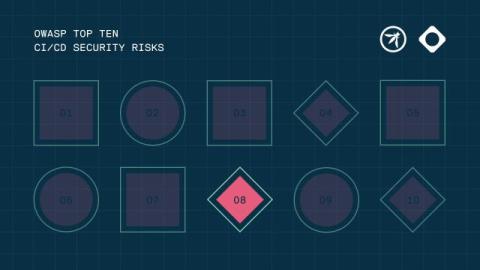
OWASP CI/CD Part 3: Dependency Chain Abuse

As more teams rely on public repositories in their software supply chain, the dependency chain has become both a critical foundation and a potential blind spot. Dependency chain abuse is not new, but a growing list of attack vectors - like typosquatting, dependency confusion, and now slopsquatting - means security leaders need to respond quickly as attackers adopt new techniques.

Enterprise Policy Management Example: Quarantine Packages Using Policy as Code

Cloudsmith built Enterprise Policy Management (EPM) on Open Policy Agent (OPA) and uses Rego to define policies as code. These policies control how packages move through your systems. They're versioned, reviewable, and enforceable. EPM is in early release, but it already draws on extensive metadata Cloudsmith collects from your artifacts: format, version, tags, license, vulnerability, malware scan results, and digital signatures.

Enterprise Policy Management with Cloudsmith

Enterprise Policy Management (EPM) is a programmable policy-as-code layer that controls the security, compliance, and flow of artifacts across the software supply chain. Teams can codify rules once and apply them continuously across repositories. With Cloudsmith’s platform, organizations extend policy enforcement across teams, environments, and geographies without introducing friction, including the open source packages that the chain depends on.

OWASP CI/CD Top 10: Inadequate IAM

In the race to ship software faster, many teams have turned to automation, decentralised tools, and powerful pipelines. But lurking under the surface of these streamlined processes is a growing and often invisible Identity and Access Management (IAM) threat vector. — a core vulnerability in modern CI/CD security.

OWASP CI/CD Top 10: Inadequate Flow Control in CI/CD Pipelines

With the recent shake-up around CVE funding and broader questions about long-term support for cybersecurity infrastructure, one thing is clear: controlling what you can is more important than ever. This is abundantly clear in modern software development practices which rely heavily on CI/CD systems, which in turn serve as the primary conduit from a developer’s local environment to production.

Scaling up to 1 Million Requests per Minute: How Cloudsmith Delivers Extreme Performance

CI/CD pipelines don’t wait. When traffic surges and your artifact platform can’t keep up, it’s not just a few slow requests: builds fail, deploys become backlogged, and engineers lose confidence. We’ve seen it all: 502s from overloaded VMs, minutes-long pulls, and pipelines grinding to a halt. That’s why we built Cloudsmith to scale by default; no one should have to firefight with their registry at 2 a.m.

Full Support for Arbitrary Files in Maven Repositories with Cloudsmith

We're excited to announce a major enhancement to our Maven repository support at Cloudsmith. As a Java developer, you can now upload and distribute arbitrary files using Maven repositories, unlocking more flexible and powerful workflows for your projects. Arbitrary files are files that are ignored by Maven unless explicitly included in the Project Object Model (POM) / pom.xml configuration.

Reproducible Builds, Fedora 43, and What It Means for the Software Supply Chain

April 2025 has brought some important news in the world of open source and software supply chain security: Fedora has announced a change proposal to make 99% of its package builds reproducible in its upcoming Fedora 43 release. At first glance, this might seem like a low-level Linux packaging detail. But in reality, this is part of a much bigger shift that touches anyone who builds, ships, or consumes software - including us at Cloudsmith and the developers and enterprises who rely on us.