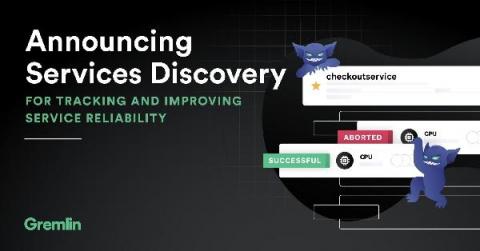
Gremlin helps teams proactively improve the reliability of their systems by running chaos experiments on infrastructure including hosts, containers, and Kubernetes clusters. But as microservice-based architectures and automated cloud platforms become the norm, engineers are shifting their focus from managing infrastructure to managing services. In order to keep these services as resilient as possible, they need tools that can help them find failure modes, reduce incidents, and improve availability.
Today, Gremlin is excited to announce the ability to create an API key that can perform actions with the same set of permissions as your user account. This allows you to automate Gremlin tasks safely and securely.
Gremlin empowers you to proactively root out failure before it causes downtime. See how you can harness chaos to build resilient systems by requesting a demo of Gremlin. With everyone working remotely, video conference tools like Zoom have been a critical part of maintaining business continuity. It’s truly amazing that we can continue to work and connect with one another, even during a time where getting together in an office hasn’t been possible…
Get started with Gremlin's Chaos Engineering tools to safely, securely, and simply inject failure into your systems to find weaknesses before they cause customer-facing issues. API gateways are a critical component of distributed systems and cloud-native deployments. They perform many important functions including request routing, caching, user authentication, rate limiting, and metrics collection. However, this means that any failures in your API gateway can put your entire deployment at risk.
When reading about Chaos Engineering, you’ll likely hear the terms “fault injection” or “failure injection.” As the name suggests, fault injection is a technique for deliberately introducing stress or failure into a system in order to see how the system responds. But what exactly does this mean, and how does this relate to Chaos Engineering?