Operations | Monitoring | ITSM | DevOps | Cloud

Capture once, test forever

We’ve gotten used to understanding our applications through signals, summaries, and traces. Tiny little bits of information about how the app really works. Not because that’s the best way to do it, but because it’s been too hard to get the real thing. The real information exists. It’s on the network. How people called your app and what your code did. What other systems it called, the database queries it made, and the result sets that came back.

We won't train on your data is not a security architecture

Every enterprise contract I’ve signed in the last two years has the same clause. “Vendor will not use Customer Data to train machine learning models.” Sometimes it’s a paragraph. Sometimes it’s a whole section. The language varies but the intent is identical: don’t feed our production data into your AI. I get it. I sign the same clause as a vendor. But here’s what’s been bothering me: that clause is a promise, not an architecture.

Validate Spring Boot Upgrades with Traffic Replay

Spring Boot version upgrades—whether moving from 2.x to 3.x, 3.x to 4.x, or even minor bumps like 3.2.5 to 3.3.1—regularly introduce subtle, breaking changes that unit and integration tests miss. JSON serialization shifts, autoconfiguration reordering, and transitive dependency conflicts can silently alter your API contract.

The AI Code Explosion: Why Your Mocking Strategy is Breaking Down

The rise of AI-assisted coding has transformed how software is built. With tools generating entire features in seconds, the bottleneck is no longer writing code—it’s verifying it. Because AI can generate boilerplate and handle API integrations instantly, more service changes are being pushed into authentication logic, API calls, and configurations. Teams desperately need a way to verify these changes before merging, especially when the code touches external dependencies.

Testing AI Code is a Security Nightmare? #Speedscale #DevOps #Kubernetes #AICoding #SoftwareTesting

AI can write a feature in seconds, but where are you testing it? Sending production traffic, API payloads, and auth headers to a third-party SaaS is a massive security risk. In this video, we break down why the Bring Your Own Cloud (BYOC) model is the ultimate fix for DevSecOps. Learn how to safely test AI-generated code against real production traffic entirely within your own VPC or Kubernetes cluster. No data leaks, no massive DLP pipelines, and no endless masking rules.

The Bug Hiding in Your Production Traffic

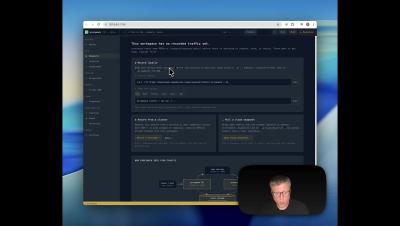
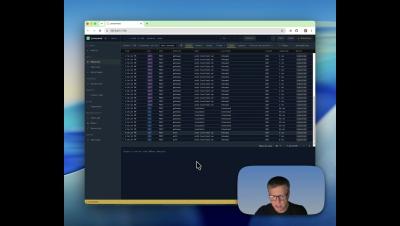
Your logs showed 500 errors. The traces showed the dependency graph. Neither showed the actual bug, a DEL control character getting appended to the query string. This is how I found it. In this video I walk through Speedscale BYOC (bring your own cloud): capture real production traffic, store it in your own Elasticsearch cluster inside your VPC, pull it down locally with a single script, and reproduce the exact bug using proxymock. The data never leaves your environment.