Operations | Monitoring | ITSM | DevOps | Cloud

The latest News and Information on DevOps, CI/CD, Automation and related technologies.

Introducing all new Serverless360 in preview

Towards the end of 2016, it all started with developing a simple platform to manage Microsoft Azure Service Bus namespaces. The then classic Azure portal had limited capabilities to manage Azure Messaging resources like Service Bus Queues and Topics. Paolo Salvatori developed and managed a community tool called Service Bus Explorer. We identified that there are some challenges or limitations in managing and monitoring Azure Messaging resources using the above two.

The future of testing with Launchable

Do we really need to run all the tests every time we make a change to the source code or make a release? That could take minutes or even hours. Wouldn't it be better to run only the tests related to the changes we are making or the phase of the lifecycle of an application? Is the future of testing in AI and ML? Kohsuke Kawaguchi from Launchable might have the answers to those and quite a few other questions.

Ruby on Rails Development Setup for Beginners

Today we will install Ruby on Rails (RoR) on a Debian Linux operating system (Ubuntu 18.04 LTS). With that said, RoR is compatible with other operating systems with just a few tweaks. This blog will assist you in installing RoR with a simple step-by-step process. Your installation may differ, for other operating systems refer to this site. I am new to developing and have been using Ubuntu 18.04 LTS, a flavor of Debian Linux, for my projects.

Full-stack monitoring for code-to-cloud visibility

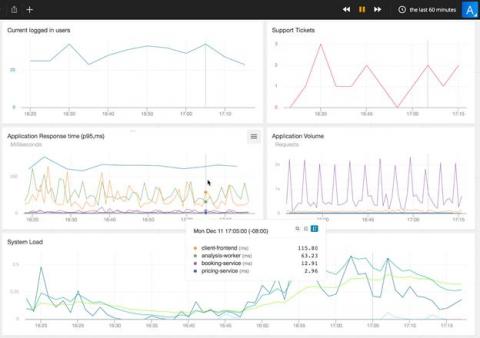
Engineering teams are very used to talking about their tech stack as the technologies and tools used to build their application. Monitoring also has a stack, and full-stack monitoring is when you align each layer of your tech stack with a monitoring practice and weave a thread from every layer. True code-to-cloud visibility is only accomplished with full-stack monitoring, and necessary for long-term DevOps success.

The 7 Hues of DevOps

Purple teams. Blue, green, red, back, canary deploys. Golden signals and red metrics. There are oddly a lot of color adjectives used in DevOps terminology, and Dave and Chris cover them all in this episode. They will talk about the range of deployment strategies for modern applications. The various types of metrics used to monitor them, and the different approaches to understanding how much visibility is good enough.

Cloud 66 Feature Highlight: Delete Protection

What is Delete Protection? This feature stops specific servers from being accidentally deleted from your account. Delete Protection helps developers to prevent applications from going down and gives more control over your server mix. This includes avoiding deletion of core servers when scaling down via the API, and safeguarding servers with intentionally unique configurations ("snowflakes").

How to monitor HashiCorp Vault with Datadog

In this series, we’ve introduced key HashiCorp Vault metrics and logs to watch, and looked at some ways to retrieve that information with built-in monitoring tools. Vault is made up of many moving parts, including the core, secrets engine, and audit devices. To get a full picture of Vault health and performance, it’s important to track all these components, along with the resources they consume from their underlying infrastructure.

Tools for HashiCorp Vault monitoring

In Part 1, we looked at the key metrics for monitoring the health and performance of your HashiCorp Vault deployment. We also discussed how Vault server and audit logs can give you additional context for troubleshooting issues ranging from losses in availability to policy misconfiguration. Now, we’ll show you how to access this data with tools that ship with Vault.