Operations | Monitoring | ITSM | DevOps | Cloud

Honeycomb Canvas: The Multiplayer Workspace for the Agentic Era

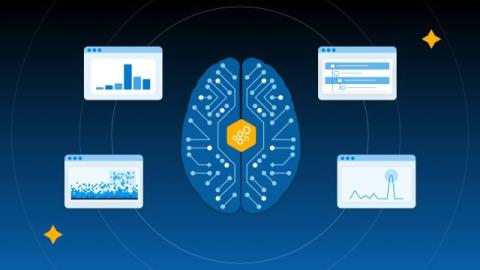
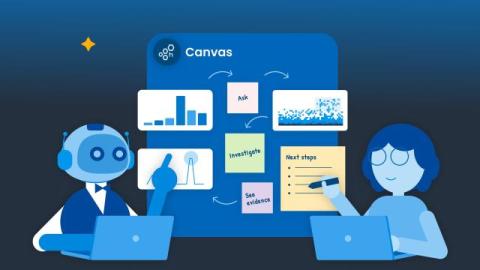
Last week, we launched a major update to Canvas, our investigation workspace. The new Canvas has evolved from an AI co-pilot you chat with to a place where your whole team, human and agent, can work the same problem on the same surface. Auto-investigations begin the moment a trigger, SLO, or anomaly fires. Custom skills encode your team's runbooks so every agent investigates with your team's expertise built in.

Agent Timeline: The Flight Recorder for Your AI Agents

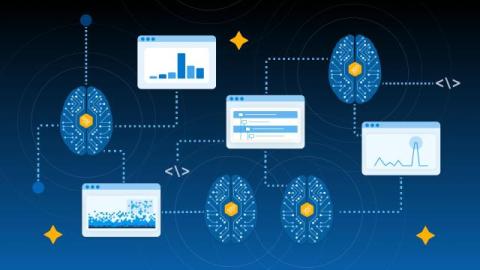
Last week, we introduced Agent Timeline, a powerful new observability experience purpose-built for debugging AI agent workflows in production. Agent Timeline uniquely connects AI-layer visibility to full-stack observability by organizing telemetry around an agentic conversation. A conversation contains one or more agent executions, each of which may contain LLM calls, tool invocations, handoffs, retries, human escalations, and downstream system calls.

How Honeycomb Is Embracing the Challenges of End-to-End Observability with Embrace

Customers regularly come to us looking to solve their observability problem by connecting the dots from frontend to backend. It sounds straightforward in theory, but in practice it's one of the hardest problems in modern application monitoring. The frontend monitoring tools they already have in place tend to be proprietary or narrowly scoped to frontend needs, leaving them without the context-rich backend data that makes real triage possible.

Honeycomb Achieves the AWS Financial Services Competency

Honeycomb is proud to share that we have achieved the Amazon Web Services (AWS) Financial Services Competency. This recognition validates our technical expertise and proven customer success in assisting financial services organizations with building, running, and understanding their production systems on AWS. Securing this competency is a direct response to our customers’ feedback in this space: observability in regulated, high-stakes environments requires more than dashboards and alerts.

Innovation Week Day 2: Observability for AI, and Observability With AI

AI is reshaping the SDLC in two directions at once. AI-generated code is shipping faster and with less human supervision than ever before, while agents and LLMs are running directly in production, where they behave very differently from traditional software: non-deterministic, with a wider blast radius than any single function or component, with no stack trace to catch when something goes wrong.

Innovation Week Day 1: The SDLC Is Collapsing, and Observability Has Never Mattered More

The software development lifecycle is collapsing. The multi-stage pipeline that defined how software got built and shipped for decades is compressing into rapid loops of intent and validation, with agents now part of the teams building and running it. Day 1 of Innovation Week was about what that shift means for how software gets validated, where observability fits, and the problems that have always been hard but are now genuinely urgent.

Making Semantic Conventions Work for You With OpenTelemetry Weaver

Your dataset has hundreds of attributes. Some are self-explanatory: http.response.status_code, server.address. Others are not: meta.refinery.reason, dataset.slug, sli.latency_target_ms. If you don't know what an attribute means, you can't write a good query. And if an AI agent doesn't know what it means, it guesses.

Span or Attribute in OpenTelemetry Custom Instrumentation

TL;DR: Attribute. More information on one event gives us more correlation power. It’s also cheaper. When you want to add some information to your tracing telemetry, you could emit a log, create a span, or add a piece of data to your current span. Adding a piece of data to your current span is the best! Usually.

Taming Log Noise With the OpenTelemetry Collector's Drain Processor

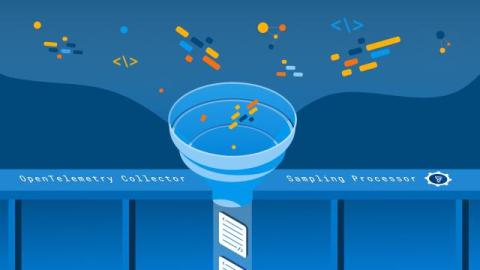
Do you receive 50 million log lines per day and struggle to see what actually matters? Health checks, heartbeat pings, connection pool messages—they all drown out the errors and anomalies you're trying to find. Most teams deal with this by writing filter rules to drop the noisy patterns. But those rules are manual, per-pattern, and brittle. A new deployment changes a log format and the filter misses it. A new service starts logging a chatty startup sequence nobody thought to exclude.

New in the Honeycomb Academy: Learn to Use the Honeycomb MCP

Two things happen when engineers first connect the Honeycomb MCP to their AI assistant. The first is the blank page problem. The Honeycomb UI gives you something to react to: a heatmap, a query builder, a trace to click into. An AI assistant gives you a cursor and nothing else. When you don't know where to start, that's a hard place to be. The second shows up right after you get past the first one. You ask a question, you get a confident-sounding answer, and you're not sure whether to trust it.