Operations | Monitoring | ITSM | DevOps | Cloud

ZFS focus on Ubuntu 20.04 LTS: what's new?

Ubuntu has supported ZFS as an option for some time. In 19.10, we introduced experimental support on the desktop. As explained, having a ZFS on root option on our desktop was only a first step in what we want to achieve by adopting this combined file system and logical volume manager. I strongly suggest you read the 2 blog posts, linked above, as introductions to this blog series we are starting. Here we cover what’s new compared to 19.10 in term of installation and general features.

Kubernetes on Windows with MicroK8s and WSL 2

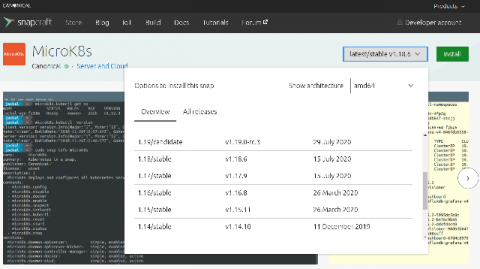
Kubernetes has enjoyed an unparalleled 5-year growth that has revolutionised the IT industry. It has become a key factor for organisations to be successful and have a competitive advantage. In order to optimise these benefits, organisations look for new ways to reduce Kubernetes complexity and get interoperability with other systems. See how combining MicroK8s and WSL 2 brings a low-ops, fully conformant Kubernetes through a single-command install within Windows.

Kubernetes GitOps with Azure Arc and Charmed Kubernetes

This week, Canonical announced the integration of Charmed Kubernetes with Microsoft Azure Arc. This integration provides businesses with a centralised place to manage their Kubernetes clusters and deploy their applications at scale, from cloud to the edge. The Azure Arc dashboard enables management and governance of any Kubernetes, across any substrate.

FIPS certification for Ubuntu 18.04 LTS

Canonical has received FIPS 140-2, Level 1 certification for cryptographic modules in Ubuntu 18.04 LTS, with FIPS-validated OpenSSL-1.1.1. modules included. This certification enables organisations to meet compliance requirements within the public sector, healthcare and finance industries when utilising Ubuntu 18.04 LTS within public and private cloud environments. Canonical worked with U.S. Government and BSI accredited laboratory, atsec information security, for the 18.04 LTS FIPS certification.

Ubuntu 20.04 LTS to enforce stronger TLS v1.2 encryption by default

In Ubuntu 20.04 LTS, the OpenSSL 1.1.1f library has been modified to use Security Level 2 by default (previous versions of Ubuntu use Security Level 1). Security Level 2 guarantees that protocols, key exchange mechanisms, cipher suites, signature algorithms, certificates and key sizes provide a minimum of 112 bits of message secrecy. In practice, it means that RSA keys are required to be at least 2048 bits long and ECC keys at least 224 bits using the SHA256 certificate signature algorithm.

New GPU and GUI features announced for WSL at Build

Microsoft Build, Microsoft’s annual developer conference, is taking place virtually May 19-20. Ubuntu will be featured throughout the event, in announcements of new WSL features, demos of cloud-native development on Microsoft Azure, and by presenters using Ubuntu desktop with native Microsoft applications like Teams, Code, and Edge. In an address by Microsoft CEO Satya Nadella the company announced new features coming to WSL 2.

Experimental feature: progressive releases

“No plan survives contact with the enemy.” This is a famous quote attributed to the Prussian field marshal Helmuth von Moltke. It is also quite applicable to software development: “No code survives contact with the user.” In mission-critical environments, staggered deployments of software are a crucial part of controlled updates, designed to ensure maximum stability of production applications and services.