
How to Choose the Right Automated Pallet Racking Supplier for Your UK Warehouse
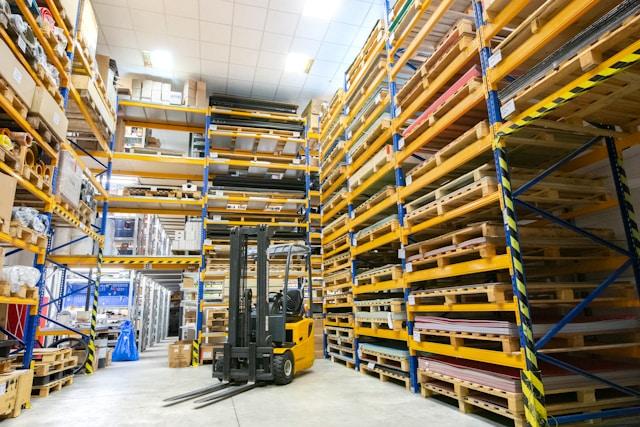
For warehouse managers, logistics directors and operations teams, the choice of pallet racking supplier shapes far more than the storage layout. It influences daily throughput, long-term operating costs, compliance position and the ability to adapt as the business grows. With the rise of automated warehouse pallet racking and increasingly demanding distribution models, the bar for what a competent supplier should deliver has risen sharply. Selecting the right partner has become a strategic decision rather than a procurement task.
The UK market includes a wide mix of pallet racking suppliers, from low-cost resellers to engineering-led specialists offering full design, manufacture, installation and aftercare. Distinguishing between them takes more than a quick comparison of quotations. The questions you ask, the credentials you verify and the way each supplier responds to your site conditions will tell you far more than any brochure.
Verifying safety credentials and compliance standards in the UK
Safety and compliance should sit at the top of any supplier evaluation. UK pallet racking design and installation are governed by HSE guidance and industry codes that reputable suppliers will know by name and number. HSG76 Warehousing and Storage sets out broader health and safety expectations, while SEMA Codes of Practice and the European standard EN 15512 cover the technical detail of racking design and structural performance. If a supplier struggles to explain how their work aligns with these documents, treat it as a warning sign.
Compliance also extends to ongoing obligations under PUWER, which require equipment to be maintained in a safe condition throughout its working life. A credible pallet racking supplier should demonstrate not just initial compliance but a clear process for routine inspection, damage reporting and repair.
Assessing engineering capability and site design for automated pallet racking
Strong engineering capability separates designed systems from assembled ones. A reliable supplier should begin with a proper site survey covering clear internal height, column grid positions, floor slab capacity, door locations and fire protection requirements. They should also review your SKU profile, pallet weights, picking methods and throughput targets to determine whether high-density formats such as drive-in or pallet flow, or high-selectivity formats such as standard adjustable racking, best suit the operation. A free site survey is now offered as standard by most credible suppliers, and the depth of that survey says a great deal about the engineering culture behind it.
For automated pallet racking, the demands increase further. Tolerances on rail alignment, upright plumb and beam levels become much tighter when stacker cranes, shuttles or pallet conveyor systems are introduced, and small errors in the base build can translate into costly downtime later. A supplier with genuine experience in automation will explain how they manage these tolerances and how their design integrates with the chosen handling technology. It is reasonable to ask for sample drawings, calculation summaries and references to previous projects of similar scale and complexity.
Why SEMA membership matters when comparing pallet racking suppliers
The Storage Equipment Manufacturers Association exists to set and uphold quality standards across the UK racking industry. SEMA membership is earned rather than purchased: members undergo independent audits covering technical competence, compliance with more than forty regulations, health and safety performance and the necessary insurance and legal documentation. These audits are repeated every three years, and members who fall short are required to leave.
Working with a SEMA approved warehouse pallet racking supplier therefore removes much of the legwork involved in verifying credentials and offers a meaningful shorthand for technical credibility. It is also worth checking whether the supplier's installation teams are registered under the Storage Equipment Installers Registration Scheme (SEIRS). Suppliers whose own teams hold SEIRS qualifications can design, install and maintain a system without bringing in a separate contractor, which usually translates into a tighter project, clearer accountability and fewer interface risks on site.
Reviewing experience across different warehouse storage systems
Experience should be assessed in terms of relevance, not just longevity. A supplier with twenty years in the trade is only useful if those years cover the type of warehouse storage systems your operation actually needs. Retail and e-commerce sites tend to require high-density and high-selectivity formats supporting rapid replenishment, while manufacturing facilities often need zoned layouts for raw materials, work in progress and finished goods. Large distribution centres frequently look at narrow aisle, drive-in or automated pallet racking to maximise capacity within a fixed footprint.
Strong suppliers also maintain close relationships with leading manufacturers such as Dexion, Link 51, AR Racking, Mecalux and Apex, giving them flexibility on lead times, pricing and component availability. Ask for case studies that reflect similar pallet weights, throughput levels and building constraints to your own, and where possible speak directly to past clients about how the supplier behaved during and after the project.
Evaluating total cost of ownership and long-term ROI
The cheapest installation is rarely the most economical over a typical fifteen to twenty-year lease. Total cost of ownership includes maintenance, repair, reconfiguration and the operational impact of any downtime, all of which can outweigh the initial purchase price. A supplier who is open about lifecycle costs, and who can present a realistic ROI forecast based on a proper site survey, is generally easier to work with than one who simply submits the lowest figure.
Material quality and scalability matter equally here. Uprights, beams and connectors should be rated for the loads they carry, with sensible margins for accidental impacts and future load growth. Modular systems that allow additional bays, increased height or reconfigured aisles protect the original investment as the business grows, which is particularly important for automated pallet racking where retrofit costs can be substantial if scalability was not planned from the start.
Integration with existing warehouse infrastructure and automation
Pallet racking rarely sits in isolation. It interacts with mezzanines, conveyors, sortation systems, warehouse management software and the building itself, and each of these relationships needs to be considered at design stage. A supplier who understands wider infrastructure constraints will flag potential conflicts early, saving time and cost compared with discovering them on site.
For automated pallet racking in particular, integration with handling equipment is a defining factor. Stacker cranes, pallet conveyor systems and automated guided vehicles all impose specific requirements on rail tolerances, aisle widths, upright protection and clear heights. A supplier with experience across both static and automated formats can advise on where automation adds genuine value and where conventional racking may still be the better choice, shaping the broader business case rather than simply the structural design.
Installation, project management and aftercare
A well-designed system can still underperform if installation is poorly managed. Ask whether the supplier uses in-house SEIRS-qualified installers or subcontractors, and how phased installation will be handled around live operations. Clear site logistics and realistic timelines are usually a sign of a supplier who knows how to work around your warehouse rather than against it.
Aftercare carries equal weight. Annual SEMA-approved rack inspections, damage reporting procedures, repair services and rack safety awareness training help maintain compliance with PUWER and protect the integrity of the warehouse storage system over time. A supplier who treats handover as the start of a long-term relationship will offer structured maintenance programmes rather than ad hoc call-outs, and this is often where the difference between a transactional vendor and a genuine pallet racking partner becomes most obvious. For a worked example of how design, installation, inspection and ongoing maintenance can be delivered under one roof, it is worth reviewing an established warehouse pallet racking provider with capability across all four service lines.
Key questions to ask warehouse pallet racking suppliers before committing
Before signing any contract, a structured conversation will reveal far more than a written proposal. Ask how much direct experience the supplier has with projects similar to yours in scale, sector and load profile, and request case studies that demonstrate it. Confirm how they meet compliance obligations across design, installation and inspection, and ask to see current insurance documentation and dated safety records.
Then test the detail. What types of racking and accessories can they supply, including upright protectors, anti-collapse mesh and rack decking? Can they support relocations, reconfigurations and adaptations as your operation evolves? Are their installation teams SEIRS-qualified, and do they offer annual inspections, repairs and safety training in-house? Suppliers who answer these questions clearly, with evidence rather than reassurance, are usually the ones worth shortlisting.
For UK warehouses planning new facilities or upgrading existing ones, the strongest indicators of a reliable partner remain consistent: SEMA membership, SEIRS-qualified installers, engineering depth, proven experience across relevant warehouse storage systems, honest cost discussions and a credible aftercare offer. When those elements are in place, automated pallet racking and conventional systems alike can deliver the safety, efficiency and return that modern operations demand.