Operations | Monitoring | ITSM | DevOps | Cloud

How Synthetic Transaction Monitoring Provides Complete Site Visibility & Why Basic Monitoring is Not Enough

We’ve all been in the situation before: it’s Friday at 5 PM and the only on-call engineer available to handle incidents is about to hit the slopes. Unfortunately, at that very moment, a customer reports to support that they are unable to access the company’s ecommerce website to complete a purchase. Internal monitoring systems seem quiet and services appear available on internal health dashboards.


Reduce 60% of your Logging Volume, and Save 40% of your Logging Costs with Lightrun Log Optimizer

As organizations are adopting more of the FinOps foundation practices and trying to optimize their cloud-computing costs, engineering plays an imperative role in that maturity. Traditional troubleshooting of applications nowadays relies heavily on static logs and legacy telemetry that developers added either when first writing their applications, or whenever they run a troubleshooting session where they lack telemetry and need to add more logs in an ad-hoc fashion.

Accurate DORA Metrics: How Sleuth Measures Engineering Efficiency

DORA metrics are the only studies-proven metrics that get measuring engineering efficiency right. And Sleuth provides organizations with accurate DORA metrics plus insights on the actions teams need to take to improve. Sleuth's co-founder and CEO, Dylan Etkin, explains how Sleuth works. Give Sleuth a try and see why it's a deploy-based Accelerate / DORA metrics tracker both managers and developers love.

How Monitoring, Observability & Telemetry Come Together for Business Resilience

Systems going down because of an unforeseen incident? Got problems with your app or website? Is your audience missing out on products and services because your load times are too slow? Then monitoring and observability (and telemetry) should be of interest to you! In this long article, we’re covering everything! I’ll start with the concepts and how they work.

Epinio Meets s3gw

Since the very first version, Epinio has made use of an internal S3 endpoint to store the user’s projects in the form of aggregated tarballs. Those objects are then downloaded and staged by the internal engine’s pipeline and, finally, they are deployed into the Kubernetes cluster as consumable applications. Epinio makes use of S3 as an internal private service. In this scenario, S3 can be thought of as an internal ephemeral cache with the purpose of storing temporary objects.

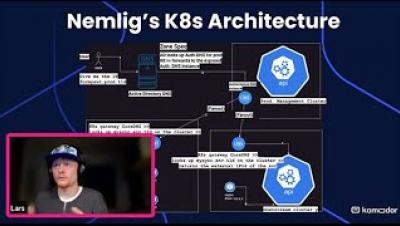
Kubernemlig's Multi-Cluster DNS Setup

Are you ready for a geeky deep-dive into the world of multi-cluster DNS setups? Buckle up, because we're about to embark on a journey through the magical realm of domain name resolution! A multi-cluster DNS setup is like the ultimate TARDIS for your servers. Just like how the TARDIS can transport the Doctor to any location in time and space, a multi-cluster DNS setup allows users to access multiple clusters of servers from anywhere in the world, using a single, convenient domain name.

Industry Experts Discuss Cybersecurity Trends and a New Fund to Shape the Future

Cribl's Ed Bailey and Angel Investor Ross Haleliuk discuss trends in the CyberSecurity industry and Ross will be making a big announcement about his new fund to shape the future of the cybersecurity industry. Ross is a big believer in focusing on the security practitioner to provide practical solutions to common issues by early investment in companies he thinks will promote these values. Ed and Ross will discuss trends in the industry and common struggles that both Cribl and his new fund seek to address by adding value and giving security practitioners choice and control over how they run their security program.