AquaSec’s Daniel Sagi recently authored a blog post about DNS spoofing in Kubernetes. TLDR is that if you use default networking in Kubernetes you might be vulnerable to ARP spoofing which can allow pods to spoof (impersonate) the IP addresses of other pods. Since so much traffic is dialed via domain names rather than IPs, spoofing DNS can allow you to redirect lots of traffic inside the cluster for nefarious purposes.
We are excited to announce the general availability of Tigera Secure 2.5. With this release, security teams can now create and enforce security controls for Kubernetes using their existing firewall manager.
The radical shift towards DevOps and the continuous everything movement have changed how organizations develop and deploy software. As the consolidation and standardization of continuous integration and continuous delivery (CI/CD) processes and tools occur in the enterprise, a standardized DevOps model helps organizations deliver faster software functionality at a large scale.
In the first two articles in this series about using serverless on an open source platform, I described how to get started with serverless platforms and how to write functions in popular languages and build components using containers on Apache OpenWhisk.Here in the third article, I’ll walk you through enabling serverless in your Kubernetes environment.
Starting this week, we will do a series of four blogposts on the intersection of Spark with Kubernetes. The first blog post will delve into the reasons why both platforms should be integrated. The second will deep-dive into Spark/K8s integration. The third will discuss usecases for Serverless and Big Data Analytics. The last post will round off with insights on best practices.
Kubernetes is the de facto open source container orchestration tool for enterprises. It provides application deployment, scaling, container management, and other capabilities, and it enables enterprises to optimize hardware resource utilization and increase production uptime through fault-tolerant functionality at speed. The project was initially developed by Google, which donated the project to the Cloud-Native Computing Foundation. In 2018, it became the first CNCF project to graduate.
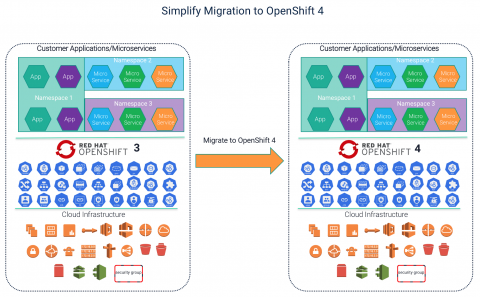
This is a guest post written by Appranix. Now that Red Hat OpenShift 4 has officially been released, it’s time to start thinking about migration from Red Hat OpenShift Container Platform 3 to OpenShift Container Platform 4. You can check out the details about the differences between OpenShift 3 and 4 here. One of the biggest differences between OpenShift 3 and 4 is how OpenShift 4 clusters operate using immutable and automated infrastructure enabled by RHEL CoreOS and automation.