Operations | Monitoring | ITSM | DevOps | Cloud

Understanding Kubernetes Cost Drivers

Optimizing Kubernetes costs isn’t an easy task. Kubernetes is as deep a topic as cloud (and even more complex), containing subtopics like: That’s a lot for a busy DevOps team to understand and manage, and doesn’t even consider that line-of-business stakeholders and finance team members should have some understanding of each cost driver’s function and importance to contribute to a successful FinOps Strategy.

Anomaly Detection Models in Moogsoft | Moogsoft Product Videos & How-Tos

Moogsoft has several different anomaly detectors, and auto-select the optimum one for given metrics. This video explains each model, as well as how to override the model selected by default. Don't forget to subscribe for content on DevOps, Observability, AIOps and more!

Synthetic Monitoring vs Real User Monitoring: What's The Difference?

It’s important for both technical and business teams to understand the different web performance monitoring options that are available as well as their various use cases and the benefits of each. In this article, we’ll compare synthetic monitoring and real user monitoring (RUM).

Synthetic Monitoring Tools: 5 Must-Have Features

There are many different classes of web performance tools, from synthetic monitoring to application performance monitoring (APM), to real user monitoring (RUM), and more. These different classes exist because each has its own strengths and weaknesses. When evaluating open-source or enterprise-grade synthetic monitoring tools, you want to look for capabilities that maximize its strengths.

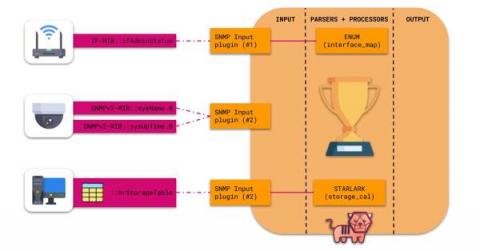
Telegraf Best Practices: SNMP Plugin

Telegraf has now reached 300+ plugins and is deployed in a wide variety of use cases. In January we released a blog post covering the golden rules for creating configs and optimizing your Telegraf agent. It’s now about time we got our hands dirty covering some of the plugins the community uses the most. In this post, we are going to cover the SNMP Input Plugin.

Identify Vulnerable Devices From Vendor Recalls and Security Notices

When network hardware vendors issue device recalls, field notices, or security alerts, the implication can be massive for MSPs. Take the 2017 clock signal issue, for example. That huge recall of Intel microchips was a large-scale vulnerability for tons of devices—and left MSPs scrambling to figure out which devices were affected on which client sites.