Operations | Monitoring | ITSM | DevOps | Cloud

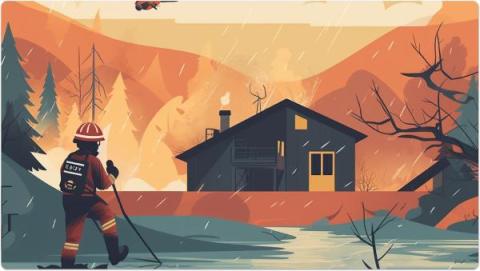
Incident response and awareness acceleration: What we can learn from responders of Queenstown floods.

I was visiting Queenstown, New Zealand last week amidst the horrible floods which quickly escalated. As an incident responder myself, I was amazed at the operations and how fast responders on the ground acted in evacuating and clearing the grounds. Over 100 people were evacuated in the middle of the night with zero casualties. A commendable job. Here are some observations I made and what we can learn as incident responders ourselves..

Alternatives to SMS alerts

While SMS alerts are handy, they also tend to be tricky. Across 120+ countries, we continuously deal with compliances & regulations from Vendors, Government, and Phone carrier companies. Other alert channels similar to SMS are a lot less cumbersome with higher delivery rates. Let’s take a look at the available options to switch from SMS.

Starting with Incident management career

Businesses and organisations are increasingly reliant on technology for their operations, the significance of alerting platforms has become paramount. Alerting platforms encompass the processes that enable organisations to acknowledge, respond, and to reduce various types of incidents that can impact their services. Incident alerts enable prompt responses,at the right time and minimise potential damage.

Manage incidents, real-time alerts, and oncall from Microsoft Teams

Welcome to Spike.sh’s Microsoft Teams bot! At the heart of every successful team lies efficient communication and swift problem resolution. That’s precisely what our bot brings to the table – a dynamic toolset that empowers you to tackle incidents seamlessly. Features: Our new Microsoft Teams bot alerts are not only prompt but also smartly updated as the situation develops. It achieves this by seamlessly integrating incident management into Microsoft Teams, providing you with real-time alerts the moment an incident surfaces.

Hello World

It feels great writing this. It's hard to believe that we have been working on Spike.sh full-time for 3 years now. It's been the most rewarding experience of my life. A big thank you to all of our users and your constant feedback, which has only made Spike.sh better month on month. We are - Over the years, we have always kept our heads down and built. During this entire process, we have learnt a huge deal of things when it comes to incidents and how they are being managed.

Our social resurgence: activating our social media presence to revamp Incident Management

Over the past year, Spike.sh social media activity has been null. As a bunch of shy nerds in a small team working remotely across the world, we really never bothered with social media and our presence on it. We always kept our heads low and maneuvered around it. But no more. As of today, we are coming back on social media channels like LinkedIn, Twitter, and Reddit as well.

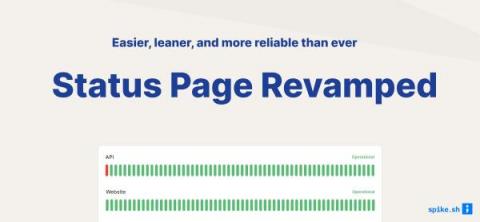
Easier, Leaner, and a more reliable Status Page

Our status page product started last year as an experiment. We built a status page product in a hurry over weekends, and to our surprise, it gained a lot of traction. People were using it and giving us feedback, which helped us improve the product over time. And this year, we're thrilled to announce that we have great things planned for our status page product! The new revemped dashboard is part of a larger plan for our status page product. Here's a quick gist of the multiple releases.

Easy to manage fine-grained access control and roles

A neatly setup access control telling which user can do exactly what on an incident management platform can save a lot of time and hassle in the future. In the past, Spike.sh had only 2 roles - Admin and Member. The only difference in these roles were that only Admins can remove members. It was fairly simple and most users liked it. However, with larger teams coming onboard, it gets a little difficult to control for admins. So, we have empowered the existing system by adding two more roles.

Got an incident? pull the Andon Cord

Andon Cord catapulted Toyota into 40 years of unprecedented quality and domination. What is Andon Cord and how did they do it? In the early 1900s, Taiichi Ohno architected and introduced Andon cord in Toyota's manufacturing plants. The problem: This costs a lot of money. Production costs have always been high. In 1984, it cost NUMMI $15,000 per minute. That's $42,758 in today's value.

Our journey to become Powerful Incident Management platform

Over the last couple of years, Spike.sh has largely been a Simple Incident Management Platform helping engineering teams across the world. Our focus on simplicity has been well received by all of you and we couldn't be more happy about it. After speaking with users earlier this year, we quickly realised there is a lot we can do to help our responders and help them better than we currently are.