Operations | Monitoring | ITSM | DevOps | Cloud

Debugging Microservices in Production with Distributed Tracing

Your production checkout flow just started returning 500 errors. Six microservices handle checkout. Logs show errors in three of them. Which service broke? Which error happened first? What caused the cascade? Traditional debugging doesn't work. You can't attach a debugger to production. Searching logs across six services gives thousands of lines with no obvious connection. By the time you correlate timestamps and trace IDs manually, customers have abandoned their carts.

How to Become an SRE Engineer

Site Reliability Engineering has emerged as one of the most sought-after careers in tech, combining software engineering expertise with operational excellence. SRE engineers ensure that critical systems remain reliable, scalable, and performant while enabling rapid feature development. With the global SRE job market projected to grow by over 25% in 2025, skilled professionals in this field command competitive salaries and enjoy diverse career opportunities across industries.

Monitor and optimize your systems with Uptrace

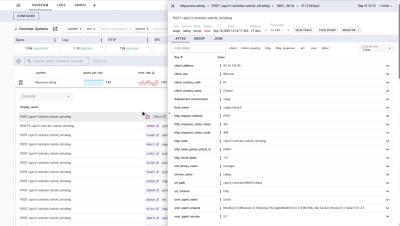
Uptrace is your single source of truth for monitoring, understanding, and optimizing complex distributed systems. Proven in production for over five years and trusted by more than a thousand installations worldwide, it lets you see your system like never before. What makes the difference is that Uptrace is pure OpenTelemetry, built natively from day one. This isn't a translation layer—it's a direct connection that eliminates friction and ensures zero vendor lock-in. Your homepage serves as your command center, providing complete visibility across your stack at a glance.

Monitor and optimize your systems with Uptrace

Uptrace is your single source of truth for monitoring, understanding, and optimizing complex distributed systems. Proven in production for over five years and trusted by more than a thousand installations worldwide, it lets you see your system like never before. What makes the difference is that Uptrace is pure OpenTelemetry, built natively from day one. This isn't a translation layer—it's a direct connection that eliminates friction and ensures zero vendor lock-in. Your homepage serves as your command center, providing complete visibility across your stack at a glance.

LangChain Observability: Monitoring Guide for Production Apps

LangChain applications fail differently than traditional web apps. A single user request can trigger 15+ LLM calls, cost $5 in tokens, and fail silently without throwing errors. One team discovered a $12,000 OpenAI bill caused by a recursive chain with no monitoring. This guide shows how to implement observability for LangChain applications, giving you complete visibility into performance, costs, and errors before they impact your users or budget.

Observability Without Limits - Uptrace Pricing Explained

Welcome to Uptrace, the modern observability platform. Our pricing is simple: pay only for the data you ingest. Unlimited users, services, and hosts Billed per uncompressed GB for spans & logs Billed by active timeseries for metrics Automatic volume discounts as your usage grows Free trial includes 1 TB of spans & logs and 100,000 timeseries — no credit card required.

Integrating CI/CD Pipelines with Observability Tools

CI/CD pipelines are automated workflows that take code from development to production. The CI/CD pipeline meaning encompasses two key practices: A typical CI/CD pipeline includes stages like code compilation, testing, security scanning, artifact creation, and deployment across multiple environments.

Uptrace v2.0: The Future of Observability is Here

The Uptrace team is thrilled to announce the release of v2.0—our biggest update yet! This release represents a complete reimagining of how observability data should be stored, queried, and managed. With multi-project support, revolutionary JSON-based storage, powerful data transformations, and a host of developer-friendly features, Uptrace v2.0 is designed to scale with your growing infrastructure needs.

Defining SLA/SLO-Driven Monitoring Requirements in 2025

SLA/SLO-driven monitoring aligns your observability strategy with business objectives by defining measurable service targets and implementing monitoring systems that track progress toward those goals. Service Level Agreements (SLAs) represent commitments to users, while Service Level Objectives (SLOs) are internal targets that ensure you meet those commitments with a safety buffer. In 2025, organizations running distributed systems need monitoring that goes beyond basic uptime checks.

A Developer's Framework for Selecting the Right Tracing Vendor

Distributed tracing tracks requests as they flow through microservices, revealing bottlenecks, failures, and performance patterns. Without proper tracing, debugging production issues becomes guesswork—especially in complex architectures with dozens of services. Modern applications generate millions of traces daily. The right vendor helps you extract actionable insights without drowning in data or breaking your budget.