
Operations | Monitoring | ITSM | DevOps | Cloud

Major Cloud Outages of 2025

Cloud outages in 2025 ranged from minor ones affecting some sections of users, to major ones affecting hundreds or thousands of users. Services like Cloudflare and AWS on which many other services depend experienced outages that affected many due to the cascading effect. Let's look at some of the major cloud outages in 2025.

How to Receive Cloud Outage Alerts in Microsoft Teams

Cloud outages like the recent ones at Cloudflare, Microsoft Azure, and AWS can have a significant impact on your business with downtime, lost revenue, and unhappy customers. They can also disrupt your team's ability to work effectively. To stay on top of such outages, your team needs to know about them in an easy and timely way. In this article, we will see how to integrate IncidentHub cloud outage alerts with Microsoft Teams.

Product Update - Turn Off Alerts, Use Microsoft Teams, and Custom Domains

Over the last few months IncidentHub has added several new features to make it easier to fine tune your alerts. IncidentHub now also integrates with Microsoft Teams and supports custom domains for your public status pages. Let's take a comprehensive look at what's new.

The 2025 Guide to Open Source Status Page Software

This is an updated version of the 2024 article. Maintaining transparent communication about service availability is crucial for businesses of all sizes. Status pages are an important part of your communication strategy during times of outages and maintenance events. You can choose to go with a fully managed status page provider or host an open-source one yourself.

Improving the Developer Experience by Monitoring Third-Party Outages

The role of third-party SaaS and cloud services in the modern software development stack needs no explanation. Primarily due to the ease of setting up and hooking them together, they make the software development lifecycle (SDLC) much easier than it was 10 years ago. No more managing the overhead of installing, configuring, maintaining, backing up, and scaling of source code repos, virtual machines, and CI/CD systems. Some services don't have any in-house options, e.g. payment gateways.

The Ultimate Guide to Incident Management Tools in 2025

Incident management tools play a key role in helping organizations to effectively handle service outages. With so many incident management tools around with different feature sets, it's often difficult to find the one that is right for your needs. In this article, we attempt to make a list of incident management software available in 2025 with their features to help you arrive at the right one. We have focused on tools that have incident management capabilities.

Mistakes To Avoid With Your Public Status Page

A public status page forms the public face of your organization's service availability. It is the first point of contact for your customers to check the status of your services during times of crisis. Hence, ensuring the credibility and uptime of your public status page is crucial to your organization's reputation. In this article we will look at the key mistakes to avoid while hosting and managing a public status page.

Best Practices for Planning for Upcoming Cloud Maintenance

Cloud maintenance is a common practice in the tech industry. Whether you manage your own infrastructure or use a cloud provider, you will need to plan for maintenance and include it as part of your operational readiness. This ensures that your team is prepared for potential downtime and can deal with any incidents in a timely manner. This article will cover some best practices for planning for upcoming cloud maintenance.

How to Fine Tune Your IncidentHub Alerts

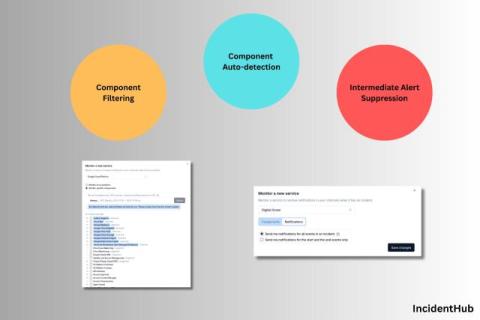
IncidentHub can send outage alerts to many external systems. You can choose from Slack, Webhook, Email, Discord, PagerDuty, and more. Alerts are effective only when they are relevant and actionable. In this article, we will explore how to fine-tune your IncidentHub alerts to receive only the relevant ones for your third-party services.