

Operations | Monitoring | ITSM | DevOps | Cloud

Event Intelligence and the Diagnosis Gap: When Logs Are the Only Witness

✓ operational truth Incident diagnosis is now the longest phase of resolution because evidence is fragmented, expertise sits with a few people, and cloud and SaaS estates no longer allow engineers to log in and look. Event Intelligence closes the gap by correlating events into a single probable cause, mining logs automatically, and arriving at the incident with a hypothesis already formed.
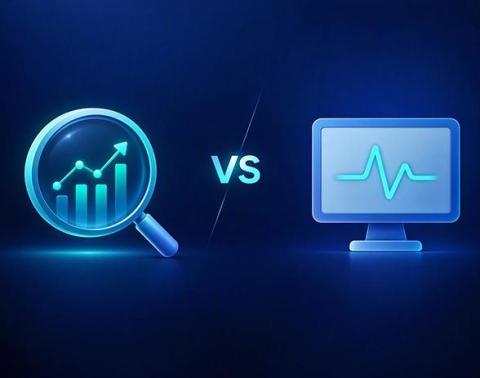
Observability vs Monitoring: Why Does IT Still Find Out After the Business Does?

✓ operational truth IT finds out late because traditional monitoring is built to detect what goes wrong, not what has quietly stopped happening. Closing that gap requires observability that validates business journeys end to end, detects missing activity, checks its own coverage, and predicts degradation before a threshold is ever crossed.

When Peak Business Demand Depends on Information Nobody Sees

Modern enterprises no longer operate as isolated systems. Every customer order, supplier commitment, shipment, invoice, and payment relies on information moving seamlessly across a growing network of applications, partners, and business functions. In many SAP-driven organizations, SAP IDocs serve as one of the primary mechanisms for exchanging business information between various SAP and non-SAP systems. Most business users never see them, never interact with them, and often never hear about them.

Correlating Business and IT Events: The Path to Business Process Observability

At 9:40 on a Tuesday morning, an order sits unconfirmed in the fulfillment process. Two systems away, a queue depth ticks upward in the integration layer. Both events are recorded. Neither is connected to the other, so nobody escalates nothing is technically down. By 2 PM, order confirmations have stalled across a region. The CFO is asking why the daily revenue number looks soft. Customer service is fielding calls.

Episode 15 - Melissa M. Reeve (part-2)

When it comes to effectively rolling out AI in companies, middle managers may be more important than ever as the link between strategy and daily work. In Part 2 of this conversation on The Intelligent Enterprise, host Tom Stoneman continues his conversation with Melissa M. Reeve, author of Hyperadaptive: Rewiring to Become an AI-Native Organization, to dig into the practical side of how businesses can become AI-native. Melissa argues that AI should be treated less like a software rollout and more like the arrival of the personal computer in the 1990s.

How Pharma IT Teams Can Achieve Continuous GxP Compliance and Audit Readiness

Maintaining GxP standards has become harder as IT environments grow more distributed. Manual processes, fragmented accountability, and inconsistent controls make it difficult to maintain a consistent compliance posture across endpoints and critical systems.

Autonomous IT for Travel and Hospitality: Revolutionizing Guest Experiences and Operational Resilience

As the travel and hospitality landscape continues to evolve, Artificial Intelligence (AI) and Autonomous IT have become indispensable for staying competitive. These technologies are fundamentally transforming how enterprises deliver seamless guest experiences while ensuring resilient, efficient operations.