Operations | Monitoring | ITSM | DevOps | Cloud

Using the New Flux Usage API to Calculate Pricing for InfluxDB Cloud

InfluxDB Cloud offers a transparent usage-based pricing model that only charges users on the work performed, with no minimums or long-term commitments. This puts YOU in charge of what you spend. However, with four separate pricing vectors, it’s not always easy to see exactly where that cost is going, or how to estimate your potential spend based on your data usage.

TL;DR InfluxDB Tech Tips - Optimizing Flux Performance in InfluxDB Cloud

So you’re using InfluxDB Cloud and you’re taking full advantage of Flux to create custom data processing tasks, checks, and notifications. However, you notice that some of your Flux scripts aren’t executing as quickly as you expect. In this post, we’ll learn about best practices and tools for optimizing Flux performance.

Building an IoT App with InfluxDB Cloud, Python and Flask (Part 3)

Last year I started an IoT project, Plant Buddy. This project entailed soldering some sensors to an Arduino, and teaching that device how to communicate directly with InfluxDB Cloud so that I could monitor those plants. Now I am taking that concept a step further and writing the app for plantbuddy.com. This app will allow users to visualize and create alerts from their uploaded Plant Buddy device data in a custom user experience.

TL;DR InfluxDB Tech Tips - Using and Understanding the InfluxDB Cloud Usage Template

So you’re using InfluxDB Cloud, and you’re writing millions of metrics to your account. Whether you’re building an IoT application on top of InfluxDB or monitoring your production environment with InfluxDB, your time series operations are finally running smoothly. You want to keep it that way. You might be a Free Plan Cloud user or a Usage-Based Plan user, but either way, you need visibility into your instance size to manage resources and costs.

Prometheus Remote Write Support with InfluxDB 2.0

In InfluxDB 1.x, we provided support for the Prometheus remote write API. The release of InfluxDB 2.0 does not provide support for the same API. However, with the release of Telegraf 1.19, Telegraf now includes a Prometheus remote write parser that can be used to ingest these metrics and output them to either InfluxDB 1.x or InfluxDB 2.0.

Monitor Your InfluxDB Open Source Instances with InfluxDB Cloud

Everyone says the cloud is the future. Sure, but try telling that to someone who has terabytes of sensitive data stored in an on-prem InfluxDB Open Source (OSS) instance, and they will bring up a whole set of reasons why it doesn’t make sense for them to move into the cloud right now. There are also some use cases which make more sense for on-prem software deployments.

Kristina Robinson | Understand and Visualize Your Data with InfluxDB Cloud | InfluxDays EMEA 2021

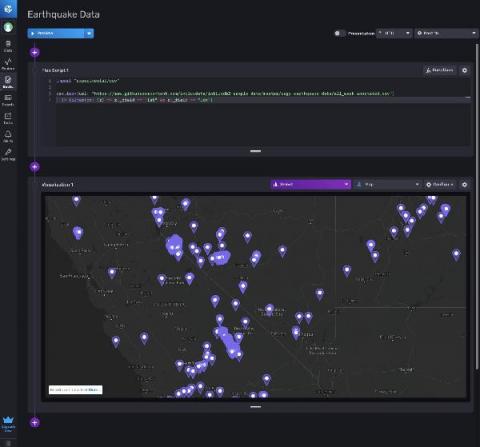
Learn how you as a developer can use our InfluxDB Cloud web interface to ingest, explore, analyze, and understand your data. We highlight new capabilities and show you some tips and tricks to get the most out of the InfluxDB Cloud Platform.