Operations | Monitoring | ITSM | DevOps | Cloud

Canonical releases Charmed MLFlow

London, United Kingdom, 26 September 2023. Canonical announced today that Charmed MLFlow, Canonical’s distribution of the popular machine learning platform, is now generally available. Charmed MLFlow is part of Canonical’s growing MLOps portfolio. Ideal for model registry and experiment tracking, Charmed MLFlow is integrated with other AI and big data tools such as Apache Spark and Kubeflow. The solution runs on any infrastructure, from workstations to public and private clouds.

Coralogix vs Google Cloud Operations: Support, Pricing and Features

Google Cloud Operations, formerly known as Stackdriver, is relatively new to the observability space. That being said, its position in the GCP ecosystem makes the platform a serious contender. Let’s explore some of the key ways in which Google Cloud Operations differs from Coralogix, a strong full-stack observability platform and leader in providing in-stream log analysis for logs, metrics, tracing and security data.

What is DataOps? Process, Benefits & Best Practices Today

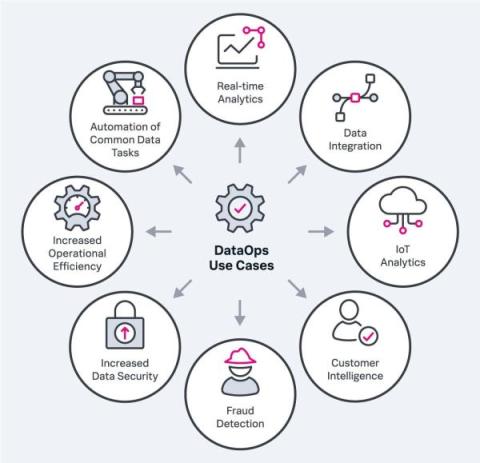
Whether you're a small business or a large enterprise, working with data consumes time and effort. But what if there was a way to turn this data into opportunities for growth? That’s what DataOps offers. DataOps helps create a collaborative environment to improve data quality by automating manual processes. Research shows the market for DataOps platforms will grow from USD 3.9 billion in 2023 to USD 10.9 billion by 2028. This growth shows how steadily organizations will streamline their operations.

Infrastructure Monitoring Today: How It Works & What It Does

The famous phrase “Houston, we’ve had a problem” isn’t a one off event for space missions or Tom Hanks — its a regular occurrence for most IT teams! Today’s IT teams are peppered with alerts indicating that something has gone amiss in their production environments. Visibility of uptime and performance is an essential part of ensuring that your IT infrastructure can power applications to meet business needs and deliver value for users.

Know Your Customer Again Revisited

At the end of last year, I wrote about using Splunk to monitor the Know Your Customer (KYC) use case that is a regulation in most Financial Services Institutions in many countries. The last part of the regulation states that continuous monitoring of your customers in terms of their interactions and transactions needs to take place.

Netdata, Prometheus, Grafana Stack

In this blog, we will walk you through the basics of getting Netdata, Prometheus and Grafana all working together and monitoring your application servers. This article will be using docker on your local workstation. We will be working with docker in an ad-hoc way, launching containers that run /bin/bash and attaching a TTY to them. We use docker here in a purely academic fashion and do not condone running Netdata in a container.

Netdata Processes monitoring and its comparison with other console based tools

Netdata reads /proc//stat for all processes, once per second and extracts utime and stime (user and system cpu utilization), much like all the console tools do. But it also extracts cutime and cstime that account the user and system time of the exit children of each process. By keeping a map in memory of the whole process tree, it is capable of assigning the right time to every process, taking into account all its exited children.

Netdata QoS Classes monitoring

Netdata monitors tc QoS classes for all interfaces. If you also use FireQOS it will collect interface and class names. There is a shell helper for this (all parsing is done by the plugin in C code - this shell script is just a configuration for the command to run to get tc output). The source of the tc plugin is here. It is somewhat complex, because a state machine was needed to keep track of all the tc classes, including the pseudo classes tc dynamically creates. You can see a live demo here.

Eight Cybersecurity Tips for Businesses in 2023

The online playing field for businesses in multiple niches has expanded, with the internet enjoying an overarching presence in various facets. New and larger markets have become more accessible through online platforms. All an established business needs is computer-based tools and an internet connection that won’t falter. Expansion is often rewarding but has its fair share of risks; thus, melding a nice blend of cybersecurity with a growing company is the safe way to go about it.

Navigating Data Overload with Cribl

So many businesses today are playing “Hungry, Hungry, (Data) Hippo,” devouring every marble of information they can get their hands on. While it seems like every company has a robust data aggregation system, what most companies don’t have is an efficient way to control what data they store and where that data goes. We all want to make data-driven business decisions, but sorting through tons of data to find useful business insights can be like finding a needle in a whole farm.