Operations | Monitoring | ITSM | DevOps | Cloud

On-Demand Vs. Spot Instances: What's The Difference?

Whether you’re in finance or engineering, you know keeping your customers happy is the key to success. That means, your SaaS product or service needs to be available, reliable, and cost-effective virtually all the time. On that note, you can determine how stable and high-performing your service is depending on whether you use On-Demand or Spot Instances. Pricing, capacity, and flexibility will also vary depending on which of the two instances you choose.

Azure Tagging In 2026: A Complete Guide to Organizing Resources, Costs, and Governance

Azure tags are like sticky notes for your cloud resources. They help you label and organize infrastructure in ways that make sense to your organization. Tags enable you to assign categories to resources, making it easy to group, monitor, track, and filter them across any environment. So, how do tags and tagging work in Azure?

The Ultimate Kubernetes Cost Monitoring And Management Guide

While Kubernetes enables teams to deliver more value faster, understanding and controlling Kubernetes costs remains challenging. You have disposable, replaceable compute resources constantly coming and going across a range of infrastructure types. Yet at the end of the month, you only get a billing line item for EKS costs and several EC2 instances.

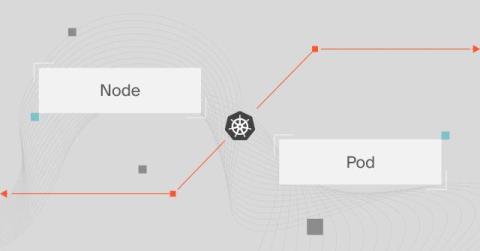
Kubernetes Node Vs. Pod Vs. Cluster: What's The Difference?

Kubernetes is increasingly the standard for deploying, running, and maintaining cloud-native applications running in containers. Kubernetes (K8s) automates most container management tasks, empowering engineers to manage high-performing, modern applications at scale. Meanwhile, surveys from VMware and Gartner reveal that insufficient Kubernetes expertise prevents many organizations from fully adopting containerization. Understanding how Kubernetes components work removes this barrier.

Database Cost Management: How To Control Rising Database Spend

According to CloudZero’s Cloud Economics Pulse, databases are often among the largest and most persistent cloud cost categories. Database costs are notoriously difficult to predict and control. Unlike stateless infrastructure that scales predictably with traffic, databases run continuously and expand behind the scenes, causing costs to rise even when usage appears stable. Because databases run continuously and expand behind the scenes, costs can rise even when usage appears stable.

Kubernetes Namespaces: What They Are, How They Work, And What They Don't Solve

Using Kubernetes to manage containerized applications has its fair share of challenges. One of those challenges is managing complexity. Using namespaces can help minimize that complexity. Yet, a common misconception is that using multiple namespaces in a single Kubernetes cluster can degrade performance. Another issue: Kubernetes namespaces can reduce visibility into costs. There’s more to it than that.

CloudZero's FinOps Cost-Per-Unit Glossary

This glossary is a bookmarkable reference for cost-per-unit metrics in FinOps unit economics. It’s designed for engineering, finance, and FinOps teams that need a shared language for understanding how cloud costs behave as usage, customers, and products scale. The terms are organized by category and include real-world context.

AWS EC2 Vs. Azure VMs Vs. GCE: Understanding The Real Cost Of Cloud VMs

AWS EC2, Azure Virtual Machines, and Google Compute Engine (GCE) appear similar on paper but produce different bills due to how each provider prices capacity, discounts, idle time, and commitment terms. The same VM configuration can cost 20-40% more or less depending on which cloud you choose and how your workload runs. On paper, all three offer similar virtual machines. In reality, they price capacity, discounts, and idle time very differently.

AWS Data Exchange Guide: Use Cases, Pros, Cons, And Pricing

Third-party data now drives forecasting, analytics, and machine learning across modern cloud teams. But acquiring it has long meant custom contracts, delayed access, and limited visibility into how data costs scale inside analytics workflows. AWS Data Exchange reduces much of that friction by integrating third-party data into the AWS ecosystem.

AWS Elastic Beanstalk 101: A Beginner's Guide To App Deployment On AWS

Imagine you want to launch an application without first building and managing the servers that run it. You write the code, pick how it should run, and then let a platform take care of the rest. That’s the core promise of AWS Elastic Beanstalk. In this snackable guide, you’ll understand AWS Elastic Beanstalk well enough to decide if it belongs in your AWS architecture.

How To Design AI-Native SaaS Architecture That Scales Without Killing Your Margins

AI-native SaaS products aren’t failing because the models are bad. They’re failing because the architecture can’t keep up with how AI actually behaves in production. What looks affordable in staging can erode your margins once real customers, workflows, and automation come into play. Designing AI-native SaaS architecture is now as much a margin decision as it is a technical one.

Surging AI Costs Are Eroding Business Efficiency: New CloudZero Report

What do 475 senior leaders across software, financial services, cybersecurity, and other industries all have in common? They have little to no idea whether their AI investments are paying off. CloudZero just released FinOps in the AI Era: A Critical Recalibration, a report assessing the state of cloud and AI spending. Culled from hundreds of responses from people directly accountable for cloud spending, the report shows that while FinOps maturity is accelerating, cloud efficiency is plummeting.

FinOps Maturity Has Never Been Higher. So Why Is Cloud Efficiency Plummeting?

Whoever thought we’d see the day when cloud cost management (CCM) seemed easy? CloudZero just released FinOps In The AI Era: A Critical Recalibration, an annual report on the state of cloud and AI costs. The report surfaced what looks like a paradox: FinOps maturity is accelerating, but organizational cloud efficiency is plummeting. 72% of organizations now have formal cloud cost management (CCM) programs. That’s nearly double what we saw in our last survey (39%).

The AI-nigma: FinOps Is Maturing - So Why Is Cloud Efficiency Falling?

Q: What do you call it when FinOps maturity surges but cloud efficiency plummets? A: An AI-nigma. I don’t claim to be a comedian. But I do claim to be Fred FinOps, so the paradoxical findings from CloudZero’s new report titled FinOps in the AI Era: A Critical Recalibration, created in partnership with B2B SaaS benchmarking firm Benchmarkit, had me scratching my head. The good news: These numbers tell a story of cloud cost maturity and control. But then there’s the bad news.

Sustainable AI Investment: A Systems Thinking Approach

According to our new report, FinOps in the AI Era: A Critical Recalibration, 40% of companies now spend $10M or more annually on AI. Most can’t tell you if it’s working. That’s not a budgeting problem. It’s a systems problem. And Donella Meadows wrote the playbook for understanding it.

Your Cloud Economics Pulse For February 2026

Welcome to February’s Cloud Economics Pulse, CloudZero’s monthly look at cloud spend as AI moves from experiment to expectation. Last month, we closed out 2025 with a settling: provider shares locked in, compute softened, and AI claimed more of the mix (big surprise there). January confirmed those patterns weren’t year-end hustle and bustle. They signify a new baseline. Also, the Big Three (AWS, GCP, Azure) barely moved. They’re as entrenched as can be.

Kubernetes Vs. OpenStack: How They Differ, How They Work Together, And When To Use Each

Kubernetes and OpenStack are not competitors. They operate at different layers of the stack and are often used together. OpenStack manages cloud infrastructure such as compute, storage, and networking. Kubernetes runs on top of that infrastructure to deploy, scale, and manage containerized applications. Teams often compare them as alternatives, but in practice, Kubernetes frequently runs on OpenStack.

AI Vendor Lock-In: How AI Is Creating A New Dependency Problem

Like most SaaS companies, you’re under pressure to ship AI-powered features faster, smarter, and at scale. For many teams, that pressure leads to relying on external AI platforms, managed models, and third-party APIs instead of building everything from scratch in-house. At first, it feels like a win. Your team ships an AI-powered feature in weeks instead of months. No GPU clusters to manage. No models to train. No infrastructure to babysit.

AI Is Forcing A Return To Hybrid And Multi-Cloud (Here's What To Do Now)

For most of the last decade, the direction of cloud strategy was clear: standardize, consolidate, and reduce sprawl. Engineering teams worked to pick a primary cloud, reduce vendor dependencies, and simplify their stacks. FinOps teams unwound years of fragmentation. Platform teams built guardrails to make sure it didn’t happen again. Then AI arrived, and it’s a fundamentally different class of workload. AI demands specialized hardware and, increasingly, diverging providers.

From Chaos To Clarity: How Forcepoint Scaled FinOps Across The Organization

When Anthony Leung talks about FinOps, he’s speaking from operating at real scale — not theory. As VP of Engineering Platforms and Security Research at Forcepoint, he led a transformation that cut cloud spend in half while improving availability, and built a culture where engineers own their economics.

Intelligent FinOps: AI-Informed, AI-Enabled

AI is the new frontier for FinOps maturity. It introduces fresh spend patterns and new opportunities for value. As GPUs, inference, and retraining reshape costs, FinOps maturity grows through visibility, forecasting, and shared mindset about how these workloads drive business impact. In this 2025 post, I gave my guidelines for implementing AI tagging to give business context and clarity to vague AI invoices. Now, I’m sharing the next level up: how to drive FinOps in AI with AI.

AI Tags: Why Cloud Tagging Breaks Down For AI Workloads (And What To Use Instead)

Tags have long been the backbone of cloud cost visibility and governance. They help teams understand who owns what, where spend comes from, and how infrastructure maps back to the value the business delivers. However, AI workloads have altered that model, and exposed the limitations of traditional AI tags in the process. In fact, many of the most expensive AI operations don’t run on taggable cloud resources at all.

How To Calculate Customer Retention Cost in 2026: The Hidden SaaS Metric

You may have heard that keeping an existing customer is five times cheaper than acquiring a new one. But that isn’t always true. “Hidden costs” often accompany customer retention, loyalty, and increasing “share of customer”. Could you be spending more on customer retention than on winning new customers? This quick guide will walk you through the meaning of Customer Retention Cost (CRC), why it’s important to calculate it, and how to calculate it.