The latest News and Information on Containers, Kubernetes, Docker and related technologies.
On this episode of Exception Perceptions, Katy Farmer, InfluxData’s Developer Advocate, tells us all about Kubernetes (also known as K8s). Watch the episode, and then accompany Katy on her journey to uncover the “captain” of containerization’s secrets.
I am embracing managed Kubernetes services and here’s my journey. While I attended KubeCon 2018 ready to soak up all I could about Kubernetes and the cloud-native ecosystem, I sought to learn as much as I could to aid me in running my clusters day to day. More importantly, though, I experienced a fundamental shift in what I see as the future of Kubernetes, and what getting started in Kubernetes looks like for companies today.
In part 1 of this series, I discussed the rise of microservice architecture and the reliance on Kubernetes and Docker for container orchestration and management. I also shared some of the challenges these new technologies present and what sources of data we need in order to effectively monitor our Kubernetes environments.
This article analyzes the recent CNCF article, '9 Kubernetes Security Best Practices Everyone Must Follow' and discusses how Rancher, RKE, and RancherOS satisfy these by default. I also discuss the Rancher Hardening Guide, which covers 101 more security changes that will secure your Kubernetes clusters.
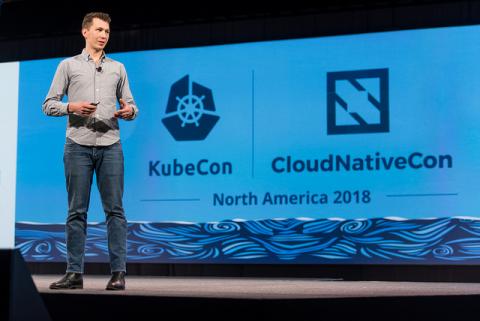
I made the trip up to Seattle for KubeCon North America at the end of 2018 along with a bunch of us from Sumo Logic. KubeCon is a conference that specializes in all things Kubernetes and focuses on updating the world on the state of the Kubernetes ecosystem. This year’s event was massive with 8,000 attendees, and talks given by representatives from Amazon Web Services (AWS), Google Cloud Platform (GCP), and Microsoft Azure to name a few big wigs that were there.
At Mattermost, we aim to develop a product that is simple to deploy and manage. To this end, we recently examined Kubernetes, today’s most popular orchestration platform that uses containers.
In this post, I’m going to cover some of the fundamentals of how Calico works. I really don’t like the idea that with these Kubernetes deployments, you simply grab a yaml file and deploy it, sometimes with little to no explanation of what’s actually happening. Hopefully, this post will servce to better understand what’s going on.
OpsRamp is proud to announce that we’ve joined the Cloud Native Computing Foundation (CNCF). As cloud-native adoption within the enterprise grows at an accelerated pace and Kubernetes emerges as the leading orchestration platform for containerized applications, we’ve been actively developing new enhancements and features to support these innovative technologies.
OpsRamp, the service-centric AIOps platform for the modern enterprise, today announced its silver membership in the Cloud Native Computing Foundation (CNCF). Today OpsRamp provides autodiscovery for Kubernetes and Docker hosts along with Kubernetes infrastructure monitoring for multi-cloud infrastructure (AKS, EKS, GKE) and on-prem environments. The CNCF partnership comes as the company is set to release new features for Kubernetes monitoring in a matter of weeks.