Operations | Monitoring | ITSM | DevOps | Cloud

The latest News and Information on DevOps, CI/CD, Automation and related technologies.

4 on-call burnout signs (and how to address them)

Being on-call can sometimes feel overwhelming. If that feeling goes unnoticed for too long, it often translates into burnout. And early burnout signs usually show up in ways, like how people respond to incidents or how they feel about the schedule. This guide walks through four such signs that can be useful to watch for before on-call burnout sets in.

The foundations of software: open source libraries and their maintainers

Open source libraries are repositories of code that developers can use and, depending on the license, contribute to, modify, and redistribute. Open source libraries are usually developed on a platform like GitHub, and distributed using package registries like PyPI for Python and npm for JavaScript. These repositories contain pre-written, re-usable code that developers use to add elements or features within their software projects.

Syslog Checks: How to find Insights in the Data Flood

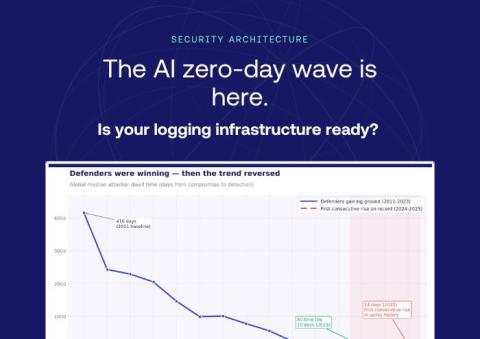
Every SysAdmin knows the feeling. They are swimming in logs—terabytes of them. Every daemon, service, and kernel subsystem religiously writing their activities to syslog. The data exists. The signals are there. Yet, somehow, incidents still are still unpredictable. How is this even possible? Here's why this happens: Traditional syslog infrastructure was designed for storage and retrieval, not detection and response.

Why Your Company Will Be Running OpenClaw Next Year

You’ve probably heard of OpenClaw. Maybe you’ve seen the demos where an AI agent opens a browser, navigates to your CRM, fills in a form, and files a support ticket. No API required. Maybe you thought “that’s cool but I’d never run that at work.” Your employees already are. According to Permiso’s research, 22% of enterprise customers have employees running OpenClaw without IT approval.

How AI Coding Is Breaking Synthetic Data Generation

Traditional synthetic data generation approaches, still called “Test Data Management” (TDM) by legacy vendor, were designed for a world where applications were monolithic, databases were the center of gravity and change happened slowly. The world looks a lot different now. Modern systems are distributed, often times event-driven, and increasingly powered by streaming data and AI agents. In this environment, batch-oriented synthetic data generation fails to capture how systems actually behave.

DLP, Traffic Replay, and the Missing Link to Software Quality

In Part 1 and Part 2 we explored why testing modern software is so difficult. Production data is the most valuable input for testing, but it’s locked away because it contains PII and sensitive context. Traditional Synthetic Data Generation (SDG) was built for batch databases, not streaming systems. And AI coding agents amplify every weakness in existing test strategies because they need current, realistic data or they generate buggy code based on outdated assumptions.

Migration blueprint for moving your application without rewriting

The decision to migrate a production application is rarely about the destination. It is about the friction of the journey. For most engineering leaders, the word "migration" is a synonym for "refactor." The industry has conditioned us to assume that moving to a modern cloud platform requires throwing away years of stable configuration, learning a new proprietary DSL, and rewriting core application logic to fit a specific container or serverless model.

Why Upsun is the multi-cloud PaaS technical leaders are choosing in 2026

In a recent technical evaluation by Journal du Net (JDN), Upsun (formerly Platform.sh) was recognized for its ability to "pull ahead" (tire son épingle du jeu) in a fiercely competitive market dominated by cloud giants and specialized pure players. While hyperscalers offer raw power, Upsun’s strategic fusion of enterprise reliability and AI-ready agility has redefined expectations for modern PaaS.

5 Offbeat on-call rotations that work

Most teams choose standard on-call patterns like weekly or daily rotations. But sometimes a less conventional rotation can solve a specific problem or just fit better with how your team works. This guide walks you through five offbeat on-call rotations. For each, we look at why it might work for you and the challenges involved. This helps you see the full picture before you decide to try them out. Let’s dive in!

Follow-the-sun and other on-call models

Most teams run on-call using rotation-based schedules where responsibility shifts every few days or weeks. But some situations call for different models that change who responds based on time zones, expertise, or the type of incident that triggers. This guide walks you through six on-call models that work outside the standard rotation patterns.