Operations | Monitoring | ITSM | DevOps | Cloud

How we built an automated debugging workflow at Sentry

AI is going to generate a lot of code from here on out, and a lot of bugs along with it. You already know this. We’ve talked about it before. The bigger challenge is making sure you don’t spend all your time fixing the broken code your agents write. You’re going to need a system that makes it easier to fix those issues for you and fortunately, there are a lot of solutions out there for building automated workflows.

The New MCP Headers Are a Gift to Gateways

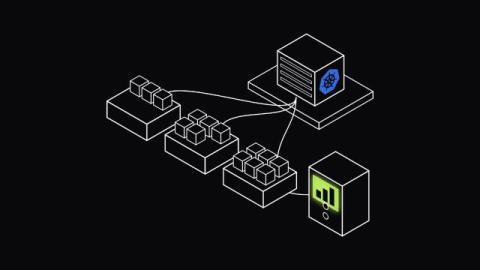
In short, buried in the transport section of the MCP 2026-07-28 release candidate are three changes that matter more to infrastructure teams than to anyone else: mandatory Mcp-Method and Mcp-Name headers, cache-control-style ttlMs and cacheScope fields, and standardized W3C Trace Context propagation. Together with the stateless core, they turn MCP from a protocol that gateways had to fight into one that meets them halfway.

Open Models Are Closing the Gap

The frontier models have led the pack for a while now. It seems like the big players of Anthropic and OpenAI keep leapfrogging each other by a couple points in benchmark scores every other month. But, a trend we are starting to see is that open weight models are improving by leaps and bounds. They don’t hold the lead and probably won’t for a while, but the fact that open models are scaring the leaders is something to think about.

How to Build and Scale Unified Asset Intelligence for AI Success

Every IT leader has felt this tension: your organization has invested in AI, automation and digital operations, and yet outcomes still fall short of expectations. Even with the right tools and intent, you won’t be able to fully realize the value of your AI investments if they’re built on an unsteady foundation.

AI isn't a black box. It's Pandora's Box.

When CFOs talk about AI budgets, they tend to describe it the same way: it’s a black box, offering little or no transparency. The bill arrives at the end of the month, it’s bigger than last month, and nobody can really explain why. Meanwhile, engineering keeps asking to raise the token budget. I think that framing undersells what’s actually happening out there. If the black box is the bill, the Pandora’s box is what you opened when you brought AI into the company.

Generative AI ROI: benchmarks and how to prove it

Generative AI ROI measures the financial return on generative AI investments relative to their total cost. Benchmarks diverge sharply: Google Cloud's 2025 study found 74% of enterprises see ROI within the first year, while MIT's NANDA initiative found 95% of pilots deliver no measurable P&L impact. The difference is not the AI. It is whether the organization can actually measure cost and outcome at the use case level.

Shipped: Catch the S3 object-tag charge before it scales with you

There’s an S3 charge that stays invisible in a normal storage cost review. AWS bills S3 object tags per tag, per hour, so the cost scales with how many objects you have, not how much data you store. It gets its own line item, which is easy to miss when you’re scanning storage spend. It can sneak up on you. Tags get added in a dev environment to drive lifecycle rules, where object counts are small and the cost is nothing.

GPU Cloud for non-AI workloads: Rendering, simulation, and scientific computing

The GPU cloud conversation over the last three years has been almost entirely captured by AI. Marketing pages talk about training, inference, and foundation models. Vendor announcements focus on which NVIDIA card fits which LLM. Reference customers are AI companies. The infrastructure decisions being made in the market are shaped by AI's specific requirements - high VRAM, fast interconnect, FP8 support, continuous utilization patterns.

How to Monitor Internet Uptime

Your ISP tells you your connection is up 99.9% of the time. Your users tell you the MS Teams video calls keep freezing. Both can be true at once, and that gap is exactly why you need to monitor Internet uptime yourself instead of taking your provider's word for it. This article covers what Internet uptime actually means, how to calculate it, what a good internet uptime SLA looks like, and how to monitor internet uptime with your own data so you're not stuck relying on your ISP's version of events.