Operations | Monitoring | ITSM | DevOps | Cloud

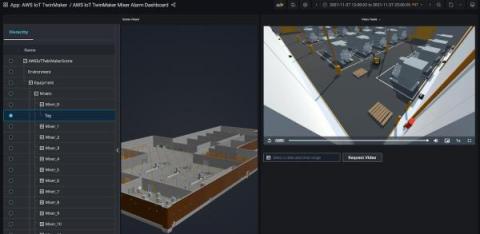
How Grafana powers the dynamic visualizations of IoT data for AWS IoT TwinMaker

At re:Invent this year, AWS announced its new digital twin service, AWS IoT TwinMaker (in preview), which allows users to create digital twins of real-world systems like buildings, factories, industrial equipment, and production lines. Using a digital twin to monitor and improve operations for a physical system requires ingesting data from IoT sensors, process instruments, cameras, and enterprise systems, and curating and associating data from these disparate sources.

Help us help you with content usage telemetry

Let's rip off the bandaid and get the bad news out there first: we're rolling out telemetry for Puppet content. Read on to find out why I think that's actually good news for you, how you can see exactly what data it collects, and how to make sure it never runs if your corporate policy doesn't allow it. And maybe a free beanie if you choose to opt in?

Cloud misconfiguration: vulnerability hiding in plain sight

This post originally appeared on The New Stack and is re-published here with permission. In our technology-driven business climate, most companies have at least some, if not all, workloads on the cloud. And unlike on-premises networks, these cloud environments lack secure outer perimeters and specific off times. Cloud networks are always on and always available. While convenient, this also means hackers can access them at any time.

Harvester: A Modern Infrastructure for a Modern Platform

Cloud platforms are not new — they have been around for a few years. And containers have been around even longer. Together, they have changed the way we think about software. Since the creation of these technologies, we have focused on platforms and apps. And who could blame anyone? Containers and Kubernetes let us do things that were unheard of only a few years ago.

QA Activities- What Should You Keep In Mind?

When your development team is under pressure to keep releasing new functionality in order to stay ahead of the competition, the time spent on quality assurance (QA) activities can feel like one overhead that you could do without. After all, with automated CI/CD pipelines enabling multiple deployments per day, you can get a fix out pretty quickly if something does go wrong – so why invest the time in testing before release? The reality is that scrimping on software testing is a false economy.

Using context.Context to mock API clients

We've found a pattern to mock external client libraries while keeping code simple, reducing the number of injection spots and ensuring all the code down a callstack uses the same mock client. Establishing patterns like these is what makes test suites great, and improves developer productivity when writing tests. Here's how it works.