Operations | Monitoring | ITSM | DevOps | Cloud

MicroCloud LTS Demo

Canonical MicroCloud’s 2.1.0 LTS release features support for single-node deployments, improved security posture, and more flexibility during the initialization process. In this video we guide you through the new process, starting with deploying a MicroCloud on a single node, and then expanding with two additional members for a highly available cluster. Follow along and try it yourself.

What is a MicroCloud?

A MicroCloud is a new lightweight, featureful, and straightforward cloud for on-demand computing at the edge. MicroClouds differ from IoT which uses thousands of single machines or sensors to gather data, yet does not perform computing tasks. Instead, MicroClouds reuse proven cloud primitives with unattended, autonomous, and clustering features that resolve typical edge computing challenges.

Canonical announces the first MicroCloud LTS release

Today, Canonical announced the availability of MicroCloud’s first long term support (LTS) release. MicroCloud is part of Canonical’s cloud infrastructure portfolio. As the publisher of Ubuntu, Canonical is known for providing Ubuntu LTS releases every two years in April. With the addition of a MicroCloud LTS, Canonical expands its commitment to long term support for organizations looking for a scalable virtualization solution for edge and low-touch clouds.

Navigating multi-cloud database deployments with MySQL for maximum uptime

Public cloud providers offer convenient services for database deployments. However, depending solely on a single provider’s database-as-a-service can result in vendor lock-in and reduce your system’s resilience against widespread outages affecting the provider. Instead, explore our approach to deploying MySQL across multiple clouds. A multi-cloud database strategy enables you to retain control of your infrastructure while enhancing overall resiliency and leveraging the unique strengths of each cloud provider.

Ubuntu 24.04 LTS Noble Numbat is Now Supported!

Announcing support for Ubuntu 24.04 LTS Noble Numbat on all Cloud 66 products (including registered servers). From this point onward, newly added servers will have Ubuntu 24.04 installed. Don't forget, you can control your target Ubuntu version via a selection dropdown when scaling up via the UI, or through your manifest! Ubuntu 24.04 is a Long-Term Support (LTS) release and will receive ongoing app updates and critical security fixes until June 2029.

Charmed MySQL enters General Availability

Nov 6th, 2024: Today Canonical announced the release of Charmed MySQL, an enterprise solution that helps you secure and automate the deployment, maintenance and upgrades of your MySQL databases across private and public clouds. MySQL is one of the world’s most popular databases. MySQL’s simple deployment model and ease of use make it the default choice for many developers. MySQL is the M in the popular LAMP architecture that powers most web applications today.

What is IoT device management?

IoT device management refers to processes or practices used to deploy, monitor and maintain IoT devices. As organizations scale up their IoT efforts, a solid device management approach is essential to running a secure, streamlined fleet of devices. The proliferation of connected devices worldwide (projected to reach 18.8 billion in 2024) means that IoT device management is growing more complex, a reality that has not gone unnoticed by bad actors.

Linux Load Average Myths and Realities

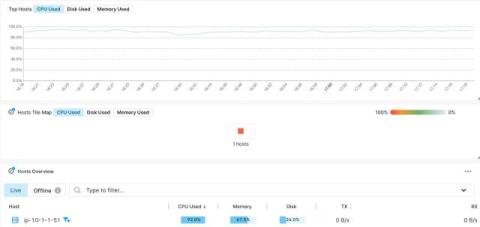
When it comes to monitoring system performance on Linux, the load average is one of the most referenced metrics. Displayed prominently in tools like top, uptime, and htop, it’s often used as a quick gauge of system load and capacity. But how reliable is it? For complex, multi-threaded applications, load average can paint a misleading picture of actual system performance.

Charmed Kubeflow vs Kubeflow

Kubeflow is an open source MLOps platform that is designed to enable organizations to scale their ML initiatives and automate their workloads. It is a cloud-native solution that helps developers run the entire machine learning lifecycle within a single solution on Kubernetes. It can be used to develop, optimize and deploy models. This blog will walk you through the benefits of using an official distribution of the Kubeflow project.