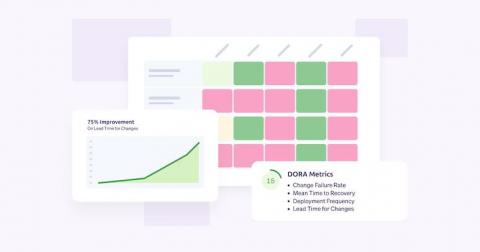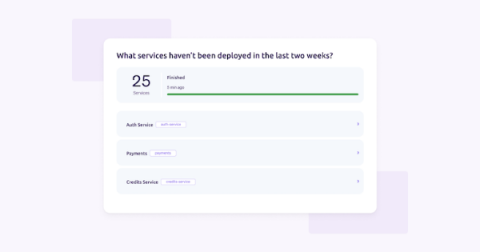
To improve reliability, we need to measure it, and to measure it we use SLOs (Service Level Objectives). Or at least, that’s what Google SRE has popularized. In practice, it can be difficult and time-consuming to identify the right things to measure, to get to the right data, and to surface the results in a way that engages the stakeholders and teams involved. And all this is especially hard as we scale our teams and applications across multiple technology stacks.
Observability is a very important aspect of software that’s often taken for granted. You need to have visibility into what your application is doing at different levels to better understand an issue when it occurs. There are multiple open-source tools and initiatives to help you achieve improved visibility. When we talk about observability, there are three parts to consider: logs, traces and metrics.
Microservice architecture is an application system design pattern in which an entire business application is composed of individual functional scoped services, which can scale on demand. Each team focuses on an individual service and builds it according to their skillset or language of choice. In addition to flexibility, this pattern provides: These features have made microservices architecture a popular choice for enterprises.
Mickael Alliel 5 Min read September 20th, 2022 DevOps Kubernetes
Have you ever tried to find a bug in a multi-layered architecture? Although this might sound like a simple enough task, it can quickly become a nightmare if the system doesn’t have proper monitoring. And the more distributed your system is, the more complex it becomes to analyze the root cause of a problem. That’s precisely why observability is key in distributed systems. Observability can be thought of as the advanced version of application monitoring.
The past ten years marked a significant change in how software teams build and deploy applications. We moved away from bulky, slow, monolithic applications toward lightweight, scalable, distributed service-based applications. Meanwhile, tools like Docker, Kubernetes, and other container platforms helped accelerate this process. Despite this sudden growth, a fundamental question remains: what exactly is a service, and how does it fit into a microservice architecture?
Microservices have grown to become one of the most optimal alternatives to monoliths. However, just building your app and releasing it to the public isn’t everything. Monitoring microservices is as important as building and releasing them. You need to maintain it to resolve issues that may occur and also introduce new features from time to time.