Operations | Monitoring | ITSM | DevOps | Cloud

Microsoft Teams for Alerting has landed

Get crucial error and performance diagnostics sent directly to your chosen Microsoft Teams channel with Raygun Alerting. As of 2022, Microsoft Teams has surpassed Slack’s 18 million active users with a user base of over 270 million, solidifying its position as the leading business communication platform. In August 2021, we released our Slack for Alerting integration, and now it’s time to extend that capability to Microsoft Teams.

Containerization 101 | Getting Started & Best Practices

Containers and Microservices architectures are no longer the new kid on the block, and it may be time to take a fresh look at your ecosystem. In this session we will provide a baseline for getting started with containerization in 2023 with a strong emphasis on security. To help the novice and the seasoned veteran, we’ll navigate topics that apply to all, including.

How to track the failures in microservice applications?

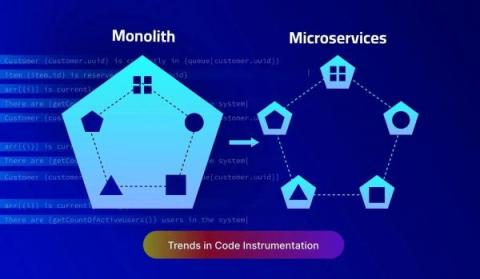
Microservices architecture (often shortened to microservices) is an architectural style for developing applications. Microservices allow a large application to be separated into smaller independent parts, each having its own realm of responsibility. To serve a single user request, a microservices-based application can call on many internal microservices to compose its response. It is critical to track failures in microservice to take corrective actions and keep the business process ongoing.

Control Plane is the most powerful environment for running multi-cloud & multi-region microservices

Control Plane is the most powerful environment for running microservices. Our patented technology harnesses the combined power of all the clouds, giving developers unprecedented power and flexibility. Founded in 2019, the Control Plane Platform was born out of the need to deliver unbreakable, auto-scaled, low-latency microservices. It is a virtual cloud made up of the three major cloud providers, harnessing all their power at a small fraction of the cost because workloads run serverless and cluster-less.