Operations | Monitoring | ITSM | DevOps | Cloud

The latest News and Information on IT Networks and related technologies.

Cloud Migration Statistics for 2026

Cloud adoption has officially crossed a tipping point. In 2026, the conversation is shifting from whether companies are moving to the cloud to how complicated things are getting once they’ve moved. Hybrid architectures, multi-cloud strategies, AI workloads, and rising security pressure are turning “the cloud” into a web of interconnected environments. For IT and network teams, that creates huge opportunity—and plenty of room for chaos if visibility doesn’t keep pace.

Network Documentation: Excel vs. DCIM Software

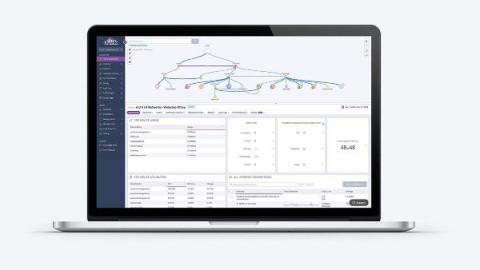
Spreadsheets and Visio diagrams may work in small, static environments, but they cannot maintain accurate, real-time records at the port level, track relationships between assets, or support the pace of change in modern operations. DCIM software is purpose-built for those demands. In this blog post, we'll cover what network documentation actually requires, where Excel and Visio fall short, and how DCIM software addresses those gaps.

Nine Ways to Connect to Cloud Using Private Connectivity

Struggling with cloud complexity? Compare dedicated, partner, and IPsec connections to find the right private connectivity solution. Multicloud environments bring complexity, and how you connect to your CSPs can make or break performance, cost, and reliability. Here’s how dedicated, partner, and IPsec connections compare — and which might be right for your business. There are three main methods of connecting to the cloud with private connectivity.

Re-Inventing Network Operations: Are AI Extensions the Right Path?

For decades, telecom network operations have depended on traditional OSS tools – complex, services-heavy platforms that take years to modernize and even longer to deliver measurable business impact. This year at MWC, the leading OSS vendors showcased a variety of new AI extensions for their portfolios and marketed them as the fastest path to autonomous network operations. They are not.

Monitor your application and network load balancer logs

Load balancers are the primary entry points to distributed applications. By strategically directing the flow of incoming web traffic to specific endpoints, load balancers help optimize throughput and ensure the horizontal scalability of applications. In modern systems, load balancers often do more than their name suggests: Beyond basic load distribution, they analyze requests and route traffic based on a wide range of variables, such as client identity.

Bridging the gap between mobile networks and the cloud

When it comes to IoT connectivity, it’s no longer enough for Mobile Network Operators (MNOs) and Mobile Service Providers (MSPs) to provide coverage, capacity and SIM cards. As enterprises accelerate their digital transformation, the focus has shifted from basic connectivity to seamless, secure and scalable device-to-cloud integration.

Announcing HAProxy Fusion 2.0

Today, we announce the release of HAProxy Fusion 2.0. This release marks a generational leap for the authoritative control plane that orchestrates HAProxy Enterprise’s high-performance application delivery and security. With a combination of new headliner features, structural changes, and improvements to the performance of the underlying API, HAProxy Fusion has jumped from version 1.3 to version 2.0.

The Obkio Story: Building a Network Observability & Diagnostics Solution

In 2016, before Obkio existed, we ran a market audit. We interviewed banks, manufacturing companies, and service providers, and asked them one simple question: Why aren't you using a Network Performance Monitoring solution? The answer was unanimous: the tools were too complex, and nobody had the internal resources to run them full-time. If that was true for enterprises with dedicated networking staff, it was even more true for smaller businesses with generalist IT teams.