
How Pneumatic Technology Is Powering the Future of Industrial Automation
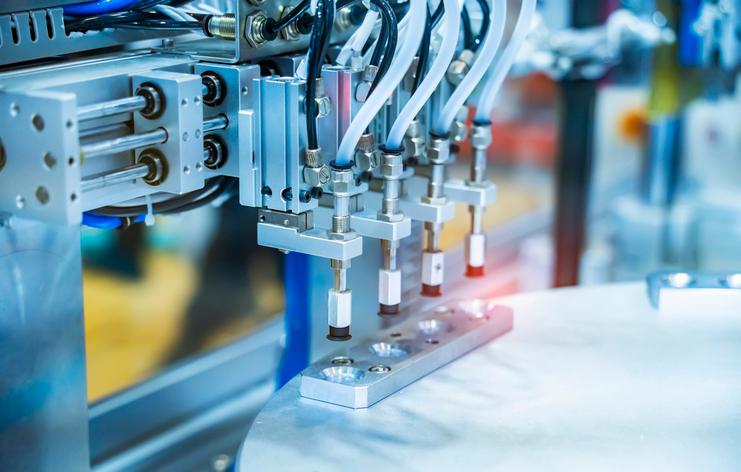
Automation is no longer an option when it comes to industries as industries evolve and transform to suit the requirement of efficiency, speed, and flexibility. At the center of this transition is pneumatic technology which is time tested and fast developing which is particularly vital in ensuring well running of industrial processes. Pneumatic components are the unsung heroes whom innovation is propelling both assembly lines and robotic systems.
This article covers what significance pneumatic technology has in defining the future of industrial automation and why it is essential in a factory today. We'll also take a closer look at how pneumatic systems are integrated into innovative automation products for factories, creating smarter, faster, and more reliable production environments.
Why Pneumatics Remain Relevant in a Digitally Driven Industry
At the same time when the world runs on smart electronics, software and artificial intelligence, it is possible to forget about the mechanical infrastructure of automation. Nevertheless, the pneumatic based systems that use pressurized air are still one of the most efficient and trustworthy types of actuation in industrial set-ups. The fact that they take little time, are resistant, flexible explains why they are applicable today.
Pneumatics are particularly suitable for repetitive-type work including clamping, stamping, pushing, or op-lifting work where speed is an important factor. Having fewer moving parts and maintenance requirements than electric actuators or hydraulic systems, pneumatic components enable down time reduction. They are also suitable in factories that have high temperatures, dust or are even wet since they will not be affected by these harsh conditions.
Moreover, due to maturity in design and material, pneumatic cylinders, valves, and regulators are getting intelligent. Frequently, they are equipped with sensors and control systems enabling the connection to PLCs and IIoT (Industrial Internet of Things) platforms so that factories gradually switch to smarter data-driven models. That is why the combination of pneumatic technologies with new automation solutions to work in the factories is also an essential aspect in 2025 and coming years.
Overall Pneumatic Parts That Act as a Terrific Motor to Smart Factory Performance
In pneumatics the essential idea of driving mechanical parts via compressed air has not altered in decades, but the working parts have received an intensive innovation. Contemporary pneumatic systems are accurate, tailored, and networked better than ever.
Standard and custom built pneumatic cylinders are now coming in compact versions to address the space savings demands and produce high force output. An example is rodless pneumatic cylinders, which offer longer stroke movements in a reduced foot print, sizing ideal where there is limited space.
Pneumatic guided cylinders find more application in robotics and automated handling systems in which stability in the X direction is important. They smooth accurate linear movement and they can accommodate greater side loads compared to conventional cylinders.
The backbone of these systems depends on the quality of the air supply. Many modern setups now utilize an oil-less air compressor to ensure a clean, contaminant-free source of power from the start. To maintain this quality, FRL units (Filter, Regulator, Lubricator) ensure a consistent flow of properly treated air to the hardware. The emergence of combination units of FRLs simplifies installation and maintenance making their footprint and cost less and compact in form as modules that combine all three aspects.
Compressed air filters and pneumatic air lubricators are vital in enhancing the life span of the systems. These components clean impurities and lubricate where required thus lengthening the lifespan of valves and actuators and maintaining the steady performance of the system.
Combined, these elements become the elements of innovative factory automation products, bringing the ability to move, grasp and sort and assemble with unsurpassed efficiency.
Integration of Pneumatics with Industrial Automation Systems
With more advanced industrial automation, there is an increased demand to combine the ability to use mechanical and digital systems. The pneumatic systems are not an exception. Top-of-the-line factories have gone to the extent of using data to streamline each production process, and pneumatic systems are no longer bottlenecks to that data flow.
It is now possible to install smart sensors on the pneumatic cylinders that monitor the stroke position and cycle counts as well as the status of wear. Data is fed into a central control system of the factory by these sensors, which enables prediction maintenance and real period-time diagnosis. These sensors can minimize downtimes and avoid failures, which are expensive to fix, by identifying leaks or dips in pressure or unusual speeds prior to their occurrence.
Controls and precision are further promoted by proximity sensors and photoelectric sensors with frequent pneumatic actuators. These sensors are able to capture pneumatic motion depending on the presence or the absence of an object, and this fact plays an extremely important role in packaging, bottling and sorting.
There are also the switching power supply units which ensure that the sensor modules and controllers are supplied with clean stable power which is vital to the integrity of the system. With the current trend of automation systems to become fully computerized, the need to combine electronics and pneumatics into single platforms becomes not simply desirable, but rather required.
This integration allows the moving of the normal tools to become a smart automation tool that is not only mighty but also smart to the industrial factories.
Advantages of Pneumatic Systems Over Electric or Hydraulic Alternatives
Electric actuators have their benefits as well as hydraulic systems, but still, it is possible to note that pneumatic systems provide special sets of features which allow regarding them as the best solution in many industrial applications.
Speed is also one of the greatest assets. Pneumatic systems are nearly instant because they are suitable to use in high-speed high-cycle applications. They are also lighter and smaller especially in relation to hydraulic installations, which come with pumps, fluid tanks, and high-powered parts.
Another key issue is cost-efficiency. The pneumatic parts are cheaper to purchase and install as well as maintain. They do not need complex electrical wiring and fluid control systems and so it becomes less complex and less points to break.
Moreover, there is a safety strength. The pneumatic has a smaller hazard potential in an explosive or high-temperature setting, where electrical sparks or spillages of fluid can be a hazard.
Speed, simplicity, safety, and cost considerations make it easy to understand why the pneumatic system is still the cornerstone in designing innovative automation products in the world's factories.
The Future of Pneumatics in Industry 4.0
Going further into the era where Industry 4.0 is progressing, the usage of pneumatic systems will still be changing. They are ceasing to be regarded only as mechanical tools whereas they are becoming smart parts of the smart factory ecosystem.
Increased embedded diagnostics, air system energy use and remote monitoring capabilities are expected. Such innovations like digital FRL units that can notify operators about pressure imbalances or level of contamination will become normal. Options of feedback will be increased by the use of pneumatic actuators which will be able to give information about cycle performance, load condition as well as air consumption.
Also, the demand and pipe focus on sustainability are encouraging manufacturers to enhance energy efficiency in the pneumatic system. Overpressurization and air leaks are a frequent cause of energy waste and it is automation of modern control systems that is now taking care of these matters.
The modularity will equally target the development of pneumatics and innovative automation products that will run in factories. Easy to reconfiguration/rescaling plug-and-play pneumatic modules will also enable the factories to quickly respond to any new production lines or the dynamic customer needs.
To put it in a nutshell, the pneumatic technology is not running out of business to match with the electronics but rather is being augmented by the electronics. The hybrid solution gives you the best of both worlds, the brute power of pressurized air and the precision of digital control.