Operations | Monitoring | ITSM | DevOps | Cloud

Understanding how attackers move inside your organization

Cyberthreats have been coming at us from the left, right, and center. The number of cyberattacks is forever on the rise, and companies need to keep ramping up their security measures to protect themselves. It’s important that these measures cover every aspect of a network environment. To understand why monitoring your whole environment is so important, let’s take a look at what an attacker might do once they get inside your organization.

Monitor Auth0 with Datadog

Auth0 provides identity as a service (IDaaS), allowing you to secure your apps and APIs without having to write your own authorization code. Auth0 can work with social identity providers (IdP) like Google and Facebook so your users can access your app by using their existing accounts for authentication. You can also use an existing enterprise identity provider (e.g., LDAP) to allow your users to leverage single sign-on (SSO) across multiple apps.

NiCE Active 365 Management Pack 3.20 released

Microsoft 365 outages happen. The NiCE Active 365 Management Pack for SCOM is an intelligent monitoring set for Microsoft Teams, SharePoint, OneDrive, and Office 365 hosted on-premise. The NiCE Active 365 Management Pack ensures end-to-end control for your Microsoft 365 services. IT executives, operators, and administrators can now actively boost Microsoft 365 User Experience by starting advanced monitoring today.

Now in Beta: SLA Monitor by StatusGator

StatusGator has been monitoring hundreds of status pages for more than 5 years. During this time, we’ve collected millions of data points about the status of the cloud: What went down, how long it was down, messages about why, and more. As StatusGator grows, we’re working on ways to incorporate this archival data into StatusGator for various uses. One common use: holding vendors accountable to Service Level Agreements. Introducing: SLA Monitor by StatusGator.

Exploring Node.js Async Hooks

Have you ever heard of Node.js async hooks module? If the answer is no, then you should get familiar with it. Even though it’s new stuff (released along with Node.js 9) and the module is still in experimental mode, which means it’s not recommended for production, you should still get to know it a bit better. In short, Node.js async hooks, more specifically the async_hooks module, provides a clear and easy-to-use API to track async resources in Node.js.

New Teams Connector for Operations Manager - BETA program available today

OpsLogix releases a BETA program of a Teams Connector for Operations Manager (SCOM), as the latest addition in our Virtual Operator product lineup. As of today, you will be able to sign up and join our program. The new connector is a welcomed addition to our existing products, such as the Service Now Connector and EZalert,” says Jonas Lenntun, Business Development at OpsLogix. “Not only is the timing just right since we all depend on virtual collaboration and meetings to work.

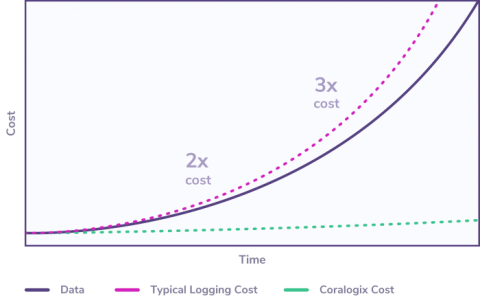
Announcing Streama: Get complete monitoring coverage without paying for the noise

With the new Streama capability announced today, you no longer have to choose what to monitor and what to drop to manage your logging costs. For years, our customers have enjoyed the benefits of a log analytics platform that enables them to autonomously manage and analyze data in their cloud applications. Our machine learning engine empowers users to improve their system stability and accelerate their release cycles.

Best Practices: Onboarding Jfrog Xray

JFrog Xray is a Software Composition Analysis tool (SCA) which is tightly integrated with JFrog Artifactory to ensure security and compliance governance for the organization binaries throughout the SDLC. This video provides best practices learned from customers for successfully deploying JFrog Xray into your organization and performing a real Shift-Left. It will focus on two keys to success, 1. involving R&D and 2. starting small and working in cycles.

Gain Better Visibility into Kubernetes Cost Allocation

Adopting Kubernetes and service-based architecture can bring many benefits to organizations – teams move faster and applications scale more easily. However, visibility into cloud costs is made more complicated with this transition. This is because applications and their resource needs are often dynamic, and teams share core resources without transparent prices attached to workloads.